Why Your ICP Spectrometer Struggles with Trace Elements?
In the relentless pursuit of purity and performance, high-end manufacturing sectors—from semiconductor fabrication to aerospace alloys—rely on precise elemental analysis. Inductively Coupled Plasma Spectrometers (ICP-OES/MS) are the workhorses of this analytical domain. But if you’re like many engineers we speak with, you’ve probably asked: Why does my ICP spectrometer struggle with trace elements? It’s a question that haunts labs striving for parts-per-trillion detection limits, and the answer isn’t always simple. Let’s cut through the noise and get to the heart of the matter. The struggle often stems from a combination of outdated optical designs, inadequate plasma robustness, and software that can’t keep up with complex matrices. In this blog, we’ll dissect these pain points, offer tangible solutions, and show you how industry leaders are overcoming them with instruments engineered for the extreme demands of modern manufacturing.
Imagine this: a quality control lab in a semiconductor plant is analyzing ultra-pure chemicals for trace metal contamination. The ICP-OES is running a batch of samples, but the results are erratic—some elements are below detection limits one run and spike the next. Production is halted, waiting for clearance. The lab manager is under pressure to release the batch, but the data isn’t trustworthy. This scenario is all too common. Trace element analysis is fraught with challenges that can cost time, money, and reputation. In this article, we’ll explore why your ICP spectrometer might be underperforming and how to transform it into a reliable, high-throughput analytical tool.
Pain Point 1: Sensitivity Loss and Detection Limit Barriers
Trace element analysis demands extraordinary sensitivity. In industries like semiconductor manufacturing, contaminants at the parts-per-trillion (ppt) level can ruin wafer yields. Yet many labs struggle with detection limits that are an order of magnitude higher than required. The root causes are often found in the optical system: inefficient light collection, poor stray light rejection, and detectors that lack the dynamic range to capture both trace and major elements simultaneously. Additionally, sample introduction systems that aren’t optimized for low-flow nebulization can waste precious sample and reduce signal intensity.
The consequences are severe. Consider a specialty alloy producer that needs to verify trace impurities in a high-temperature superalloy. If the ICP spectrometer can’t reach the required detection limits, the material might be rejected or, worse, used in a critical application where failure leads to catastrophic consequences. The cost isn’t just the rejected batch—it’s the potential liability, the delayed delivery, and the erosion of customer trust. In monetary terms, a single false-negative result can cost hundreds of thousands of dollars in scrapped product and lost production time.
Pain Point 2: Matrix Interferences and Plasma Robustness
High-end manufacturing samples are rarely simple. Whether it’s a digested metal alloy with high dissolved solids or an organic solvent from a pharmaceutical process, the matrix can play havoc with plasma stability. Easily ionizable elements like sodium or calcium can suppress the signal of analytes, while refractory elements can deposit on the torch, leading to drift and memory effects. The result is inaccurate results, frequent recalibration, and extended analysis times.
In a precious metals refinery, for instance, the matrix is dominated by gold or platinum, which can cause severe suppression of trace impurity signals. Without a robust plasma and effective interference correction, the lab might report false compliance, only to discover contamination later in the production chain. The downstream impact includes rework, customer complaints, and regulatory penalties. The cost of matrix interference is often hidden but substantial: increased consumable usage, more frequent maintenance, and the intangible cost of lost credibility.
Pain Point 3: Operational Downtime and Maintenance Burden
Even the most advanced ICP spectrometer is only as good as its uptime. In high-throughput environments, every hour of downtime translates to lost revenue. Common culprits include clogged nebulizers, degraded torches, and pumps that fail under corrosive conditions. Moreover, software that is not user-friendly can lead to operator errors, requiring time-consuming troubleshooting.
Take the case of a contract testing laboratory that runs hundreds of samples per day. When their ICP-OES goes down, they face a backlog that can take days to clear, straining client relationships and forcing overtime. The cost of downtime can be calculated in thousands of dollars per hour, not to mention the expense of emergency service calls and expedited parts shipping. In extreme cases, repeated failures can lead to the need for a replacement instrument, a capital expenditure that could have been avoided with proper design and maintenance planning.
Solutions: Engineering Excellence for Trace Analysis
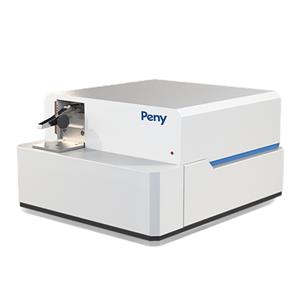
Addressing these pain points requires a holistic approach that combines cutting-edge hardware with intelligent software. At Peny Scientific Instruments (Nantong) Co., Ltd., we’ve dedicated years to perfecting ICP spectrometer technology that excels in the most demanding environments. Here’s how we tackle each challenge.
Solution for Sensitivity: High-Throughput Optics and Advanced Detectors
To achieve ultra-low detection limits, our ICP-OES systems utilize a high-resolution echelle optical design with a large-area CCD detector. This combination ensures maximum light capture and minimal stray light, enabling detection limits in the sub-ppb range for most elements. Additionally, our sample introduction system features a low-flow nebulizer and a cyclonic spray chamber that maximize aerosol transport efficiency, reducing sample consumption while boosting signal intensity. For labs needing the ultimate in sensitivity, our ICP-MS offerings provide ppt-level detection limits with a robust interface that handles high matrix samples without dilution.
But hardware alone isn’t enough. Our proprietary software includes advanced signal processing algorithms that automatically optimize integration times and apply real-time background correction. This means you can trust your trace results even in the presence of complex matrices.
Solution for Matrix Interferences: Robust Plasma and Intelligent Interference Correction
Our ICP spectrometers feature a solid-state RF generator that delivers stable power even with high dissolved solids, ensuring plasma robustness. The torch design incorporates a large-bore injector and a unique cooling system that minimizes salt buildup and extends torch life. For interference correction, we employ a multi-component spectral fitting algorithm that deconvolutes overlapping peaks, even in the presence of strong matrix elements. This is complemented by a comprehensive library of interference coefficients, continuously updated from our applications lab.
For organic matrices, we offer a dedicated organic sample introduction kit that includes a platinum injector and a chilled spray chamber, preventing carbon deposition and ensuring stable plasma operation. The result is accurate, reproducible data across a wide range of sample types.
Solution for Downtime: Reliability by Design and Predictive Maintenance
We understand that uptime is critical. That’s why our instruments are built with robust components: corrosion-resistant materials, long-life pumps, and easy-access torch assemblies that reduce maintenance time. Our software includes a predictive maintenance dashboard that tracks consumable usage and alerts operators before failures occur. Remote diagnostics allow our engineers to troubleshoot issues quickly, often without the need for an on-site visit.
Moreover, our modular design means that critical components can be swapped out in minutes, not hours. For example, the nebulizer and spray chamber are easily accessible without tools, and the torch can be replaced without realignment. This design philosophy minimizes downtime and keeps your lab productive.
Customer Cases: Real Results from Real Labs
Don’t just take our word for it. Here are a few examples of how Peny Scientific Instruments has helped organizations around the world overcome their trace element challenges.
Case 1: Semiconductor Chemical Supplier in Hsinchu, Taiwan
A leading supplier of ultra-pure chemicals for semiconductor fabrication was struggling with inconsistent detection limits for trace metals in their HF and H2O2 products. Their existing ICP-MS couldn’t handle the corrosive matrix, leading to frequent downtime and unreliable data. After switching to our ICP-MS with a corrosion-resistant sample introduction system and advanced interference correction, they achieved detection limits below 10 ppt for critical elements like Fe, Cu, and Zn. The result: a 40% reduction in analysis time and a 99.5% uptime rate. “The reliability and sensitivity of Peny’s instrument have transformed our QC lab,” says Dr. Chen, Lab Manager. “We now release batches with confidence, knowing our data is rock solid.”
Case 2: Aerospace Alloy Manufacturer in Toulouse, France
This manufacturer produces nickel-based superalloys for jet engine components. They needed to quantify trace impurities like Pb, Bi, and Se at levels below 1 ppm, but their old ICP-OES suffered from spectral interferences from the nickel matrix. Our solution included a high-resolution echelle spectrometer with a large CCD detector and our multi-component fitting software. The new system achieved a 5x improvement in detection limits, allowing them to certify alloys to stricter specifications. “We’ve reduced rework by 30% and shortened our certification cycle by two days,” notes Pierre, Quality Director. “Peny’s technical support was instrumental in method development.”
Case 3: Precious Metals Refinery in Johannesburg, South Africa
Refining platinum group metals requires precise analysis of trace impurities in high-matrix samples. This refinery was using an ICP-OES that required frequent dilution, leading to errors and delays. We provided an ICP-OES with a robust plasma and an organic sample introduction kit, allowing direct analysis of undiluted samples. The result was a 50% reduction in sample preparation time and a 20% increase in throughput. “The ability to run high-matrix samples without dilution has been a game-changer,” says Johan, Laboratory Supervisor. “Our operators appreciate the ease of use, and our clients appreciate the faster turnaround.”
Case 4: Environmental Testing Lab in Houston, USA
This lab analyzes trace metals in soil and water samples for environmental compliance. They faced challenges with drift and memory effects when running samples with high total dissolved solids. Our ICP-OES with a cyclonic spray chamber and advanced rinse protocol eliminated memory effects and reduced drift to less than 2% over an 8-hour shift. “We’ve cut our recalibration frequency in half and improved data quality,” says Emily, Lab Director. “Peny’s instrument has become the backbone of our metals analysis.”
Case 5: Pharmaceutical Company in Basel, Switzerland
This company needed to detect trace catalysts (e.g., Pd, Pt) in drug substances at sub-ppm levels. Their existing ICP-MS was prone to polyatomic interferences from the organic matrix. Our ICP-MS with collision/reaction cell technology and a dedicated organic kit provided accurate results without time-consuming digestion. “The interference removal is exceptional,” says Dr. Müller, Analytical Chemist. “We’ve reduced sample prep time by 60% and achieved detection limits well below our target.”
Applications and Partnerships: Where Precision Matters Most
Our ICP spectrometers are trusted in a wide array of applications, including:
- Semiconductor manufacturing: Ultra-pure chemicals, wafers, and process gases.
- Aerospace and defense: Superalloys, coatings, and high-performance materials.
- Precious metals: Refining, recycling, and quality control.
- Environmental monitoring: Soil, water, and waste analysis.
- Pharmaceuticals: Elemental impurities, catalyst residues, and packaging leachables.
- Food and agriculture: Trace nutrients and contaminants.
We are proud to partner with leading distributors and OEMs worldwide. For instance, our instruments are integrated into the quality control workflows of major chemical suppliers in Europe and Asia, and we collaborate with research institutions on method development for emerging contaminants. These partnerships are built on a shared commitment to accuracy and reliability, and they drive continuous improvement in our product line.
FAQ: Engineers and Procurement Managers Ask
Q1: What are the key differences between ICP-OES and ICP-MS for trace element analysis?
A1: ICP-OES is generally more robust for high-matrix samples and offers excellent precision for major and minor elements, with detection limits in the ppb range. ICP-MS provides superior sensitivity (ppt range) and isotope ratio capabilities but requires more careful sample preparation and can suffer from polyatomic interferences. The choice depends on your detection limit requirements, sample matrix, and throughput needs. Our experts can help you select the right technology for your application.
Q2: How do you handle spectral interferences in complex matrices?
A2: We employ a combination of high-resolution optics, advanced detector technology, and intelligent software algorithms. Our multi-component spectral fitting (MCSF) algorithm deconvolutes overlapping peaks using a library of reference spectra. For ICP-MS, we offer collision/reaction cell technology to eliminate polyatomic interferences. Additionally, we provide method development support to optimize parameters for your specific matrix.
Q3: What is the typical maintenance schedule for your ICP spectrometers?
A3: Routine maintenance includes daily checks of the nebulizer and spray chamber, weekly cleaning of the torch, and monthly replacement of pump tubing. Our software includes a predictive maintenance dashboard that alerts you when consumables need replacement. With proper care, our instruments can achieve uptime rates exceeding 98%. We also offer service contracts with scheduled preventive maintenance visits.
Q4: Can your instruments handle organic solvents directly?
A4: Yes, we offer dedicated organic sample introduction kits that include a platinum injector, a chilled spray chamber, and a solvent-resistant pump tubing. These kits enable direct analysis of organic solutions without the need for digestion, reducing sample preparation time and minimizing contamination risks.
Q5: What support do you provide for method development and regulatory compliance?
A5: Our applications team provides method development assistance, including sample preparation, calibration strategies, and interference correction. We also offer documentation packages to support regulatory submissions (e.g., USP <232>, ICH Q3D). Additionally, we conduct on-site training and provide access to our online knowledge base with application notes and technical guides.
Conclusion: Unlock Ultimate Performance
Trace element analysis doesn’t have to be a struggle. With the right instrument and support, you can achieve the sensitivity, robustness, and uptime your lab demands. At Peny Scientific Instruments (Nantong) Co., Ltd., we are committed to empowering high-end manufacturing with analytical solutions that deliver confidence in every result. Whether you’re battling matrix interferences, pushing detection limits, or striving for operational excellence, our team is here to help.
Ready to learn more? Contact our sales engineers to discuss your specific challenges or request a copy of our comprehensive technical white paper, “Advanced Trace Element Analysis in High-End Manufacturing: Best Practices and Solutions.” Discover how Peny Scientific Instruments can transform your lab’s performance.