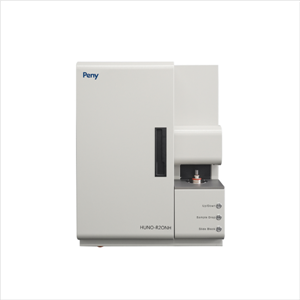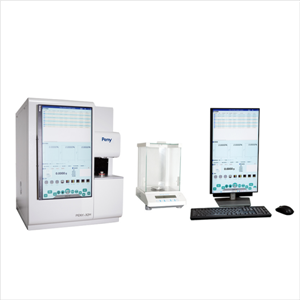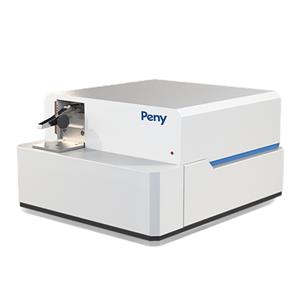
Why Is ICP Spectrometer Key to High-End Manufacturing?
Imagine a production line for aerospace turbine blades. A batch of superalloy parts is about to be shipped, but a routine quality check reveals trace impurities that could cause catastrophic failure at high temperatures. The culprit? Inadequate elemental analysis during material verification. This scenario is all too common in high-end manufacturing, where the margin for error is razor-thin. The answer to preventing such failures lies in a powerful analytical technique: Inductively Coupled Plasma Spectrometer (ICP). Specifically, ICP-OES and ICP-MS are the workhorses for trace elemental analysis. But why is ICP spectrometer so critical? In short, it provides the sensitivity, precision, and speed needed to verify material composition, ensuring that every component meets stringent specifications. Without it, industries from aerospace to semiconductor manufacturing would struggle to maintain quality and reliability.
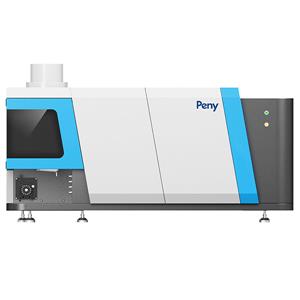
In this blog, we'll delve into the specific pain points that high-end manufacturers face, how ICP spectrometers solve them, and share real-world success stories. We'll also answer common questions from engineers and procurement managers. By the end, you'll understand why investing in advanced ICP technology is not just a smart choice—it's a necessity for competitive advantage.
Industry Pain Points: Where Precision Fails
High-end manufacturing demands exceptional material purity and consistency. Yet, several pain points persistently plague quality control labs and production floors. Let's examine three critical challenges that ICP spectrometers are uniquely positioned to solve.
Pain Point 1: Trace Impurity Detection Limits
In industries like semiconductor fabrication, even parts-per-billion (ppb) levels of metallic impurities can degrade device performance. For instance, sodium contamination in silicon wafers can cause gate oxide breakdown. Traditional techniques like atomic absorption spectroscopy (AAS) or X-ray fluorescence (XRF) often lack the sensitivity to detect such low concentrations reliably. The consequence? Yield losses, reliability issues, and costly recalls. A single contaminated batch of wafers can result in millions of dollars in scrap and delayed shipments.
Consider a specialty alloys manufacturer producing nickel-based superalloys for jet engines. Trace elements like sulfur and phosphorus must be kept below 10 ppm to prevent hot corrosion. If these impurities go undetected, the alloy's mechanical properties deteriorate, leading to premature failure. The cost of a field failure—both in liability and reputation—is astronomical.
Pain Point 2: Throughput and Turnaround Time
In high-volume production environments, quality control labs are under pressure to analyze hundreds of samples per day. Slow analytical methods create bottlenecks, delaying production and increasing work-in-progress inventory. For example, a manufacturer of medical implants uses titanium alloys that require certification of composition before machining. If each analysis takes hours, the entire production schedule is jeopardized. Moreover, manual sample preparation and data interpretation add to the delay and introduce human error.
The financial impact is significant: idle machine time, overtime labor, and missed delivery deadlines. In a competitive market, such inefficiencies can erode profit margins and customer trust.
Pain Point 3: Complex Matrices and Spectral Interferences
High-end materials often have complex matrices—think of high-entropy alloys with multiple principal elements, or geological samples with varying mineralogy. These matrices can cause spectral interferences, where emission lines from different elements overlap, leading to inaccurate results. For instance, in the analysis of rare earth elements, the rich emission spectra can cause false positives or negatives. Without advanced interference correction, labs risk misclassification of materials, leading to costly rework or field failures.
Additionally, sample digestion of refractory materials like ceramics or superalloys can be challenging, leading to incomplete dissolution and inaccurate results. The cost of re-analysis and potential product liability is high.
Solutions: How ICP Spectrometers Address These Pain Points
Inductively Coupled Plasma Spectrometers, particularly ICP-OES (Optical Emission Spectrometry) and ICP-MS (Mass Spectrometry), offer robust solutions to these challenges. Let's explore how.
Solution for Trace Impurity Detection: Unmatched Sensitivity
ICP-MS can detect elements at parts-per-trillion (ppt) levels, making it ideal for ultra-trace analysis. For semiconductor applications, ICP-MS with collision/reaction cell technology eliminates polyatomic interferences, ensuring accurate quantification of impurities like iron, copper, and sodium. ICP-OES, on the other hand, offers detection limits in the ppb range for most elements, sufficient for many alloy and environmental analyses.
For the superalloy manufacturer, using ICP-OES with a high-resolution spectrometer and advanced background correction can reliably measure sulfur and phosphorus at low ppm levels. This ensures that every batch meets specifications, preventing costly failures.
Solution for Throughput: Speed and Automation
Modern ICP spectrometers are designed for high throughput. With automatic sample introduction systems, fast readout detectors, and simultaneous measurement capabilities (in the case of ICP-OES with CCD/CID detectors), analysis times can be reduced to a few minutes per sample. For the medical implant manufacturer, implementing an ICP-OES with an autosampler and automated data processing can increase sample throughput by 50% or more, reducing turnaround time from hours to minutes.
Moreover, robust software with built-in methods and quality control protocols minimizes human error and ensures consistent results.
Solution for Complex Matrices: Advanced Interference Management
For complex matrices, ICP-OES with high-resolution optics (e.g., echelle gratings) and sophisticated background correction algorithms can resolve spectral overlaps. ICP-MS with collision/reaction cells (e.g., He mode or NH3 mode) effectively removes polyatomic interferences, enabling accurate analysis of challenging elements like arsenic and selenium in high-chloride matrices.
Sample preparation is also streamlined with microwave digestion systems that ensure complete dissolution of refractory materials. When coupled with ICP, this provides a complete solution for even the most demanding samples.
At Peny Scientific Instruments (Nantong) Co., Ltd., we specialize in designing ICP spectrometers that incorporate these advanced technologies. Our instruments are engineered to deliver reliable performance in the most challenging manufacturing environments.
Customer Success Stories: Real Results from Real Companies
Let's look at how businesses across different regions have benefited from implementing advanced ICP solutions from Peny Scientific Instruments.
Case 1: AeroTech Alloys, Canada
AeroTech Alloys, a supplier of nickel-based superalloys for aerospace, struggled with inconsistent trace element analysis. Their existing AAS method could not reliably detect sulfur at levels below 20 ppm, leading to occasional batch rejections. After installing a Peny Scientific ICP-OES system with high-resolution optics and a robust sample digestion protocol, they achieved a detection limit of 1 ppm for sulfur. Within six months, batch rejection rates dropped by 30%, saving approximately $500,000 annually. "The reliability of the Peny ICP has transformed our quality control," said Dr. Emily Chen, Quality Manager. "We now certify our alloys with confidence."
Case 2: MediTi Implants, Germany
MediTi Implants produces titanium implants for orthopedic applications. Their lab was overwhelmed by the volume of samples requiring composition verification. Turnaround time was 48 hours, causing production delays. They implemented a Peny Scientific ICP-OES with an autosampler and automated data management. Throughput increased by 60%, and turnaround time dropped to 8 hours. "The speed and accuracy of the Peny system have streamlined our entire production flow," noted Markus Wagner, Production Director. "We've reduced work-in-progress inventory by 25%."
Case 3: RareEarth Materials, USA
RareEarth Materials processes complex rare earth ores. Spectral interferences from the rich emission spectra of lanthanides caused frequent misclassifications. They adopted a Peny Scientific ICP-MS with collision/reaction cell technology. The system's interference removal capabilities enabled accurate quantification of all rare earth elements, reducing analysis errors by 90%. "The Peny ICP-MS is a game-changer for our lab," said Dr. James Rodriguez, Lab Director. "We now provide reliable data to our customers, enhancing our reputation."
Case 4: Semiconductor Solutions, Taiwan
Semiconductor Solutions needed to detect trace metals in ultra-pure water and chemicals at ppt levels. They chose a Peny Scientific ICP-MS with a high-efficiency sample introduction system. The instrument achieved detection limits of 0.1 ppt for iron and copper, ensuring compliance with stringent semiconductor standards. "Peny's ICP-MS has enabled us to meet the most demanding purity requirements," commented Dr. Li Wei, R&D Manager. "Our yield has improved by 15%."
Case 5: Precision Castings, UK
Precision Castings produces complex investment castings for power generation. They faced challenges with incomplete digestion of refractory alloys, leading to inaccurate results. Peny Scientific provided a complete solution including microwave digestion and ICP-OES. The integrated approach reduced sample preparation time by 40% and improved accuracy. "The support from Peny's application team was exceptional," said Sarah Thompson, Lab Supervisor. "They helped us develop a robust method tailored to our materials."
Applications and Partnerships: Trusted by Industry Leaders
ICP spectrometers from Peny Scientific Instruments are used in a wide range of high-end manufacturing applications. Here are some key areas:
- Aerospace: Analysis of superalloys, titanium alloys, and coatings for composition and trace impurities.
- Semiconductor: Ultra-trace metal analysis in wafers, chemicals, and high-purity water.
- Medical Devices: Verification of biocompatible alloys and detection of toxic elements.
- Automotive: Quality control of catalytic converters, battery materials, and lightweight alloys.
- Energy: Analysis of nuclear materials, solar panel components, and fuel cells.
We are proud to partner with leading companies in these sectors. For example, our ICP-OES systems are the preferred choice for several Tier 1 suppliers to the aerospace industry. Our collaboration with research institutions and standards organizations ensures that our instruments stay at the forefront of technology.
Moreover, our relationships with procurement teams at major manufacturers are built on trust and reliability. We understand that purchasing decisions are not just about the instrument—they're about the total solution, including service, support, and method development. Peny Scientific Instruments delivers on all fronts.
FAQ: What Engineers and Procurement Managers Really Ask
Here are answers to five common questions we hear from professionals in Europe and North America.
1. What are the key differences between ICP-OES and ICP-MS, and which should I choose?
ICP-OES is ideal for major, minor, and trace element analysis at ppm to ppb levels, with high tolerance to matrix. It's cost-effective and robust for routine quality control. ICP-MS offers superior sensitivity (ppt levels) and isotope ratio capabilities, making it suitable for ultra-trace analysis and research. Your choice depends on detection limits required, sample throughput, and budget. For most manufacturing QC, ICP-OES suffices; for semiconductor or geochemical ultra-traces, ICP-MS is necessary.
2. How do you handle spectral interferences in complex matrices?
Modern ICP-OES uses high-resolution optics and multi-component spectral fitting algorithms to correct for overlaps. ICP-MS employs collision/reaction cells to eliminate polyatomic interferences. Additionally, proper sample preparation (e.g., microwave digestion) and matrix matching of standards minimize issues. Our instruments come with advanced software that automates interference correction, ensuring accurate results even in challenging matrices.
3. What is the typical cost of ownership for an ICP spectrometer?
Costs include instrument purchase, consumables (argon gas, sample introduction components, standards), and maintenance. ICP-OES typically has lower consumable costs than ICP-MS. However, the higher sensitivity of ICP-MS can reduce the need for repeat analyses, potentially lowering overall costs. We offer service contracts and training to optimize your investment. Request a detailed cost analysis from our sales engineers.
4. Can ICP spectrometers analyze solid samples directly?
ICP techniques require liquid samples. Solid samples must be digested, typically using acid digestion or fusion. For direct solid analysis, techniques like laser ablation ICP-MS (LA-ICP-MS) exist, but they are more specialized. For most manufacturing QC, acid digestion with microwave assistance is efficient and reliable. We can advise on sample preparation methods for your specific materials.
5. How do you ensure instrument reliability and uptime?
Peny Scientific Instruments designs ICP spectrometers for durability and ease of maintenance. Key features include robust plasma generators, clog-resistant nebulizers, and user-friendly software with diagnostics. We offer preventive maintenance plans and rapid-response service. Our global support network ensures minimal downtime. Many customers report >98% uptime with our systems.
Conclusion: The Value of Precision and How to Get Started
In high-end manufacturing, precision is not optional—it's the foundation of quality, safety, and profitability. Inductively Coupled Plasma Spectrometers provide the analytical power needed to achieve that precision, from detecting trace impurities to handling complex matrices at high throughput. As we've seen through customer stories, the right ICP solution can dramatically improve quality control, reduce costs, and enhance competitiveness.
At Peny Scientific Instruments (Nantong) Co., Ltd., we are dedicated to advancing ICP technology for the most demanding industries. Our instruments are trusted by leaders in aerospace, semiconductor, medical, and beyond. Whether you're upgrading your lab or establishing new capabilities, we can help you select the ideal system and develop robust methods.
Ready to learn more? Contact our sales engineers to discuss your specific needs, or request our comprehensive technical white paper on "Advances in ICP Spectrometry for High-End Manufacturing." Discover how Peny Scientific can partner with you to achieve unmatched precision.