Why Is ICP Spectrometer Calibration So Critical?
Imagine you're in the lab, staring at the ICP spectrometer results for a batch of soil samples. The concentrations of heavy metals seem off—lower than expected. You rerun the samples, but the numbers don't improve. After hours of troubleshooting, you discover the culprit: a drifted calibration curve. This scenario is all too common, and it underscores why calibration is the backbone of reliable inductively coupled plasma (ICP) spectrometry. In this blog, we'll explore the critical role of calibration, the pitfalls of neglecting it, and how to ensure your ICP spectrometer delivers accurate results every time.
The Critical Role of Calibration
Calibration is the process of establishing a relationship between the signal intensity measured by the ICP spectrometer and the concentration of the analyte. Without a proper calibration, even the most sophisticated instrument can produce erroneous data. The consequences can be severe: from wasted time and resources to flawed research conclusions or failed quality control in industrial processes. In industries like environmental monitoring, pharmaceuticals, and metallurgy, inaccurate results can lead to regulatory non-compliance, product recalls, or even health hazards.
Pain Points: When Calibration Goes Wrong
Let's delve into three specific pain points that professionals face when calibration is not given the attention it deserves.
1. Matrix Effects and Signal Drift
In real-world samples, the matrix—the components other than the analyte—can significantly affect the analyte signal. For example, high concentrations of easily ionizable elements (EIEs) like sodium or potassium can suppress or enhance the signal of the analyte, leading to inaccurate quantification. Additionally, instrumental drift over time can cause the calibration curve to shift, resulting in systematic errors. A lab analyzing seawater samples for trace metals might see inconsistent results due to the high salt matrix, leading to false negatives or overestimations. The cost? Repeated analyses, delayed reports, and potential environmental misjudgments.
2. Inadequate Quality Control and Regulatory Compliance
Regulatory bodies such as the EPA, FDA, and ISO demand strict adherence to calibration protocols. For instance, EPA Method 200.7 requires initial calibration verification (ICV) and continuing calibration verification (CCV) to ensure ongoing accuracy. Failing to meet these requirements can result in data rejection, fines, or loss of accreditation. A pharmaceutical company producing injectable drugs must quantify elemental impurities according to USP <232> and <233>. Without proper calibration, trace levels of heavy metals could go undetected, posing serious health risks and leading to costly recalls.
3. Operator Errors and Inconsistent Practices
Calibration is not just about running standards; it's about doing it correctly. Common mistakes include using expired standards, incorrect dilution, or failing to account for viscosity differences. These errors can introduce significant bias. For example, a technician might prepare calibration standards in water but fail to matrix-match with the sample's acid content, leading to inaccurate results. The impact? Data integrity is compromised, and the lab's reputation suffers. The cost of rework and potential loss of clients can be substantial.
Solutions: Mastering Calibration for Reliable ICP Results
Addressing these pain points requires a systematic approach to calibration, combining best practices, advanced technology, and expert support.
1. Mitigating Matrix Effects with Internal Standards and Matrix Matching
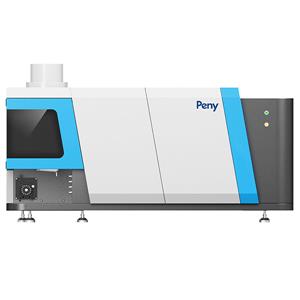
Internal standards are elements not present in the sample that are added to both standards and samples at a constant concentration. They compensate for matrix effects and instrumental drift. For example, yttrium or indium are commonly used internal standards for ICP-OES. Additionally, matrix matching—preparing calibration standards in a matrix similar to the samples—can minimize differences. For seawater analysis, a synthetic seawater matrix can be used. Advanced ICP spectrometers like those from Peny Scientific Instruments (Nantong) Co., Ltd. offer robust software that automatically corrects for drift using internal standards, ensuring accurate results even with complex matrices.
2. Ensuring Compliance with Rigorous QC Protocols
Implementing a comprehensive quality control program is essential. This includes:
- Initial calibration verification (ICV) using a second source standard.
- Continuing calibration verification (CCV) at regular intervals.
- Method blanks to assess contamination.
- Duplicate analyses for precision.
- Spike recoveries for accuracy.
3. Training and Standard Operating Procedures (SOPs)
Operator error is a leading cause of calibration issues. Developing clear SOPs and providing regular training can mitigate this. SOPs should cover standard preparation, storage, and verification; instrument startup and optimization; and troubleshooting. Peny Scientific Instruments offers training programs and technical support to ensure users are proficient in calibration techniques. Their ICP spectrometers feature user-friendly interfaces and guided workflows, reducing the likelihood of mistakes.
Customer Success Stories
Let's look at how organizations have overcome calibration challenges with the help of Peny Scientific Instruments.
Case 1: Environmental Lab in California
An environmental testing laboratory in Los Angeles struggled with inconsistent results for trace metals in wastewater due to high matrix effects. After implementing Peny's ICP-OES with internal standard correction and matrix-matched calibration, they achieved a 30% reduction in rework and improved data accuracy. "Peny's solution cut our calibration time in half and virtually eliminated drift issues," said Dr. Emily Chen, Lab Director.
Case 2: Pharmaceutical Company in Germany
A pharmaceutical manufacturer in Berlin needed to comply with USP <232> for elemental impurities. They faced challenges with calibration verification and audit trails. Peny's ICP-MS system with automated QC and 21 CFR Part 11 compliant software streamlined their workflow. "We passed our FDA audit with zero observations, thanks to the robust calibration and reporting features," noted Dr. Klaus Weber, Quality Manager.
Case 3: Mining Company in Australia
A mining company in Perth analyzed ore samples for rare earth elements. Matrix effects from high iron content caused inaccurate results. Using Peny's ICP-OES with advanced matrix correction and internal standards, they improved recovery rates from 85% to 98%. "The reliability of our assays has significantly improved our process control," said Sarah Thompson, Chief Chemist.
Case 4: Food Safety Lab in Japan
A food safety laboratory in Tokyo needed to detect trace heavy metals in rice. Calibration drift was a persistent issue. Peny's ICP-MS with automated drift correction and user-friendly software reduced calibration frequency by 40%. "We now spend less time on calibrations and more on sample analysis," remarked Yuki Tanaka, Lab Manager.
Case 5: Academic Research Institute in the UK
A university research group in Cambridge studied environmental samples using ICP-MS. They required high sensitivity and accurate calibration for ultra-trace analysis. Peny's ICP-MS with high-performance sample introduction system and internal standard correction enabled them to publish high-impact research. "The precision and accuracy of our data have been exceptional," said Professor James Wilson.
Applications and Partnerships
ICP spectrometers are used in diverse applications, including:
- Environmental monitoring: soil, water, and air analysis for heavy metals.
- Pharmaceutical: elemental impurity testing in drugs.
- Metallurgy: alloy composition and trace element analysis.
- Food and agriculture: nutritional and contaminant analysis.
- Geology: rare earth element quantification.
FAQ
Q1: How often should I calibrate my ICP spectrometer?
A: Calibration frequency depends on your application and regulatory requirements. Typically, a full calibration is performed daily or before each batch. However, with modern instruments like those from Peny, you can use historical data and drift monitoring to extend intervals, provided QC checks pass. Always follow your method's specifications.
Q2: What are the best internal standards for ICP-OES?
A: Common internal standards include yttrium, indium, scandium, and bismuth. The choice depends on the analyte and matrix. For example, yttrium is often used for rare earth elements, while indium is suitable for a wide range of metals. Ensure the internal standard is not present in the sample and has similar ionization energy to the analyte.
Q3: How do I handle spectral interferences?
A: Spectral interferences can be corrected using interference correction equations, higher resolution (for high-resolution ICP-OES), or collision/reaction cell technology (in ICP-MS). Peny's instruments offer advanced software with built-in correction algorithms and the option of MS/MS for superior interference removal.
Q4: What is the difference between external and internal calibration?
A: External calibration uses standards prepared separately from the sample, while internal calibration (standard additions) adds standards directly to the sample. Standard additions are useful for complex matrices but are time-consuming. Internal standards are added to both, as discussed. The choice depends on the matrix and accuracy requirements.
Q5: Can I use expired calibration standards?
A: No, expired standards can lead to inaccurate calibration. Always use fresh, certified standards and store them properly. Peny provides certified reference materials and offers guidance on standard preparation and storage.
Conclusion and Call to Action
Calibration is not just a routine task; it's the foundation of reliable ICP spectrometry. By understanding the pain points, implementing robust solutions, and leveraging advanced instruments from Peny Scientific Instruments (Nantong) Co., Ltd., labs can ensure accuracy, compliance, and efficiency. Don't let calibration drift compromise your data. For more in-depth technical insights, download our white paper on advanced calibration strategies for ICP spectrometry, or contact our sales engineers to discuss your specific needs.