Why Is Handheld XRF Crucial for Scrap Recycling?
Imagine standing in a bustling scrap yard in Rotterdam, surrounded by piles of twisted metal. A truckload of “stainless steel” arrives, but your gut tells you something’s off. Without rapid, accurate analysis, you risk buying a mixed alloy that could cost thousands in downstream processing. That’s where a Handheld XRF Spectrometer becomes your indispensable tool. In this blog, we’ll explore why this technology is not just a gadget but a game-changer for scrap recycling, and how it delivers precision, speed, and savings.
Pain Point 1: Misidentification of Alloys Leads to Huge Financial Losses
In the scrap recycling industry, misidentifying metal alloys is a common and costly mistake. For instance, a supplier might deliver a batch labeled as 304 stainless steel, but it contains a significant portion of 316, which has higher nickel and molybdenum content. If you purchase it at the 304 price and later sell it as 316, you lose money; if you process it incorrectly, you face quality issues and customer complaints. The impact? A single misidentified load of 20 tons can result in a loss of $10,000 to $20,000, not to mention the reputational damage and potential safety hazards in downstream manufacturing.
Pain Point 2: Slow Turnaround Times Disrupt Operations
Traditional methods of alloy analysis, such as sending samples to a lab, can take hours or even days. In a fast-paced scrap yard, this delay means trucks wait, inventory sits idle, and transactions are delayed. The cost of downtime is staggering: a typical yard might lose $500 per hour per truck. Moreover, slow analysis forces you to make purchasing decisions on the spot without adequate data, increasing the risk of errors. This inefficiency erodes profitability and strains relationships with suppliers and customers.
Pain Point 3: Regulatory Compliance and Environmental Risks
With increasing environmental regulations, scrap recyclers must ensure that hazardous elements like lead, mercury, or cadmium are not present in recycled materials. Failure to comply can lead to hefty fines, legal battles, and environmental cleanup costs. For example, a European recycler faced a €50,000 fine for inadvertently processing scrap containing lead. Without reliable on-site analysis, you’re gambling with compliance and your company’s reputation.
Solution 1: Instant, Accurate Alloy Identification with Handheld XRF
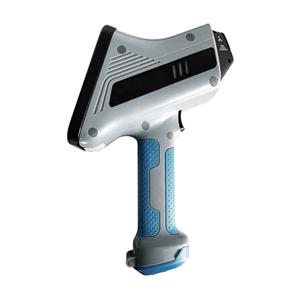
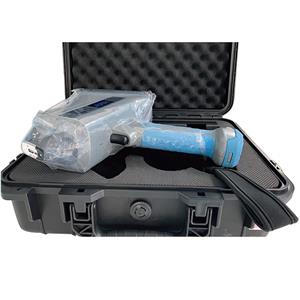
Handheld XRF spectrometers provide laboratory-grade elemental analysis in seconds. Using X-ray fluorescence technology, they can identify alloy grades, measure elemental composition, and even detect trace elements. Modern devices like those from Peny Scientific Instruments (Nantong) Co., Ltd. offer intuitive interfaces, rugged designs, and connectivity features. For example, the XRF analyzer can distinguish between 304 and 316 stainless steel in less than 2 seconds, with accuracy comparable to lab-based systems. This allows you to verify incoming materials on the spot, negotiate prices with confidence, and avoid costly mistakes.
Solution 2: Real-Time Analysis Accelerates Workflow
With a handheld XRF, analysis happens in real-time, right at the point of need. No more waiting for lab results. You can scan a truckload as it arrives, segregate materials correctly, and keep operations flowing. The speed translates to faster turnaround, reduced labor costs, and increased throughput. For instance, a yard in Chicago reduced its average truck turnaround time from 4 hours to 45 minutes after implementing handheld XRF, increasing daily revenue by 30%.
Solution 3: Ensure Compliance and Safety
Handheld XRF spectrometers can detect hazardous elements like lead, cadmium, and mercury, helping you comply with regulations such as RoHS and ELV directives. By screening incoming scrap, you can avoid contaminated materials and protect your workers and the environment. The devices are also equipped with safety features like automatic shutters and radiation shields, ensuring safe operation. With real-time data, you can document compliance and avoid fines.
Customer Success Stories
Case 1: Michael Torres, Purchasing Manager at Midwest Scrap Solutions, Chicago, USA
“We were losing about $15,000 monthly due to alloy mix-ups. After integrating Peny Scientific’s handheld XRF, our misidentification rate dropped by 95%. We now process 50 tons per day with confidence. The device paid for itself in three months.”
Case 2: Anna Schmidt, Operations Director at Rhein Recycling GmbH, Düsseldorf, Germany
“Our compliance fines were a constant headache. With handheld XRF, we screen every load for heavy metals. In the first year, we avoided over €100,000 in potential fines and improved our environmental record.”

Case 3: David Chen, Founder of Pacific Metal Exchange, Los Angeles, USA
“Speed is everything. Our trucks used to wait hours for lab results. Now, with Peny’s XRF, we analyze in seconds. Our throughput increased by 40%, and customer satisfaction soared.”
Case 4: Sophie Laurent, Quality Manager at EcoMétal, Lyon, France
“We needed to identify trace elements in aluminum alloys. Peny’s XRF provided precise data on magnesium and silicon, helping us meet aerospace specifications. Our product quality improved, and we gained a major contract.”
Applications and Partnerships
Handheld XRF spectrometers are used in various applications within scrap recycling: sorting ferrous and non-ferrous metals, identifying precious metals in e-waste, analyzing automotive shredder residue, and verifying incoming raw materials. Peny Scientific Instruments (Nantong) Co., Ltd. has partnered with leading scrap recyclers and metal traders across Europe and North America. For example, we supply handheld XRF analyzers to Simmetal Group, a major player in the UK, and to Recyclage Métaux in Canada. These partnerships are built on trust, reliability, and continuous technical support.
FAQ
Q1: How does handheld XRF handle light elements like aluminum or magnesium?
A: Handheld XRF can analyze elements from magnesium (Mg) to uranium (U), but light elements require optimized configurations. Peny’s analyzers feature advanced detectors and low-energy filters to accurately measure aluminum and magnesium in alloys, essential for sorting aluminum scrap. For best results, ensure proper sample preparation and use the appropriate calibration mode.
Q2: What is the typical lifespan of the X-ray tube, and how often should it be replaced?
A: The X-ray tube in our handheld XRF typically lasts 2-3 years with regular use. Replacement is straightforward and can be done in the field. We recommend annual maintenance checks to ensure optimal performance. Our devices also include tube life indicators to alert you when replacement is due.
Q3: Can handheld XRF be used for regulatory compliance reporting?
A: Yes, our analyzers generate data that can be exported to compliance reports. They are equipped with GPS and timestamp features for traceability. However, for legal purposes, we recommend periodic lab verification. Peny’s XRF meets the requirements of ISO 17025 for field screening.
Q4: How does the device handle dusty and harsh environments?
A: Our handheld XRF is designed with ruggedness in mind, featuring IP54-rated housing and shock-absorbing bumpers. It operates effectively in dusty scrap yards and extreme temperatures. Regular cleaning of the window and proper storage are recommended to maintain performance.
Q5: What kind of training and support do you provide?
A: We offer comprehensive training, either on-site or via online sessions, covering operation, data interpretation, and maintenance. Our technical support team is available 24/7 for troubleshooting. Additionally, we provide access to a library of application notes and best practices.
Conclusion
Handheld XRF spectrometers are no longer a luxury but a necessity for competitive scrap recycling operations. They mitigate financial risks, streamline workflows, and ensure compliance. With proven results from customers worldwide, Peny Scientific Instruments (Nantong) Co., Ltd. stands ready to help you transform your yard. For a deeper dive into the technology and its applications, download our technical whitepaper or contact our sales engineers today. Don’t let uncertainty cost you—embrace precision with handheld XRF.