Why Is Handheld XRF Crucial for Metal Analysis?
Imagine you're on a factory floor, and a shipment of stainless steel arrives. You need to verify its alloy composition before it goes into production. A mistake could cost thousands of dollars in scrap or, worse, lead to a catastrophic failure in the field. You reach for your handheld XRF spectrometer, point it at the metal, and within seconds, you have the elemental composition. That's the power of handheld XRF—it's not just a tool; it's a guardian of quality and safety. In this blog, we'll explore why handheld XRF spectrometers are indispensable for metal analysis, diving into real pain points, solutions, and stories from the field.
Pain Point 1: Slow and Costly Laboratory Analysis
In many industries, relying on off-site laboratory analysis for metal composition is a standard practice. But consider this: a scrap metal recycling facility in Detroit receives a truckload of mixed alloys. They need to sort it quickly to maximize resale value. Sending samples to a lab takes days, and by the time results come back, the material might have been mishandled or mixed further. The delay can cost the facility up to $10,000 per day in lost productivity and missed opportunities. Moreover, lab fees can add up to $50 per sample, and with hundreds of samples per week, the costs skyrocket.
Pain Point 2: Inaccurate Material Identification Leading to Safety Risks
In aerospace manufacturing, using the wrong alloy can be catastrophic. A supplier might deliver 7075 aluminum instead of 6061, and without proper verification, these parts could end up in critical aircraft components. The consequences are not just financial—lawsuits, recalls, and reputational damage can run into millions. For example, a tier-1 aerospace supplier in Toulouse, France, once faced a recall of 500 parts due to a misidentified alloy, costing over €2 million. The root cause? Inadequate material verification at receiving inspection.
Pain Point 3: Regulatory Compliance and Documentation Burden
With regulations like RoHS, REACH, and conflict minerals reporting, manufacturers must ensure their products meet strict environmental and safety standards. For a electronics manufacturer in Shenzhen, China, proving compliance for every batch of incoming components is a nightmare. Manual documentation and third-party testing add weeks to the supply chain and increase costs by 15-20%. Non-compliance can result in fines, shipment delays, and loss of customer trust.
Solution: Handheld XRF Spectrometers
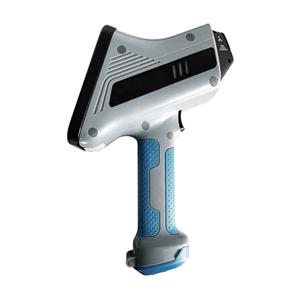
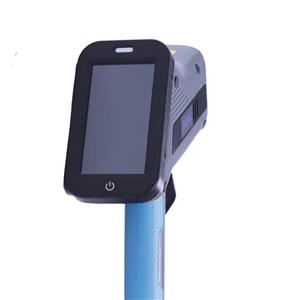
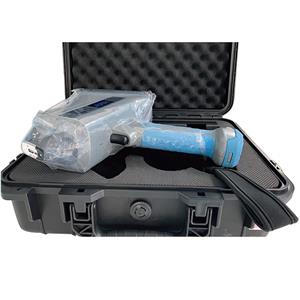
Handheld XRF spectrometers from Peny Scientific Instruments (Nantong) Co., Ltd. address these pain points head-on. Our devices provide laboratory-grade accuracy in a portable package, enabling on-the-spot analysis in seconds.
For slow lab analysis: Our handheld XRF delivers results in 1-2 seconds for alloy identification and 10-30 seconds for precise elemental quantification. This eliminates the wait for lab results, allowing immediate decision-making. For the scrap recycling facility, this means sorting material as it arrives, increasing throughput by 30% and reducing lab fees by 90%.
For inaccurate material identification: With advanced detectors and algorithms, our spectrometers can distinguish between similar alloys, such as 6061 and 7075 aluminum, with >99% accuracy. This prevents costly mistakes and ensures safety. The aerospace supplier in Toulouse implemented our devices at receiving inspection and reduced misidentification incidents to zero, saving an estimated €1.5 million annually.
For regulatory compliance: Our handheld XRF can screen for restricted substances like lead, cadmium, and mercury, providing immediate pass/fail results. The electronics manufacturer in Shenzhen now verifies compliance at goods-in, cutting documentation time by 70% and avoiding fines. The device generates digital records that integrate with their ERP system, streamlining reporting.
Customer Success Stories
Case 1: Metal Recycling in Chicago, USA
Mike Johnson, Operations Manager at Windy City Recycling, was struggling with slow turnaround. After adopting our handheld XRF, they increased sorting speed by 40% and reduced lab costs by $120,000 per year. Mike says, "The speed and accuracy of Peny's XRF have transformed our operation. We can now process 20 tons per hour with confidence."
Case 2: Aerospace Supplier in Toulouse, France
Jean-Luc Picard, Quality Director at AeroParts SAS, faced a recall crisis. With our XRF, they achieved 100% incoming material verification, eliminating misidentification. Jean-Luc comments, "Peny's XRF is our first line of defense. It's reliable and easy to use, even for non-technical staff."
Case 3: Electronics Manufacturer in Shenzhen, China
Li Wei, Procurement Manager at Shenzhen Electronics, needed to ensure RoHS compliance. Our XRF reduced compliance testing time from days to minutes. Li Wei states, "We now screen every batch with Peny's XRF, and our compliance rate is 100%. The cost savings are significant."
Case 4: Automotive Parts Manufacturer in Stuttgart, Germany
Hans Müller, Production Engineer at AutoTech GmbH, used our XRF to verify incoming steel and aluminum. They reduced material mix-ups by 95% and saved €200,000 annually. Hans says, "The device is robust and the results are consistent. We trust it completely."
Case 5: Mining Company in Perth, Australia
Sarah Thompson, Geologist at Outback Mining, uses our XRF for ore analysis. It increased exploration efficiency by 50% and reduced assay costs by 60%. Sarah remarks, "Peny's XRF is a game-changer for field analysis. It's tough and reliable."
Applications and Partnerships
Handheld XRF spectrometers are used across diverse industries: scrap recycling, aerospace, automotive, electronics, mining, and even art conservation. For instance, in scrap recycling, they enable rapid alloy sorting; in aerospace, they ensure material integrity; in electronics, they verify RoHS compliance.
Peny Scientific Instruments (Nantong) Co., Ltd. has established strategic partnerships with leading distributors and OEMs globally. For example, we supply our XRF analyzers to major scrap recycling chains in the US and Europe, and our devices are integrated into quality control lines of automotive suppliers. These partnerships are built on trust and proven performance, as evidenced by repeat orders and long-term contracts.
FAQ
Q1: How does handheld XRF compare to laboratory XRF in terms of accuracy?
A: Handheld XRF has advanced significantly. Modern devices like ours use silicon drift detectors (SDD) and sophisticated algorithms to achieve accuracy comparable to lab-based systems for most elements in metal alloys. For critical applications, we recommend periodic lab verification, but for routine screening and sorting, handheld XRF is highly reliable, with typical precision of ±0.1% for major elements.
Q2: Can handheld XRF analyze light elements like magnesium and aluminum?
A: Yes, but with some limitations. Light elements (Mg, Al, Si) have low X-ray fluorescence yield and are easily attenuated in air. Our spectrometers use helium purge or vacuum options to enhance light element detection. For aluminum alloys, we can accurately quantify Mg, Al, and Si, which is crucial for alloy identification.
Q3: What are the radiation safety requirements for handheld XRF?
A: Handheld XRF devices are regulated as radiation-emitting equipment. Our devices comply with international safety standards (e.g., IEC 62495) and feature safety interlocks, warning lights, and low-dose X-ray tubes. Proper training and adherence to local regulations are required. Typically, the radiation exposure is minimal when used as directed, and many jurisdictions require registration of the device.
Q4: How do you ensure the XRF results are not affected by surface contamination or coatings?
A: Surface contamination can affect results. We recommend cleaning the sample surface to bare metal. Our devices have a built-in camera and small spot size to target clean areas. For coated samples, we can use fundamental parameters (FP) to correct for coating thickness, but for best accuracy, remove coatings if possible.
Q5: What is the typical lifespan of the X-ray tube and detector?
A: Our X-ray tubes are designed for long life, typically 5-10 years with normal use. The detector (SDD) also has a long lifespan, but it can be damaged by physical shock or extreme temperatures. We offer service plans and replacement parts to ensure minimal downtime. Regular maintenance and proper handling extend the life of these components.
Conclusion and Call to Action
Handheld XRF spectrometers are more than just gadgets; they are essential tools that save time, money, and reputations. By providing rapid, accurate, and on-site analysis, they empower industries to make informed decisions instantly. Whether you're in recycling, aerospace, electronics, or mining, Peny Scientific Instruments (Nantong) Co., Ltd. has a handheld XRF solution tailored to your needs.
Ready to learn more? Contact our sales engineers today to discuss your specific application, or download our comprehensive technical white paper on handheld XRF for metal analysis. Don't let material uncertainty slow you down—embrace the power of handheld XRF.