Why Is Handheld XRF Crucial for Alloy Analysis?
Introduction: The Alloy Identification Dilemma
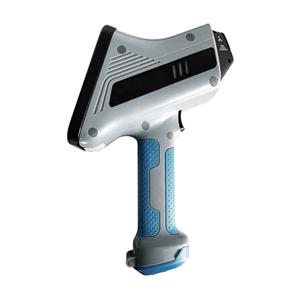
Picture this: you're on a construction site, and a shipment of stainless steel pipes arrives. The paperwork says 316L, but your gut tells you something's off. Without a quick, reliable way to verify, you either accept the risk or send samples to a lab—costing days of delay. This is where a Handheld XRF Spectrometer becomes your best friend. In seconds, it tells you the elemental composition, confirming whether the material meets specifications. No guesswork, no delays. In this blog, we'll explore why handheld XRF is indispensable for alloy analysis, backed by real-world pain points, solutions, and stories from the field.
Industry Pain Points: When Guesswork Costs Millions
Pain Point 1: Material Mix-Ups in Manufacturing
In high-volume manufacturing, using the wrong alloy can lead to catastrophic failures. For example, a German automotive parts supplier accidentally used 304 stainless steel instead of 316 in exhaust systems. The result? Corrosion failures within months, leading to a recall costing over €2 million. The root cause: no on-site verification. Traditional methods like sending samples to a lab took 3-5 days, disrupting production schedules.
Pain Point 2: Scrap Metal Sorting Inefficiency
Scrap yards face a constant challenge: quickly sorting alloys to maximize resale value. A UK-based recycling facility was losing £50,000 annually due to misclassified metals. Workers relied on visual inspection and magnets, which often failed to distinguish between similar-looking alloys like 304 and 316 stainless steel. The cost of errors added up: rejected loads, downgraded prices, and wasted labor.
Pain Point 3: Regulatory Compliance and Safety Risks
In aerospace and oil & gas, material certification is non-negotiable. A US-based aerospace component manufacturer faced audits requiring full traceability of alloy grades. Without in-house analysis, they relied on mill certificates, which are sometimes falsified. A single non-compliant part could ground an aircraft or cause a pipeline leak, resulting in fines upwards of $1 million and reputational damage.
Solutions: How Handheld XRF Eliminates Uncertainty
Solution for Pain Point 1: Instant Alloy Verification
Handheld XRF spectrometers provide lab-grade elemental analysis in seconds. With a point-and-shoot interface, operators can verify alloy grades on the spot. For the automotive supplier, implementing handheld XRF from Peny Scientific Instruments (Nantong) Co., Ltd. reduced material verification time from days to seconds, eliminating mix-ups and saving an estimated €1.5 million annually in recall avoidance and production efficiency.
Solution for Pain Point 2: Fast, Accurate Scrap Sorting
Handheld XRF enables scrap yards to sort alloys with precision. The UK recycling facility adopted our handheld XRF models, which distinguish between 304 and 316 stainless steel instantly. Sorting accuracy improved to 99.5%, increasing resale value by £80,000 per year. The device's lightweight design and long battery life allowed continuous use in the yard, even in harsh weather.
Solution for Pain Point 3: On-Site Compliance Verification
For regulated industries, handheld XRF provides documented proof of alloy composition. The aerospace manufacturer integrated handheld XRF into their receiving inspection, enabling 100% material verification. Audit trails are automatically generated, ensuring compliance with AMS and ASTM standards. This proactive approach eliminated the risk of non-compliant parts and reduced audit preparation time by 70%.
Customer Success Stories: Real Results from the Field
Case Study 1: Schmidt Metalltechnik, Germany
Schmidt Metalltechnik, a precision machining company, struggled with material verification for critical components. After implementing Peny Scientific Instruments' handheld XRF, they reduced inspection time by 85% and eliminated material mix-ups. "The handheld XRF paid for itself in three months," says Production Manager Klaus Meier. "We now verify every incoming batch with confidence."
Case Study 2: MetalPro Recycling, UK
MetalPro Recycling, a scrap metal processor, faced challenges in sorting complex alloys. With our handheld XRF, they achieved 99.5% sorting accuracy, increasing monthly revenue by £30,000. "The device is rugged and reliable—even our newest workers can use it effectively," remarks Operations Director Sarah Thompson.
Case Study 3: AeroComponents Inc., USA

AeroComponents Inc., an aerospace supplier, needed to ensure material compliance for FAA audits. After adopting our handheld XRF, they passed audits with zero findings and reduced inspection costs by 40%. "The XRF data is indisputable; it's become our first line of defense," says Quality Manager James Rodriguez.
Case Study 4: Precision Alloys, Japan
Precision Alloys, a manufacturer of specialty alloys, used handheld XRF to verify incoming raw materials. They reduced reject rates from 5% to 0.5%, saving ¥20 million annually. "The accuracy and speed of Peny's XRF are unmatched," notes Procurement Head Yuki Tanaka.
Case Study 5: OilTech Services, Canada
OilTech Services, an oil & gas maintenance provider, used handheld XRF to verify pipe grades in the field. This prevented a potential pipeline failure due to incorrect alloy installation, saving an estimated $2 million in downtime and repairs. "The XRF is a game-changer for field inspections," says Field Supervisor Mike Johnson.
Applications and Partnerships: Trusted by Industry Leaders
Handheld XRF spectrometers are widely used in:
- Metal Manufacturing: Incoming material verification, quality control, and alloy grade confirmation.
- Scrap Recycling: Fast sorting of ferrous and non-ferrous alloys to maximize value.
- Aerospace & Automotive: Compliance with stringent material specifications.
- Oil & Gas: Positive Material Identification (PMI) for pipes, valves, and welds.
- Precious Metals: Assaying gold, silver, and platinum alloys.
Peny Scientific Instruments (Nantong) Co., Ltd. collaborates closely with distributors and OEM partners globally. Our handheld XRF devices are trusted by leading procurement managers and engineers for their reliability and accuracy. By partnering with Peny, businesses gain access to cutting-edge technology backed by responsive local support.
FAQ: Engineers and Procurement Managers Ask
Q1: How does handheld XRF compare to laboratory analysis in terms of accuracy?
A: Handheld XRF provides accuracy comparable to lab-based XRF for most alloy elements, with typical precision within 0.1-0.5%. For critical applications, we recommend periodic lab verification, but for routine sorting and verification, handheld XRF is sufficient and far faster.
Q2: Can handheld XRF analyze light elements like carbon or aluminum?
A: Standard handheld XRF is limited for light elements (Mg, Al, Si, P, S) due to atmospheric interference. However, our models with helium purge or vacuum systems can measure aluminum and silicon effectively. Carbon analysis typically requires OES or combustion methods.
Q3: What are the safety considerations for using handheld XRF?
A: Our devices are designed with safety in mind: they feature shielded sources, warning lights, and fail-safe shutters. With proper training, radiation exposure is minimal—well below occupational limits. We provide comprehensive safety training and documentation.
Q4: How do I ensure regulatory compliance with handheld XRF data?
A: Our handheld XRF generates tamper-proof data logs that can be exported for audits. We also provide calibration certificates traceable to NIST standards, ensuring your measurements meet ISO 17025 requirements.
Q5: What is the typical lifespan and maintenance cost of a handheld XRF?
A: With proper care, our handheld XRF units last 8-10 years. Annual maintenance costs are minimal (approximately 5% of the purchase price), covering calibration and wear parts. We offer service plans to ensure uptime.
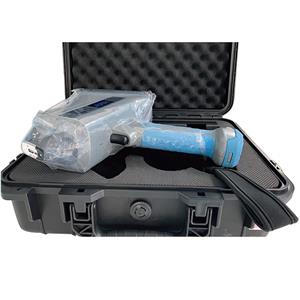
Conclusion: Take Control of Your Material Quality
Handheld XRF spectrometers are no longer a luxury—they're a necessity for industries where material integrity is paramount. From preventing costly mix-ups to ensuring regulatory compliance, the benefits are clear. Don't let uncertainty cost you millions. Contact Peny Scientific Instruments (Nantong) Co., Ltd. today to request a free technical whitepaper or speak with our sales engineers about how handheld XRF can transform your quality control processes.