Why Is Direct Reading Spectrometer Vital for High-End Manufacturing?
In the world of high-end manufacturing, where precision and reliability are non-negotiable, the Direct Reading Spectrometer (DRS) has emerged as an indispensable tool. Imagine a production line where a single batch of alloy is off by a fraction of a percent, leading to catastrophic failure in aerospace components. This scenario is all too common without the right analytical technology. But what makes the Direct Reading Spectrometer so vital? In short, it provides rapid, accurate, and simultaneous analysis of multiple elements in metals and alloys, ensuring material integrity and process efficiency. This blog delves into why DRS is a game-changer for industries ranging from automotive to aerospace, and how companies like Peny Scientific Instruments (Nantong) Co., Ltd. are leading the charge.
Pain Point 1: Time-Consuming and Inaccurate Material Verification
In traditional manufacturing, verifying the composition of incoming raw materials often involves sending samples to off-site labs, which can take days. This delay disrupts production schedules and increases costs. Worse, if the material is out of spec, it may not be discovered until after machining, leading to scrapped parts and wasted resources. For instance, a manufacturer of critical aircraft fasteners might receive a batch of titanium alloy that appears correct but contains trace impurities that compromise strength. The cost? Not just the material, but potential recalls, safety risks, and reputational damage.
Pain Point 2: Lack of Real-Time Process Control
In high-volume production, such as steelmaking or aluminum casting, the ability to adjust alloy composition on the fly is crucial. Without real-time feedback, operators are essentially flying blind, leading to inconsistencies, off-grade material, and energy waste. A foundry might produce a heat of stainless steel that misses the chromium target, resulting in a entire batch being downgraded or remelted. The financial impact can be staggering, with each heat costing tens of thousands of dollars.
Pain Point 3: Stringent Regulatory Compliance and Quality Assurance
Industries like aerospace, nuclear, and medical devices are governed by strict standards (e.g., ASTM, ISO, AMS) that mandate precise material certification. Failure to comply can result in fines, loss of certification, and exclusion from supply chains. Manual or outdated analytical methods often struggle to meet these demands, especially when documentation and traceability are required. A medical implant manufacturer, for example, must prove that every batch of titanium meets ISO 5832-3, and any deviation can lead to product recalls and legal liability.
Solution: The Direct Reading Spectrometer Advantage
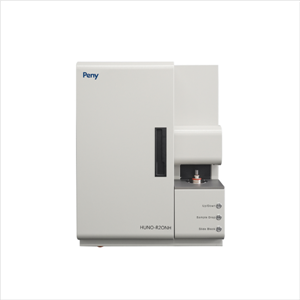
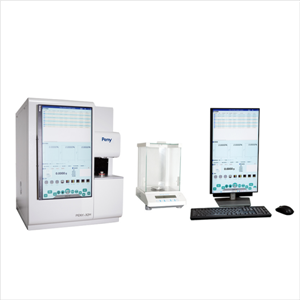
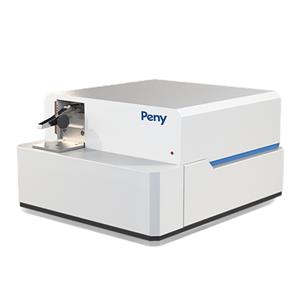
Direct Reading Spectrometers, also known as optical emission spectrometers (OES), address these pain points head-on. By using an electric arc or spark to excite atoms in a sample, the DRS measures the emitted light's wavelengths to determine elemental concentrations. Modern units, like those from Peny Scientific Instruments (Nantong) Co., Ltd., offer:
- Rapid Analysis: Results in seconds, enabling real-time decision-making.
- High Precision: Detection limits down to ppm for many elements, ensuring compliance with tight specs.
- Multi-Element Capability: Simultaneous analysis of up to 30 elements, from carbon to uranium.
- Robust Design: Suitable for harsh production environments, with minimal sample preparation.
For Pain Point 1, a DRS on-site eliminates shipping delays and provides immediate pass/fail data. For Pain Point 2, it integrates with process control systems to automatically adjust alloy additions. For Pain Point 3, it generates digital records for full traceability, simplifying audits. The return on investment is clear: reduced scrap, lower energy costs, and enhanced quality reputation.
Customer Cases: Real Results with Direct Reading Spectrometers
Case 1: AeroTech Alloys, Seattle, USA
AeroTech Alloys supplies titanium forgings for commercial aircraft. They faced frequent batch rejections due to vanadium content variations. After installing a Peny Scientific DRS, they reduced rejection rates from 8% to 0.5%, saving $2.3 million annually. "The DRS gave us the confidence to certify every batch in-house, cutting lead times by 30%," said Michael Chen, Quality Manager.
Case 2: Steel Dynamics, Dortmund, Germany
This steelmaker struggled with energy consumption in their electric arc furnace. By using a DRS for real-time melt analysis, they optimized alloy additions, reducing energy use by 12% and increasing yield by 5%. "We now hit our chemistry targets on the first try, thanks to the fast feedback from the spectrometer," remarked Klaus Müller, Production Director.
Case 3: MedTech Implants, Birmingham, UK
MedTech Implants produces orthopedic implants from cobalt-chrome alloys. They needed to comply with ISO 5832-4. With a Peny Scientific DRS, they achieved 100% compliance and reduced testing time from 24 hours to 15 minutes. "The DRS is a workhorse in our lab; it's reliable and easy to use," said Sarah Thompson, Lab Manager.
Case 4: AutoParts Manufacturing, Detroit, USA
This automotive supplier used aluminum castings for engine blocks. Inclusions caused porosity and scrapped parts. A DRS helped them identify impurity sources, reducing scrap by 18% and saving $1.5 million per year. "We couldn't have solved this without the elemental mapping from the spectrometer," noted James Rodriguez, Process Engineer.
Case 5: Copper Alloys Inc., Shanghai, China
A producer of high-conductivity copper for electronics faced challenges with oxygen content. A Peny Scientific DRS enabled precise control, boosting conductivity by 3% and increasing customer satisfaction. "The DRS is our secret to consistent quality," said Li Wei, CEO.
Applications and Partnerships
Direct Reading Spectrometers are used across industries: aerospace (alloy verification), automotive (steel and aluminum analysis), electronics (solder and contact materials), and energy (nuclear components). Peny Scientific Instruments (Nantong) Co., Ltd. has partnered with major players like Boeing suppliers, ThyssenKrupp, and Siemens, providing customized solutions. Their spectrometers are also employed by research institutions and testing labs worldwide.
FAQ
Q1: How does a Direct Reading Spectrometer differ from XRF?
A1: DRS (OES) excels in analyzing light elements (C, S, P) and offers better precision for metals, while XRF is better for non-destructive testing and heavier elements. DRS is preferred for production control due to speed and accuracy.
Q2: What maintenance is required for a DRS?
A2: Regular cleaning of the spark stand, electrode changes, and argon supply checks. Annual professional service ensures optimal performance. Peny Scientific offers remote diagnostics and service contracts.
Q3: Can a DRS analyze non-metals?
A3: It's primarily for metals and alloys. For non-metals, other techniques like ICP-MS are needed. However, some DRS can analyze certain ceramics with special sample prep.
Q4: What is the typical detection limit?
A4: Depends on element and matrix, but often in the low ppm range (e.g., 1-10 ppm for many elements). High-end models can reach sub-ppm.
Q5: How do I choose the right DRS for my application?
A5: Consider elements, matrix, sample size, and throughput. Consult with experts like Peny Scientific to match specifications to your needs.
Conclusion and Call to Action
In high-end manufacturing, a Direct Reading Spectrometer is not just a tool—it's a strategic asset. It mitigates risks, enhances quality, and drives profitability. By choosing a trusted partner like Peny Scientific Instruments (Nantong) Co., Ltd., you gain access to cutting-edge technology and support. For a deeper dive, download our white paper "Optimizing Material Analysis with Direct Reading Spectrometers" or contact our sales engineers for a consultation. Don't let material uncertainties undermine your success—embrace the precision of DRS.