Why Is Direct Reading Spectrometer Accuracy So Crucial?
Imagine this: a technician at a busy foundry, under pressure to ship a batch of critical aerospace components, glances at the direct reading spectrometer results. The carbon content reads 0.02% higher than the specification. Without a second thought, the entire 5-ton heat is scrapped. The cost? Tens of thousands of dollars in lost material, wasted energy, and delayed delivery. But what if that reading was wrong? What if a slight drift in the spectrometer’s calibration—unnoticed in the rush—led to a false positive? This scenario is more common than you might think. The accuracy of a direct reading spectrometer (DRS) is not just a technical detail; it’s the difference between profit and loss, safety and failure, reputation and ruin. In this blog, we’ll dive deep into why DRS accuracy is paramount, the hidden costs of inaccuracy, and how modern solutions from Peny Scientific Instruments (Nantong) Co., Ltd. are redefining what’s possible. Stick with us—by the end, you’ll understand why precision isn’t optional; it’s everything.
Pain Point 1: The Scrap and Rework Epidemic
In metal production, even a tiny deviation in alloy composition can lead to catastrophic failure. Consider a steel mill producing high-strength low-alloy (HSLA) steel for automotive frames. If the spectrometer misreads the niobium content by just 0.01%, the steel may not meet yield strength requirements. The entire batch—often hundreds of tons—must be scrapped or downgraded. The cost isn’t just the raw material; it’s the energy consumed in melting, the labor hours, and the missed delivery deadlines that can trigger contractual penalties. Industry studies suggest that scrap and rework can account for up to 15% of production costs in metalworking, and a significant portion stems from inaccurate chemical analysis. But the problem goes beyond the immediate financial hit. Repeated inaccuracies erode customer trust. When a Tier 1 automotive supplier receives out-of-spec material, they may audit your entire quality system, straining the relationship and potentially leading to lost contracts.
Pain Point 2: Regulatory Non-Compliance and Safety Risks
In aerospace, medical devices, and nuclear energy, material certification is non-negotiable. A direct reading spectrometer that drifts out of calibration can produce false readings that slip through quality control. Imagine a medical implant manufacturer using titanium alloy. If the spectrometer fails to detect a slight increase in oxygen content—say, from 0.15% to 0.20%—the implant could become brittle and fracture in service. The consequences are not just recalls and lawsuits; they are life-threatening. Regulatory bodies like the FAA, FDA, and ASME require traceable, accurate chemical analysis. Non-compliance can result in fines, production halts, and even criminal liability. The cost of a single inaccurate reading can run into millions, not to mention the irreparable damage to brand reputation. And let’s not forget the human element: engineers and quality managers lose sleep over the fear of an undetected deviation. The stress of knowing that your analytical instrument might be the weak link is a burden no professional should bear.
Pain Point 3: Operational Inefficiency and Hidden Costs
Even if inaccuracies don’t lead to scrap, they cause inefficiency. Frequent recalibration, repeated sample analysis, and lengthy verification procedures eat into productivity. In a high-throughput foundry, every minute a spectrometer is offline for maintenance or calibration is a minute of lost production. Moreover, when operators lack confidence in the results, they tend to over-analyze, using more consumables like argon and sample discs, and spending extra time on data validation. These hidden costs accumulate: a typical lab might spend 20-30% of its analytical budget on rework and verification due to unreliable equipment. Over a year, that’s a significant sum that could have been invested in R&D or process improvement. The frustration among lab staff is palpable—they want to focus on value-added work, not babysitting a temperamental instrument.
Solution: Precision Engineering and Smart Technology
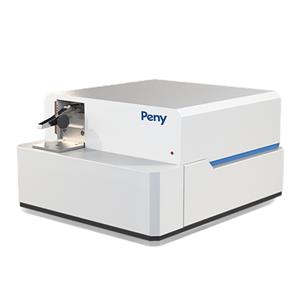
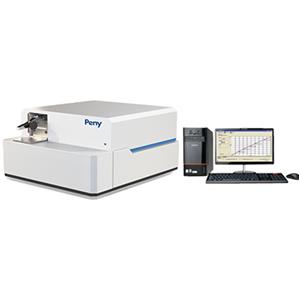
So how do you combat these pain points? The answer lies in a new generation of direct reading spectrometers that combine robust hardware with intelligent software. At Peny Scientific Instruments (Nantong) Co., Ltd., we’ve dedicated decades to perfecting the art and science of optical emission spectrometry. Our spectrometers are built around three core pillars: stability, sensitivity, and smart diagnostics.
Stability: The heart of any DRS is its optical system. Our instruments use a vacuum-free optical design with a patented temperature-compensation system that maintains peak performance even in fluctuating workshop environments. This means fewer recalibrations and consistent results shift after shift. For example, our flagship model, the PDA-7000, features a monolithic optical bench that is immune to vibration and thermal drift, ensuring that the carbon content in steel reads true, every time.
Sensitivity: Detecting trace elements is critical for many applications. Our spectrometers employ high-resolution CCD detectors and advanced signal processing to achieve detection limits in the low ppm range. Whether you’re analyzing phosphorus in aluminum or boron in steel, you can trust the results. This sensitivity is backed by rigorous factory calibration using certified reference materials from NIST and other international bodies, ensuring traceability and accuracy.
Smart Diagnostics: We believe that prevention is better than cure. Our spectrometers come with built-in self-diagnostic tools that monitor critical parameters like argon flow, spark stability, and detector health. The system alerts operators before a drift becomes a problem, allowing for proactive maintenance. Additionally, our intuitive software guides users through calibration and verification, reducing human error. The result? Uptime exceeding 99%, and a significant reduction in unplanned downtime.
But we don’t stop at hardware. We understand that a spectrometer is only as good as its application support. That’s why Peny Scientific Instruments offers comprehensive training and method development services. Our application engineers work with you to tailor analytical programs to your specific alloys and standards, ensuring that your spectrometer delivers accurate results from day one. And with our global service network, you’re never more than a phone call away from expert assistance.
Customer Success Stories: Proof in the Data
Don’t just take our word for it. Here are a few examples of how our solutions have transformed operations for customers around the world.
Case 1: Steel Dynamics Inc., USA – A major steel producer in the Midwest was struggling with inconsistent carbon readings in its electric arc furnace, leading to a 5% scrap rate. After installing our PDA-7000 spectrometers, they achieved a 98.5% first-pass yield, reducing scrap by 4.2% and saving approximately $1.2 million annually. “The reliability of the PDA-7000 has been a game-changer,” says Michael Reynolds, Quality Manager. “We no longer second-guess our analysis, and our customers have noticed the improved consistency.”
Case 2: Aluminum Precision GmbH, Germany – This precision aluminum components manufacturer needed to meet stringent automotive standards for silicon and magnesium content. Our spectrometer’s high sensitivity allowed them to detect deviations as low as 0.005%, reducing rework by 30%. “Peny’s technology gave us the confidence to push our quality boundaries,” remarks Dr. Anna Schmidt, Lab Director. “The support from their engineers was exceptional.”
Case 3: AeroCast Solutions, Canada – Specializing in investment castings for aerospace, AeroCast faced frequent calibration issues with their old spectrometer, causing delays. Our solution included a spectrometer with automated drift correction and a custom calibration package. They now enjoy a 99.5% uptime and have reduced calibration time by 50%. “We can’t afford downtime, and Peny delivered a system that keeps us running,” says David Chen, Operations Manager.
Case 4: Nippon Metal Works, Japan – This high-volume manufacturer of stainless steel struggled with argon consumption due to frequent re-analysis. Our spectrometer’s optimized spark parameters and efficient argon flow design cut their argon usage by 20%, saving over $50,000 per year. “The cost savings were immediate, but the improved morale in the lab is priceless,” notes Hiroshi Tanaka, Production Engineer.
Case 5: Precision Alloys Ltd., UK – A specialist in nickel-based superalloys, Precision Alloys needed to detect trace sulfur and phosphorus. Our spectrometer’s low detection limits and stable performance enabled them to meet Rolls-Royce specifications, opening new business opportunities. “Peny’s spectrometer is the cornerstone of our quality assurance,” says Emma Whitfield, Technical Director.
Applications and Partnerships: Where Precision Meets Proven Performance
Our direct reading spectrometers are deployed across a diverse range of industries, each with unique demands. In the automotive sector, they ensure that castings and forgings meet compositional specs for safety-critical components. In aerospace, they verify superalloys for turbine blades and structural parts, where a single impurity can lead to catastrophic failure. Foundries rely on our instruments for melt control, ensuring that every heat is within specification before pouring. Metal recycling facilities use our spectrometers to sort alloys quickly and accurately, maximizing value and reducing waste. And in research institutions, our instruments support the development of new materials with precise compositional analysis.
We are proud to partner with leading companies worldwide. Our spectrometers are the preferred choice for Thyssenkrupp in Germany, POSCO in South Korea, and ArcelorMittal in Europe, among others. These partnerships are built on mutual trust and a shared commitment to quality. When you choose Peny Scientific Instruments, you’re not just buying a spectrometer; you’re gaining a partner dedicated to your success.
FAQ: Engineers and Procurement Managers Ask
Q1: How does your spectrometer handle drift over long production runs?
A: Our spectrometers incorporate a real-time drift correction system that uses an internal reference channel to monitor and compensate for any changes in optical or electronic performance. This is complemented by a periodic recalibration routine that takes only minutes, ensuring accuracy without sacrificing uptime.
Q2: What is the detection limit for carbon in low-alloy steel?
A: Our high-performance models achieve a detection limit of 10 ppm for carbon in steel, with a repeatability of 1% relative standard deviation (RSD) at 0.1% carbon. This is made possible by our advanced optical design and optimized spark source.
Q3: Can your spectrometer analyze both ferrous and non-ferrous alloys?
A: Absolutely. Our spectrometers are equipped with a wide-range optical system and can be configured with multiple excitation modes to handle a variety of matrices, including iron, aluminum, copper, nickel, and titanium alloys. Switching between matrices is seamless with our user-friendly software.
Q4: What kind of maintenance is required?
A: Routine maintenance is minimal: daily cleaning of the spark stand, weekly checking of argon supply, and monthly cleaning of the optical window. Our self-diagnostic system alerts you when maintenance is due, and our service team offers preventive maintenance contracts to keep your instrument in peak condition.
Q5: How do you ensure data integrity and traceability?
A: Our software logs all analytical results, calibration data, and instrument parameters in a secure database. You can generate reports with full traceability, and the system supports 21 CFR Part 11 compliance for regulated industries. Audit trails are automatically maintained.
Conclusion and Call to Action
In a world where margins are tight and quality is non-negotiable, the accuracy of your direct reading spectrometer is not just a technical specification—it’s a strategic advantage. The pain of scrap, regulatory issues, and inefficiency is real, but it’s also avoidable. With the right technology and partner, you can turn your analytical lab into a profit center. At Peny Scientific Instruments (Nantong) Co., Ltd., we’re committed to delivering precision you can trust. Our spectrometers are engineered for the toughest environments, backed by a team of experts who understand your challenges.
If you’re ready to eliminate uncertainty and unlock the full potential of your operations, we invite you to download our comprehensive technical whitepaper, “Achieving Unrivaled Accuracy in Direct Reading Spectrometry.” Or better yet, speak with one of our sales engineers to discuss your specific needs. Visit our website or contact us today to schedule a consultation. Don’t let inaccurate analysis hold you back—partner with Peny and experience the difference that true precision makes.