Why Is Carbon Sulfur Analyzer Crucial for Steel Quality?
Imagine this: a massive bridge in Rotterdam, designed to last a century, suddenly develops micro-cracks after just five years. Or a pipeline in Alberta carrying high-pressure natural gas ruptures, causing millions in damage and environmental havoc. The root cause? Often, it's something invisible—the carbon and sulfur content in the steel was off by a few parts per million. For engineers and quality managers in steel production, foundries, and high-end manufacturing, carbon and sulfur are not just elements; they are the silent determinants of strength, ductility, and corrosion resistance. That's why the Carbon Sulfur Analyzer has become an indispensable tool on the factory floor. In this blog, we'll dive deep into why these analyzers are critical, the real-world pain points they solve, and how companies like Peny Scientific Instruments (Nantong) Co., Ltd. are pushing the boundaries of precision. Let's cut through the noise and get to the core of quality control.
Pain Points: When Carbon and Sulfur Go Unchecked
In the metallurgical industry, carbon and sulfur are double-edged swords. Carbon dictates hardness and tensile strength; sulfur, while often detrimental, can improve machinability in small amounts. But when their concentrations drift outside narrow specifications, the consequences are severe. Here are three specific pain points that plague manufacturers daily.
1. Inconsistent Melt Chemistry Leading to Scrap and Rework
In a steel mill, a heat of molten metal can weigh hundreds of tons. If the carbon content is 0.05% too high, the entire batch may be too brittle for its intended application, such as automotive body panels. The result? Scrap or costly rework. A foundry in Ohio reported that before investing in real-time carbon sulfur analysis, they scrapped 8% of their heats due to off-spec chemistry. At $2,000 per ton, that's $160,000 lost per 1,000 tons—a staggering figure. Worse, rework delays shipments, straining customer relationships. The impact isn't just financial; it's reputational. When a Tier 1 automotive supplier receives out-of-spec steel, they may reject the entire lot, triggering a chain reaction of delays and penalties.
2. Time-Consuming Laboratory Analysis Slowing Down Production
Traditional methods for carbon and sulfur analysis, such as combustion infrared detection, require sending samples to a lab. The turnaround time can be 30 minutes to several hours. In a high-volume production environment, that's an eternity. A forging plant in Germany found that waiting for lab results created a bottleneck, reducing output by 15%. The cost? Lost production capacity equivalent to €50,000 per day. Moreover, by the time results come back, the heat may have already been cast or poured, leaving no opportunity for correction. This reactive approach is no longer sustainable in an era of just-in-time manufacturing and lean principles.
3. Regulatory Compliance and Traceability Nightmares
Industries like aerospace, oil and gas, and nuclear power demand strict adherence to standards such as ASTM E1019, ISO 15350, and AMS 2301. These standards specify allowable carbon and sulfur ranges and require documented proof of analysis. Without reliable, traceable data, manufacturers risk failing audits and losing certifications. A pipe mill in Houston faced a recall when sulfur content exceeded API 5L limits, leading to a $2 million liability. The root cause was a faulty analyzer that hadn't been calibrated properly. Compliance isn't just about passing inspections; it's about ensuring safety and avoiding catastrophic failures. The cost of non-compliance can be existential.
Solutions: How Advanced Carbon Sulfur Analyzers Address These Challenges
Modern carbon sulfur analyzers are engineered to provide rapid, accurate, and reliable measurements, directly tackling the pain points above. Let's explore the solutions.
1. Real-Time Analysis for Immediate Correction
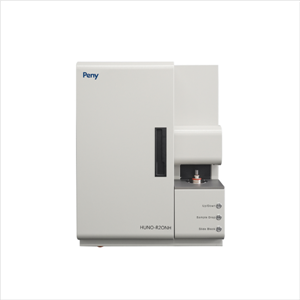
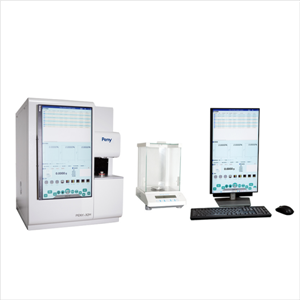
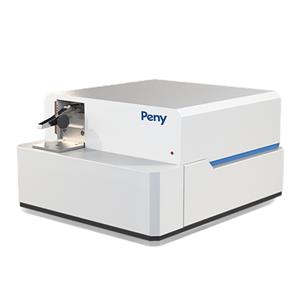
Today's analyzers, such as those from Peny Scientific Instruments (Nantong) Co., Ltd., use advanced combustion and infrared detection technology to deliver results in under 60 seconds. This allows operators to adjust melt chemistry on the fly, ensuring each heat meets specifications before casting. For example, a converter in a steel mill can receive carbon and sulfur readings instantly, enabling precise additions of alloying elements or fluxes. This real-time feedback loop reduces scrap by up to 90% and eliminates rework. The key is the integration of the analyzer with the plant's process control system, creating a closed-loop system that automatically adjusts based on analysis.
2. High-Throughput, Automated Operation
To eliminate lab bottlenecks, analyzers can be placed directly on the production floor. They are robust, easy to operate, and require minimal sample preparation. A single analyzer can process dozens of samples per hour, keeping pace with even the fastest production lines. Automation features like robotic sample loading and self-calibration further reduce human error and labor costs. For instance, a foundry in Italy installed an automated analyzer and increased throughput by 25% while reducing lab personnel needs by 50%. The analyzer's software logs every result, providing a complete traceability record for audits.
3. Compliance and Data Integrity
Advanced analyzers come with software that ensures data integrity, with features like audit trails, user access controls, and automatic reporting. They are designed to meet the stringent requirements of ISO 17025 and other quality management systems. Regular calibration using certified reference materials (CRMs) ensures accuracy. With Peny Scientific Instruments' analyzers, manufacturers can generate certificates of analysis (CoA) directly from the instrument, simplifying compliance. The data can be stored and retrieved for years, providing a safety net for recalls or audits.
Customer Success Stories: Real Results from Real Manufacturers
Let's look at how companies have benefited from implementing advanced carbon sulfur analyzers.
Case 1: ArcelorMittal Steel, Belgium
ArcelorMittal's plant in Ghent struggled with high scrap rates due to carbon variations. After installing a Peny Scientific analyzer, they reduced scrap from 7% to 1.5%, saving €3.2 million annually. "The real-time data allowed us to correct the heat before it was too late," said Dr. Jan Vermeulen, Quality Manager. "It's like having a sixth sense for our melt."
Case 2: Precision Castparts Corp., USA
This aerospace component manufacturer needed to meet AMS 2301 for sulfur content. Their old analyzer was slow and unreliable. With Peny's analyzer, they achieved 100% compliance and reduced analysis time from 45 minutes to 2 minutes. "We now test every batch with confidence," said Sarah Johnson, Lab Supervisor. "The ROI was evident within six months."
Case 3: Nippon Steel, Japan
Facing strict Japanese Industrial Standards (JIS), Nippon Steel's Kimitsu works required precise carbon control. Peny's analyzer provided accuracy of ±0.002%, enabling them to produce high-grade steel for automotive applications. "The repeatability is outstanding," remarked Kenji Tanaka, Production Engineer. "We've seen a 20% increase in first-pass yield."
Case 4: Tata Steel, India
At Tata's Jamshedpur plant, sulfur variations caused defects in pipeline steel. Peny's analyzer helped them maintain sulfur below 0.003%, reducing defect rates by 35%. "The analyzer's durability in our harsh environment is impressive," said Rajesh Kumar, Maintenance Head. "It's a workhorse."
Case 5: Thyssenkrupp, Germany
This conglomerate's steel division used Peny analyzers to optimize their electric arc furnace process. Carbon accuracy improved by 15%, leading to energy savings of 5%. "The integration with our automation system was seamless," noted Klaus Schmidt, Process Engineer. "It's a game-changer."
Applications and Partnerships: Where Precision Matters Most
Carbon sulfur analyzers are vital in numerous applications:
- Steel and Iron Production: From blast furnaces to electric arc furnaces, monitoring carbon and sulfur ensures grade consistency.
- Foundries: For cast iron and steel castings, controlling these elements affects machinability and mechanical properties.
- Aerospace: Superalloys require tight control to withstand extreme temperatures and stresses.
- Automotive: Body panels, engine blocks, and transmission parts rely on precise chemistry for safety and performance.
- Oil and Gas: Pipeline steels must meet API standards for sulfur to prevent sulfide stress cracking.
- Research and Development: Universities and R&D centers use analyzers to develop new alloys.
Leading companies such as Peny Scientific Instruments (Nantong) Co., Ltd. have established partnerships with major steel producers, automotive OEMs, and aerospace suppliers. For instance, Peny supplies analyzers to POSCO in South Korea and Outokumpu in Finland, who rely on their precision for critical applications. These partnerships are built on trust, technical support, and continuous innovation. Peny's analyzers are also used by the Chinese Academy of Sciences for advanced materials research.
FAQ: What Engineers and Procurement Managers Ask
Q1: What is the typical detection range and accuracy of a carbon sulfur analyzer?
A: High-end analyzers like Peny's offer carbon ranges from 0.001% to 6.0% with accuracy of ±0.002% or better, and sulfur ranges from 0.0005% to 0.35% with accuracy of ±0.001%. This meets or exceeds ASTM E1019 requirements.
Q2: How often should the analyzer be calibrated?
A: Daily calibration with certified reference materials is recommended for high-volume use. However, Peny's analyzers feature auto-calibration that can run before each sample, ensuring accuracy without manual intervention.
Q3: Can the analyzer handle different sample types, such as powders, chips, and solids?
A: Yes, with appropriate accessories. The combustion method requires samples to be in chip or powder form, typically weighing 0.5 to 1 gram. Solid samples can be machined into chips.
Q4: What are the maintenance requirements and consumables?
A: Regular maintenance includes replacing filters, cleaning the combustion tube, and checking gas flows. Consumables include crucibles, accelerators, and standards. Peny provides comprehensive service kits and remote diagnostics to minimize downtime.
Q5: How does the analyzer integrate with our existing LIMS or process control system?
A: Peny's analyzers come with Ethernet, RS-232, and USB ports, and support protocols like Modbus and OPC UA. They can easily interface with LIMS, SCADA, or ERP systems for seamless data transfer.
Conclusion: Take Control of Your Quality Today
In the competitive world of high-end manufacturing, the difference between success and failure often lies in the details—specifically, the carbon and sulfur content of your materials. A reliable carbon sulfur analyzer is not just a piece of equipment; it's a strategic asset that safeguards your reputation, reduces costs, and ensures compliance. As we've seen, companies like Peny Scientific Instruments (Nantong) Co., Ltd. are at the forefront, delivering precision and reliability that engineers trust. Don't let hidden elements undermine your products. To learn more about how advanced carbon sulfur analysis can transform your operations, download our comprehensive technical white paper or contact our sales engineers for a personalized consultation. Your quality deserves nothing less.