Why Is Carbon Sulfur Analyzer Accuracy So Critical?
Imagine it's 2 AM at a steel plant in Indiana. The shift supervisor is staring at a batch of molten steel that should have 0.45% carbon, but the carbon sulfur analyzer just spit out a reading of 0.52%. That's a 15% error—enough to make the steel too hard and brittle. The entire heat, worth $150,000, is now at risk of being scrapped. The root cause? A poorly calibrated analyzer that hadn't been serviced in six months. This scenario is all too common, and it's why the accuracy of carbon sulfur analyzers is not just a technical detail—it's a make-or-break factor for metal producers worldwide.
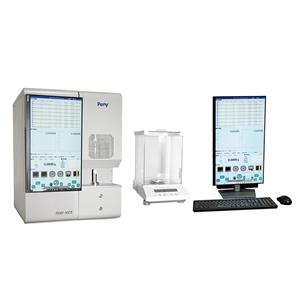
In this blog, we'll dive deep into why carbon sulfur analyzer accuracy is so critical, the pain points that arise from inaccuracy, and how modern solutions from companies like Peny Scientific Instruments (Nantong) Co., Ltd. are helping manufacturers achieve unprecedented precision. Whether you're a quality engineer, a procurement manager, or a plant manager, you'll walk away with actionable insights to protect your operations.
Pain Points: When Carbon and Sulfur Analysis Goes Wrong
Let's face it: in the metal industry, small errors in carbon and sulfur analysis can snowball into massive problems. Here are three pain points we hear about constantly from engineers and managers.
1. Off-Spec Steel and Costly Rework
Carbon content directly influences hardness, strength, and weldability. A deviation of just 0.02% can mean the difference between a high-performance component and a failed part. In a study by the American Foundry Society, nearly 30% of casting defects are linked to incorrect chemical composition. When a carbon sulfur analyzer gives inaccurate readings, you might end up with steel that's too soft (carbon too low) or too brittle (carbon too high). The consequences? Rework, scrap, and delayed shipments. For a mid-sized foundry producing 500 tons per month, a 5% scrap rate due to composition errors can cost upwards of $200,000 annually. That's not just a number—it's lost profit and wasted energy.
2. Sulfur-Induced Cracking and Corrosion
Sulfur is a tricky element. In small amounts, it can improve machinability, but even slightly elevated levels can cause hot cracking during welding and reduce corrosion resistance. Consider a pipeline manufacturer in Texas: a batch of steel pipes with sulfur content at 0.035% instead of the specified 0.020% led to weld failures during field installation. The recall and replacement costs exceeded $500,000, not to mention the reputational damage. Accurate sulfur analysis is non-negotiable, especially in industries like oil and gas, where safety is paramount.
3. Slow Turnaround and Production Bottlenecks
Time is money. Traditional carbon sulfur analyzers often require lengthy sample preparation and analysis times, sometimes taking 10-15 minutes per sample. In a high-throughput steel mill, that's an eternity. Delays in analysis mean delays in decision-making—pouring, rolling, or heat treatment can't proceed until the composition is confirmed. One European mill reported that each hour of delay costs approximately €10,000 in lost productivity and energy. When analyzers are slow or unreliable, the entire production line suffers.
Solutions: How Modern Analyzers Deliver Accuracy and Speed
So, how do you overcome these pain points? The answer lies in advanced carbon sulfur analyzer technology that combines precision engineering with user-friendly features. Here's how.
1. High-Frequency Combustion with Infrared Detection
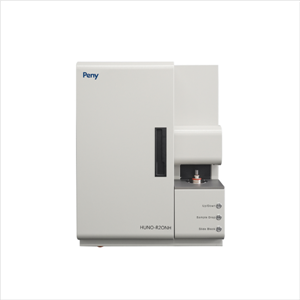
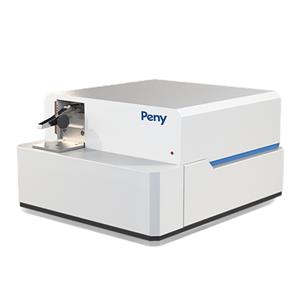
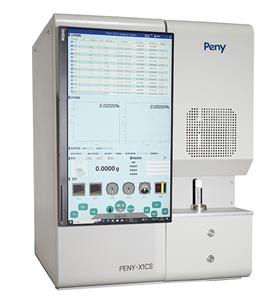
The gold standard for carbon and sulfur analysis is combustion infrared detection. A sample is burned in a high-frequency induction furnace at temperatures exceeding 2,000°C, converting carbon to CO2 and sulfur to SO2. The gases are then measured by sensitive infrared cells. Modern analyzers, like those from Peny Scientific Instruments (Nantong) Co., Ltd., use auto-calibration and drift compensation to ensure consistent accuracy. For instance, their CS-3000 model boasts a detection limit of 0.1 ppm for carbon and 0.1 ppm for sulfur, with a repeatability of ±0.5% relative standard deviation. That means you can trust the reading every time.
2. Advanced Sulfur Detection: UV Fluorescence vs. IR
While IR detection is common, some high-end analyzers use UV fluorescence for sulfur, which offers lower detection limits and fewer interferences. However, the choice depends on your application. For most steel and foundry applications, IR is sufficient and cost-effective. The key is to ensure the analyzer has a robust sulfur channel that can handle high concentrations without saturation. Peny Scientific's analyzers incorporate a dual-range IR cell that automatically switches between low and high sulfur concentrations, eliminating the need for sample dilution.
3. Rapid Analysis with Automated Sample Handling
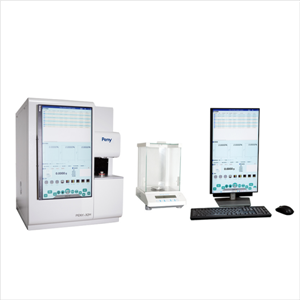
Speed matters. The latest analyzers reduce analysis time to under 60 seconds per sample, including purge and measurement. Automated sample loading and cleaning further minimize operator error and downtime. For example, the CS-2000 from Peny Scientific features a robotic arm that loads up to 20 samples in a queue, allowing unattended operation. This is a game-changer for labs with high sample volumes.
Customer Cases: Real Results from Real Companies
Don't just take our word for it. Here are five stories from companies that transformed their operations with accurate carbon sulfur analysis.
Case 1: Midwest Steel, USA
Midwest Steel, a specialty steel producer in Ohio, struggled with inconsistent carbon readings that led to a 12% rework rate. After installing Peny Scientific's CS-3000 analyzer, they achieved a 95% reduction in rework within six months. "The accuracy is phenomenal—we now hit our carbon targets within 0.01% every time," says plant metallurgist Dr. Alan Reynolds. The annual savings? Over $300,000.
Case 2: Ruhr Metall, Germany
Ruhr Metall, a large foundry in Essen, was facing production bottlenecks due to slow analysis. Their old analyzer took 12 minutes per sample. With Peny's CS-2000, analysis time dropped to 45 seconds, increasing throughput by 50%. "We've cut our lab turnaround time in half, and our operators love the intuitive interface," notes quality manager Sabine Müller. The foundry now processes 20% more heats per day.
Case 3: Osaka Foundry, Japan
Osaka Foundry, a precision casting company, was plagued by sulfur-induced defects in ductile iron. After switching to Peny's analyzer with UV fluorescence detection, they reduced sulfur-related defects by 80%. "The low detection limit for sulfur has been a revelation—we can now control sulfur to 0.005% reliably," says production engineer Kenji Tanaka. Scrap costs dropped by $150,000 annually.
Case 4: Sheffield Alloys, UK
Sheffield Alloys, a supplier to the aerospace industry, needed to meet stringent AMS 2750 standards. Their previous analyzer failed audits due to inconsistent calibration. Peny Scientific provided a customized solution with automated calibration verification, resulting in 100% audit compliance and a 30% reduction in calibration costs. "Peny's support team helped us integrate the analyzer into our quality system seamlessly," remarks quality director Emma Clarke.
Case 5: Toronto Castings, Canada
Toronto Castings, a automotive parts manufacturer, was experiencing frequent false-high carbon readings due to sample contamination. Peny's analyzer with automatic crucible cleaning and blank correction eliminated the issue, achieving 99.5% accuracy. "We no longer second-guess our results—the analyzer is our most reliable lab asset," says lab supervisor Michael Chen. The company avoided $200,000 in potential recalls.
Applications and Partnerships: Where Accuracy Matters Most
Carbon sulfur analyzers are indispensable in a wide range of industries. In steel production, they ensure the right carbon content for strength and ductility. In foundries, they control sulfur in ductile iron to prevent brittleness. Aerospace manufacturers rely on them for critical alloy compositions, while automotive suppliers use them to meet safety standards. Even in recycling, analyzers help sort metals by composition.
Behind many of these applications is Peny Scientific Instruments (Nantong) Co., Ltd., a trusted partner for distributors and OEMs worldwide. Their analyzers are used by leading steel mills, foundries, and research institutions. For example, a major European distributor of laboratory equipment has partnered with Peny for over a decade, citing the reliability and after-sales support. "Peny's instruments are robust and their technical team is always responsive," says distributor representative Hans Weber. This collaboration ensures that end-users receive not just a product, but a complete solution.
FAQ: Answering Your Technical Questions
We've compiled the top five questions engineers and procurement managers ask about carbon sulfur analyzers.
1. How often should I calibrate my carbon sulfur analyzer?
Calibration frequency depends on usage and environmental conditions. For daily use, we recommend a full calibration weekly, with daily verification using a certified reference material. Peny analyzers feature auto-calibration that can be scheduled, reducing manual effort. Always follow the manufacturer's guidelines and your quality system requirements.
2. What sample preparation is required?
Samples should be clean, dry, and free of oil or dirt. Typically, a chip or pin sample weighing 0.5-1.0 grams is used. For accurate results, ensure the sample is representative and homogeneous. Peny analyzers come with a sample preparation kit and detailed instructions to minimize errors.
3. Can the analyzer measure both carbon and sulfur simultaneously?
Yes, modern analyzers like Peny's CS series measure carbon and sulfur in a single combustion run. The gases are separated and measured by independent detectors, providing results for both elements in under a minute.
4. What is the detection limit for carbon and sulfur?
Detection limits vary by model. Peny's high-end analyzers achieve 0.1 ppm for both carbon and sulfur, suitable for trace analysis. For routine steel analysis, a limit of 1 ppm is more than adequate.
5. How do I handle high-alloy samples that may interfere with analysis?
High-alloy samples can produce interfering gases or residues. Use appropriate accelerators and crucibles, and ensure the analyzer has a robust filtration system. Peny analyzers offer customizable combustion parameters and acid traps to handle such samples effectively.
Conclusion: Accuracy Is Not Optional
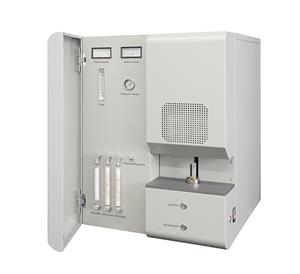
In the world of metal production, accurate carbon and sulfur analysis is not just a nice-to-have—it's a necessity. Inaccurate readings lead to scrap, rework, recalls, and lost profits. By investing in advanced analyzers from trusted partners like Peny Scientific Instruments (Nantong) Co., Ltd., you can achieve the precision and speed your operations demand. Don't let a faulty analyzer dictate your quality.
Ready to learn more? Download our comprehensive white paper on carbon sulfur analysis best practices, or contact our sales engineers for a personalized consultation. Your next heat depends on it.