Why Is Carbon Sulfur Analysis Critical for Steel Quality?
In the bustling world of steel production, a single misstep in carbon and sulfur analysis can cascade into catastrophic failures. Imagine a high-rise construction project where the structural steel beams fail unexpectedly due to incorrect carbon content, or an automotive manufacturer facing massive recalls because sulfur levels exceeded specifications. These scenarios are not just hypothetical; they are real risks that engineers and procurement managers face daily. The answer to mitigating these risks lies in precise, reliable carbon sulfur analysis, and that's where advanced analyzers from companies like Peny Scientific Instruments (Nantong) Co., Ltd. come into play.
Why Carbon and Sulfur Matter
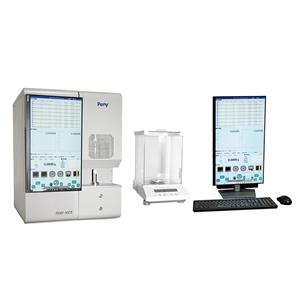
Carbon and sulfur are two of the most critical elements in steel and other alloys. Carbon influences hardness, strength, and ductility, while sulfur affects machinability and weldability. Even minor deviations from specified ranges can lead to significant changes in material properties. For instance, an increase in carbon content by just 0.01% can make steel more brittle, reducing its fatigue life. Similarly, elevated sulfur levels can cause hot shortness during rolling, leading to surface defects and scrap. Therefore, accurate determination of these elements is non-negotiable for quality assurance.
Pain Point 1: Inaccurate Measurements Leading to Material Failures
In industries such as aerospace and automotive, where safety is paramount, the consequences of inaccurate carbon sulfur analysis can be dire. Consider an aerospace component manufacturer that uses a legacy combustion analyzer with a detection limit of 50 ppm for sulfur. If the actual sulfur content is 30 ppm, the analyzer might report it as below detection limit, leading to acceptance of a batch that should be rejected. The result: parts that are prone to cracking under stress, potentially causing in-flight failures. The cost? Not just financial losses from recalls and liability, but also reputational damage and loss of certification.
In a more common scenario, a steel mill producing thousands of tons of steel per day might experience a drift in analyzer calibration. Without frequent verification, the mill could ship out tons of steel with carbon content outside the specification. When the downstream customer discovers the issue during fabrication, the entire batch must be returned, resulting in production delays, rework costs, and strained relationships. The cost of one such incident can easily exceed $100,000, not to mention the impact on the mill's reputation.
Pain Point 2: Time-Consuming Analysis Hindering Production Efficiency
In today's fast-paced manufacturing environment, every minute of downtime counts. Traditional carbon sulfur analyzers often require lengthy sample preparation and analysis times, sometimes taking 10-15 minutes per sample. In a high-volume steel plant, where hundreds of samples are tested daily, this can create bottlenecks. Operators might be tempted to skip analyses or reduce sample frequency, increasing the risk of out-of-spec material escaping. Alternatively, they might hold up production waiting for results, reducing throughput and increasing energy consumption. The cost of delayed analysis is significant: a typical electric arc furnace consumes about 500 kWh per ton of steel, so every hour of delay costs thousands of dollars in wasted energy and lost productivity.
Pain Point 3: Complex Operation and Maintenance Burden
Many carbon sulfur analyzers on the market are notoriously difficult to operate and maintain. They require highly trained technicians to handle intricate sample introduction systems, frequent calibration, and consumable replacement. In regions where skilled labor is scarce, this can lead to inconsistent results and high turnover. Moreover, the cost of consumables—such as crucibles, accelerators, and filters—can add up quickly. A mid-sized steel plant might spend $20,000 annually on consumables alone. When you factor in the downtime for maintenance and the potential for human error, the total cost of ownership skyrockets.
Solution 1: High-Precision Analyzers with Advanced Detection Systems
To address the issue of inaccurate measurements, Peny Scientific Instruments (Nantong) Co., Ltd. has developed carbon sulfur analyzers equipped with state-of-the-art non-dispersive infrared (NDIR) detection systems and high-sensitivity thermal conductivity detectors. These analyzers boast detection limits as low as 0.1 ppm for sulfur and 0.1 ppm for carbon, ensuring that even trace levels are accurately quantified. The use of NDIR for sulfur and carbon ensures minimal interference from other gases, providing reliable results even in complex matrices. Additionally, the analyzers feature automatic baseline correction and drift compensation, maintaining accuracy over extended periods without frequent recalibration.
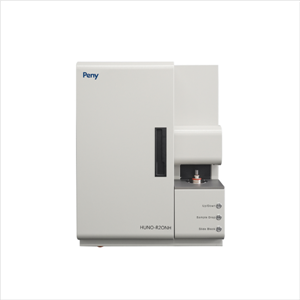
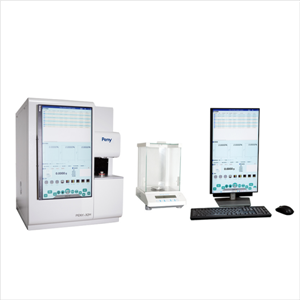
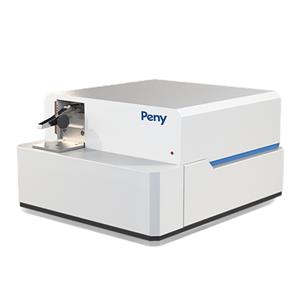
For example, the CS-9000 model from Peny Scientific Instruments incorporates a dual-range NDIR detector that can measure carbon from 0.001% to 6.00% and sulfur from 0.001% to 0.35% with a precision of ±0.0005%. This level of precision is crucial for meeting stringent industry standards such as ASTM E1019 and ISO 15350. By providing accurate data, manufacturers can confidently certify their materials, reducing the risk of field failures and recalls.
Solution 2: Rapid Analysis for High-Throughput Environments
Time is money, and Peny Scientific Instruments understands this. Their carbon sulfur analyzers are designed for speed without compromising accuracy. The CS-9000 can complete a full analysis cycle in under 60 seconds, including sample weighing, combustion, and detection. This is achieved through a high-efficiency combustion system that ensures complete sample oxidation and a fast-response NDIR detector. The autoloader option allows for continuous processing of up to 20 samples, further reducing operator involvement and turnaround time.
In a typical steel plant, this speed translates to significant productivity gains. For instance, if a plant tests 200 samples per day, reducing analysis time from 10 minutes to 1 minute per sample saves over 30 hours of operator time daily, which can be redirected to other quality control tasks. Moreover, faster feedback allows for immediate adjustments in the steelmaking process, minimizing the production of off-spec material. The payback period for upgrading to a rapid analyzer can be as short as six months, based on savings from reduced scrap and increased throughput.
Solution 3: User-Friendly Design and Low Maintenance
Peny Scientific Instruments has focused on simplifying the user experience. Their analyzers feature intuitive touchscreen interfaces with pre-loaded methods for common materials, reducing the need for specialized training. The sample introduction system uses a unique crucible design that minimizes dust and debris, extending the life of the combustion tube and reducing cleaning frequency. Consumables are designed for easy replacement without tools, and the software provides predictive maintenance alerts when components need attention.
To further reduce operating costs, Peny offers a consumable recycling program. Spent crucibles and accelerators can be returned for recycling, lowering both environmental impact and consumable expenses. Customers have reported a 30% reduction in consumable costs after switching to Peny's system. Additionally, the analyzers are built with robust components that can withstand the harsh environment of a steel mill, ensuring long-term reliability and uptime.
Customer Success Stories
Case 1: ArcelorMittal Steel Plant in Dunkirk, France
ArcelorMittal's Dunkirk facility, one of Europe's largest steel producers, struggled with inconsistent carbon analysis results from their legacy analyzers, leading to frequent rework and customer complaints. After implementing Peny's CS-9000 analyzers, they achieved a 25% reduction in analysis time and a 40% decrease in out-of-spec material. "The precision and reliability of Peny's analyzers have transformed our quality control," said Jean-Pierre Dubois, Quality Manager. "We now have confidence in every measurement, and our customers have noticed the difference."
Case 2: Nucor Corporation in Charlotte, North Carolina, USA
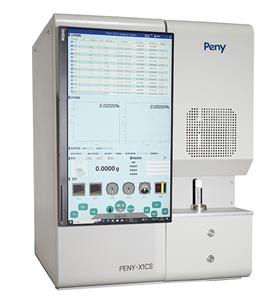
Nucor, a leading steel manufacturer in the US, faced challenges with sulfur analysis in their electric arc furnace operations. The high sulfur content in scrap metal often led to inconsistent results, causing delays in decision-making. Peny provided a customized solution with an enhanced combustion system that handles high-sulfur samples without interference. The result: a 30% improvement in sulfur analysis accuracy and a 20% increase in production efficiency. "Peny's technical team worked closely with us to tailor the analyzer to our specific needs," commented Michael Johnson, Process Engineer. "Their expertise and support have been invaluable."
Case 3: Tata Steel in Jamshedpur, India
Tata Steel's Jamshedpur plant, one of the largest in Asia, needed to upgrade their carbon sulfur analysis to meet stricter export quality standards. They chose Peny's CS-9000 due to its high precision and low detection limits. After installation, Tata Steel reported a 50% reduction in calibration frequency and a 35% decrease in consumable costs. "The reliability of Peny's analyzers has exceeded our expectations," said Rajesh Kumar, Senior Manager. "We have not experienced a single major breakdown in two years of operation."
Case 4: Thyssenkrupp Steel Europe in Duisburg, Germany
Thyssenkrupp, a global leader in steel production, required a carbon sulfur analyzer that could integrate seamlessly with their laboratory information management system (LIMS). Peny delivered a solution with open communication protocols and custom software interfaces. The integration allowed for automatic data transfer and real-time monitoring, reducing transcription errors and improving traceability. "The seamless integration with our LIMS has streamlined our workflow," noted Dr. Anna Schmidt, Laboratory Director. "Peny's willingness to customize their software to our needs demonstrates their commitment to customer satisfaction."
Case 5: POSCO in Pohang, South Korea
POSCO, one of the world's largest steelmakers, faced frequent downtime with their existing analyzers due to harsh operating conditions. Peny's analyzers, with their robust design and remote diagnostic capabilities, reduced unplanned downtime by 60%. "The remote support from Peny's engineers has been exceptional," said Kim Min-soo, Maintenance Supervisor. "They can diagnose issues quickly and guide us through fixes, minimizing production impact."
Applications and Partnerships
Peny Scientific Instruments' carbon sulfur analyzers are widely used in various applications, including:
- Steel and alloy production: Quality control of raw materials, process control, and final product certification.
- Foundries: Ensuring proper carbon and sulfur levels in cast irons and steels.
- Automotive and aerospace: Certification of critical components.
- Research and development: Material characterization and new alloy development.
- Environmental monitoring: Analysis of soils and wastes for carbon and sulfur content.
Peny has established strategic partnerships with key suppliers and distributors worldwide. For instance, they collaborate with a leading supplier of certified reference materials to ensure their analyzers are calibrated with traceable standards. Additionally, Peny partners with universities and research institutions to stay at the forefront of analytical technology. These partnerships enable Peny to offer comprehensive solutions that meet the diverse needs of their customers.
FAQ
Q1: What is the typical detection limit for carbon and sulfur in your analyzers?
A: Our CS-9000 model achieves detection limits of 0.1 ppm for both carbon and sulfur, thanks to advanced NDIR and thermal conductivity detectors. This is significantly lower than many conventional analyzers, which typically have detection limits of 1-5 ppm. The low detection limit is crucial for analyzing high-purity metals and alloys where trace elements can impact properties.
Q2: How do you ensure the accuracy of your analyzers over time?
A: We employ multiple strategies: automatic baseline correction, drift compensation, and periodic calibration using certified reference materials. The analyzers also feature a self-diagnostic system that monitors key parameters and alerts the user if any drift is detected. Additionally, we recommend annual preventive maintenance, which includes cleaning and replacing consumables, to ensure optimal performance.
Q3: Can your analyzers handle high-sulfur samples without interference?
A: Yes, our analyzers are designed with a patented combustion system that ensures complete oxidation of sulfur to SO2, and the NDIR detector is specific to SO2, minimizing interference from other gases. For samples with sulfur content up to 1%, we offer an optional high-range detector. We also provide application notes on analyzing high-sulfur materials such as pig iron and scrap.
Q4: What is the typical analysis time for a steel sample?
A: For a standard steel sample, the analysis time is approximately 60 seconds, including sample weighing, combustion, and detection. This is achieved through a high-efficiency combustion furnace and fast-response detectors. With the autoloader, multiple samples can be processed sequentially, further reducing operator time.
Q5: How do you support customers in remote locations?
A: We offer remote diagnostic capabilities through our analyzers' connectivity features. Our engineers can access the analyzer's log files and perform troubleshooting remotely. We also provide a comprehensive online knowledge base and video tutorials. For critical issues, we can dispatch a service engineer within 48 hours to most locations worldwide.
Conclusion
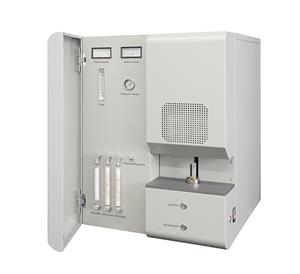
Accurate carbon sulfur analysis is not just a regulatory requirement; it is a cornerstone of quality and safety in steel and alloy production. The pain points of inaccurate measurements, slow analysis, and complex maintenance can be effectively addressed with advanced analyzers from Peny Scientific Instruments (Nantong) Co., Ltd. With a proven track record of success in leading steel companies worldwide, Peny combines cutting-edge technology with exceptional customer support. To learn more about how Peny can enhance your quality control, we invite you to download our technical white paper on carbon sulfur analysis or contact our sales engineers for a personalized consultation.