Why Handheld XRF Spectrometers?
Imagine this: You're on a factory floor in Stuttgart, and a shipment of stainless steel just arrived. Your production line is waiting, but you need to verify the alloy composition before you can start machining. The lab is backed up, and sending samples out means a two-day delay. You're stuck. What if you could get accurate elemental analysis in seconds, right there in your hand? That's exactly what a handheld XRF spectrometer does—and it's changing the game for manufacturers worldwide.
In this blog, we'll dive deep into why handheld XRF spectrometers have become indispensable tools for quality control, material verification, and regulatory compliance in high-end manufacturing. We'll explore the pain points that traditional methods create, how handheld XRF solves them, and share real-world success stories. By the end, you'll understand why companies like Peny Scientific Instruments (Nantong) Co., Ltd. are leading the charge in this technology.
The Pain Points: Where Traditional Analysis Falls Short
Before we look at solutions, let's examine the challenges that manufacturers face daily. These aren't just minor inconveniences—they cost time, money, and reputation.
Pain Point 1: Slow Turnaround from Lab-Based Analysis
In high-volume manufacturing, every minute of downtime counts. Traditional lab analysis, such as ICP-OES or wet chemistry, requires sample preparation, transport, and lengthy procedures. A typical turnaround can take hours or even days. For a company like a precision casting firm in Sheffield, UK, waiting for lab results means holding up the entire production line. The cost? Thousands of pounds per hour in lost productivity. Worse, if a non-conforming material slips through, it can lead to defective products, recalls, and damaged customer trust.
Pain Point 2: Inability to Test In-Process or On-Site
Many manufacturing processes require real-time material verification. For example, in scrap metal recycling, knowing the exact composition of incoming material determines its value and how it can be processed. Without on-the-spot analysis, recyclers must rely on visual inspection or send samples to a lab, which is inefficient and error-prone. Similarly, in aerospace or automotive, incoming inspection of metal alloys must be done quickly to avoid bottlenecks. Lab-based methods simply can't be deployed at the point of need.
Pain Point 3: Regulatory Compliance and Documentation Headaches
With increasingly stringent regulations like RoHS, REACH, and conflict minerals reporting, manufacturers must prove that their products meet environmental and safety standards. This requires detailed elemental analysis of components and materials. Without a fast, reliable method, companies risk non-compliance fines, market access restrictions, and reputational harm. For instance, a electronics manufacturer in California might need to verify that every batch of solder is lead-free. Relying on third-party labs is costly and slow, and the paperwork can be overwhelming.
The Solution: How Handheld XRF Spectrometers Revolutionize Material Analysis
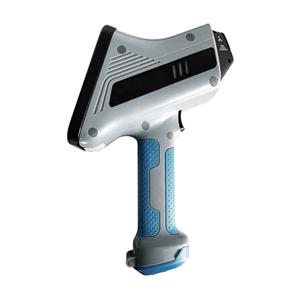
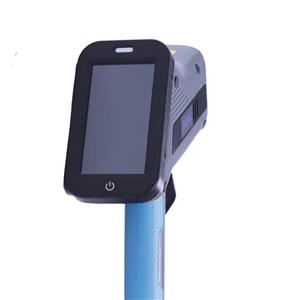
Handheld XRF (X-ray fluorescence) spectrometers are portable devices that provide rapid, non-destructive elemental analysis. They work by exposing a sample to X-rays, which cause the atoms to emit characteristic fluorescent X-rays. The detector then measures the energy and intensity of these emissions to identify and quantify elements from magnesium (Mg) to uranium (U). Here's how they address each pain point:
Solution to Pain Point 1: Instant Results at the Point of Need
With a handheld XRF spectrometer, you can analyze a material in seconds—typically 1-2 seconds for alloy identification, or up to 30 seconds for precise chemistry. This eliminates the wait for lab results. For the precision casting firm in Sheffield, they can now verify incoming stainless steel within minutes, releasing it to production immediately. The time savings translate directly to increased throughput and reduced work-in-progress inventory. Moreover, because the analysis is non-destructive, the sample remains usable, saving material costs.
Solution to Pain Point 2: True Portability and In-Situ Analysis
Handheld XRF devices are battery-powered and weigh around 1.5 kg, making them easy to carry to the factory floor, scrap yard, or even remote field locations. They can be used on curved surfaces, welds, and small parts with the aid of accessories. For scrap recyclers, this means they can quickly sort alloys, determine value, and avoid contamination. In aerospace, inspectors can verify the composition of critical components without disassembly. The ability to test in-process allows for immediate corrective action, reducing scrap and rework.
Solution to Pain Point 3: Seamless Compliance and Documentation
Modern handheld XRF spectrometers come with built-in software that flags restricted substances like lead, cadmium, mercury, and chromium. They can generate reports that include spectral data and pass/fail results, which can be exported for compliance documentation. For the electronics manufacturer in California, this means they can test every incoming lot of solder and components on the spot, ensuring RoHS compliance and maintaining a digital audit trail. The cost of ownership is quickly recovered by avoiding fines and ensuring smooth market access.
But not all handheld XRF spectrometers are created equal. Key technical differentiators include detector technology (SDD vs. Si-PIN), X-ray tube power, and software algorithms. For instance, a silicon drift detector (SDD) offers better resolution and faster count rates, enabling lower detection limits and higher precision. Companies like Peny Scientific Instruments (Nantong) Co., Ltd. have engineered their devices with advanced SDD technology and intuitive user interfaces, making them suitable for both novice operators and expert metallurgists.
Customer Success Stories: Real Results from Real Companies
Let's look at how businesses across different regions have benefited from implementing handheld XRF spectrometers from Peny Scientific Instruments.
Case Study 1: Precision Engineering in Germany
Schmidt Precision GmbH, a manufacturer of high-precision components for automotive and medical devices, struggled with incoming material verification. They were sending samples to an external lab, causing 24-hour delays. After adopting Peny's handheld XRF, they reduced verification time to under 5 minutes. Within six months, they reported a 15% increase in production throughput and a 20% reduction in material-related defects. "The handheld XRF from Peny has become our first line of defense against material mix-ups. It's fast, reliable, and our operators love it," said Dr. Klaus Weber, Quality Manager.
Case Study 2: Scrap Metal Recycling in the UK
GreenCycle Metals, a scrap recycling facility in Birmingham, UK, needed to sort complex alloy scrap quickly to maximize value. Manual sorting was error-prone and led to downgraded batches. With Peny's handheld XRF, they could identify alloy grades in seconds. This increased their sorting accuracy by 30% and boosted revenue from high-value alloys by 12%. "We've paid for the device in just four months through better sorting and fewer mistakes," remarked Sarah Thompson, Operations Director.
Case Study 3: Aerospace Component Manufacturing in the USA
AeroTech Components, based in Seattle, USA, supplies titanium and nickel-based parts for aircraft engines. They must verify that every incoming billet meets strict chemistry specifications. Previously, they relied on mill certificates and random lab checks, which occasionally missed non-conformances. After integrating Peny's handheld XRF into their receiving inspection, they achieved 100% material verification. They also reduced inspection time by 70% and avoided a potential recall that could have cost millions. "Peny's XRF gives us the confidence to release materials to production immediately. It's a game-changer for our quality system," said Michael Chen, Supply Chain Manager.
Case Study 4: Electronics Manufacturing in Japan
Tokyo-based Denshi Kogyo, a contract electronics manufacturer, needed to ensure RoHS compliance for exported products. They used to send samples to a lab for each batch, incurring costs and delays. With Peny's handheld XRF, they now perform 100% screening of incoming components and solder. They reduced compliance testing costs by 40% and eliminated the risk of non-compliant shipments. "The ability to test on the line has streamlined our entire compliance process," noted Yuki Tanaka, Environmental Compliance Officer.
Applications and Partnerships: Where Handheld XRF Makes a Difference
Handheld XRF spectrometers are versatile tools used across numerous industries. Here are some key applications:
1. Metal Alloy Identification and Quality Control
From stainless steel to superalloys, handheld XRF can identify alloy grades and verify composition against standards like ASTM, DIN, and JIS. This is critical for incoming inspection, process control, and final verification in industries such as automotive, aerospace, and oil & gas.
2. Scrap Metal Recycling and Sorting
Recyclers use handheld XRF to quickly sort aluminum, copper, brass, and other alloys, ensuring accurate grading and maximizing resale value. It also helps detect undesirable elements like lead or bismuth in aluminum scrap.
3. Environmental and RoHS Compliance
Handheld XRF is widely used to screen for hazardous substances in electronics, toys, and consumer goods. It can detect lead, cadmium, mercury, and other restricted elements, helping companies comply with RoHS, REACH, and CPSIA regulations.
4. Mining and Exploration
Geologists and miners use handheld XRF for rapid elemental analysis of ores and drill cores, guiding exploration and grade control decisions.
5. Art and Archaeology
Museums and conservators use handheld XRF to analyze pigments, metals, and ceramics non-destructively, aiding in authentication and restoration.
Peny Scientific Instruments (Nantong) Co., Ltd. has established strategic partnerships with key suppliers of X-ray tubes and detectors, ensuring the highest quality components in their devices. Additionally, they collaborate with distributors and service providers globally to offer local support. Their commitment to R&D has resulted in several patents and a reputation for reliability and accuracy.
FAQ: What Engineers and Procurement Managers Really Ask
Q1: How accurate is handheld XRF compared to lab-based analysis?
A: Handheld XRF provides excellent accuracy for most alloy and compliance screening applications. For major elements, accuracy is typically within 1-2% relative. However, for trace elements or light elements (e.g., carbon, oxygen), lab techniques like combustion analysis or ICP may be needed. The key is to use handheld XRF for rapid sorting and verification, and send only questionable samples to the lab. Modern devices with SDD detectors and advanced algorithms offer precision that rivals lab performance for many tasks.
Q2: Can handheld XRF measure light elements like magnesium, aluminum, and silicon?
A: Yes, but with limitations. Handheld XRF can measure elements down to magnesium (atomic number 12) in air, but for lighter elements like sodium, the X-rays are absorbed by air, so a vacuum or helium purge is required. For aluminum and silicon, most handheld XRF devices can provide semi-quantitative to quantitative results, especially with proper calibration. It's important to note that carbon cannot be measured by handheld XRF, so for carbon steel, other methods are needed.
Q3: What are the radiation safety requirements for operating a handheld XRF?
A: Handheld XRF devices are regulated as radiation-generating equipment. In most jurisdictions, they require registration and operators must receive radiation safety training. The devices are designed with safety features such as proximity sensors, warning lights, and shielded enclosures to minimize exposure. When used properly, the radiation dose to the operator is negligible. Peny Scientific Instruments provides comprehensive safety documentation and training materials to ensure compliance.
Q4: How do I choose the right handheld XRF for my application?
A: Consider the elements you need to analyze, the required detection limits, and the sample types. For alloy analysis, a device with an SDD detector and a rhodium anode X-ray tube is ideal. For RoHS screening, you need good sensitivity for cadmium and lead. Also consider ergonomics, software usability, and service support. Peny Scientific Instruments offers a range of models and can help you select the best fit based on your specific needs.
Q5: What is the typical lifespan and maintenance cost of a handheld XRF?
A: With proper care, a handheld XRF can last 5-10 years. The X-ray tube and detector are the most critical components; their lifespan depends on usage. Routine maintenance includes cleaning the window, calibrating with reference standards, and annual service. Peny Scientific Instruments offers service plans and replacement parts to keep your device in optimal condition. The cost of ownership is typically low compared to the value it delivers in quality assurance.
Conclusion and Call to Action
Handheld XRF spectrometers have transformed the way manufacturers verify materials, ensure compliance, and optimize processes. They provide speed, portability, and accuracy that lab-based methods cannot match. By addressing the pain points of slow turnaround, limited mobility, and compliance complexity, they deliver tangible ROI. Companies like Peny Scientific Instruments (Nantong) Co., Ltd. are at the forefront, offering robust, innovative solutions backed by global support.
If you're ready to explore how handheld XRF can benefit your operation, we invite you to download our comprehensive technical white paper, "The Ultimate Guide to Handheld XRF for High-End Manufacturing." Or, better yet, speak with one of our sales engineers to discuss your specific challenges. Contact Peny Scientific Instruments today and take the first step toward faster, smarter material analysis.