Why Does Your ICP Spectrometer Keep Drifting?
It’s 3 a.m. in a semiconductor fab in Hsinchu, Taiwan. A process engineer stares at the ICP spectrometer readout—the calibration curve has drifted again, and a batch of wafers worth $500,000 is on hold. She sighs, knowing the next two hours will be spent recalibrating, requalifying, and explaining the delay to management. This scenario is all too familiar in high-stakes manufacturing, where an Inductively Coupled Plasma Spectrometer (ICP) is the backbone of elemental analysis. But why does this critical instrument keep drifting? The answer lies in a complex interplay of plasma instability, sample introduction inefficiencies, and environmental factors. In this blog, we’ll dissect the root causes of ICP drift and show you how to achieve the stability your process demands.
Pain Point 1: Plasma Instability Due to RF Generator Aging
In many older ICP systems, the RF generator—the heart of the plasma—begins to degrade after years of service. This leads to fluctuating power output, causing the plasma to flicker and the analytical signal to drift. The consequences are severe: a major specialty chemicals producer in Ludwigshafen, Germany, reported that their ICP downtime due to plasma instability cost them €120,000 per month in lost production and rework. The cost isn’t just in downtime; it’s in the repeated recalibrations, the wasted high-purity gases, and the erosion of customer trust when delivery schedules slip.
Pain Point 2: Sample Introduction System Clogging and Memory Effects
Even with a stable plasma, the sample introduction system—nebulizer, spray chamber, and torch—can be a source of drift. High-matrix samples, such as brines or digested ores, tend to clog nebulizers and create memory effects, where residual analyte from a previous sample contaminates the next. A mining assay lab in Perth, Australia, struggled with this: their throughput dropped by 30% because each sample required extended washout times. The hidden cost? Overtime labor and delayed assay results that held up entire shipments.
Pain Point 3: Environmental Factors and Installation Oversights
ICP spectrometers are sensitive to temperature fluctuations, vibrations, and even electromagnetic interference. In one case, a manufacturer in Detroit, USA, installed their ICP next to a large compressor, causing vibrations that misaligned the optical system. The result was a systematic drift that took weeks to diagnose, costing $75,000 in service fees and lost productivity. These environmental issues are often overlooked during installation, leading to chronic instability.
Solution 1: Solid-State RF Generators with Active Feedback
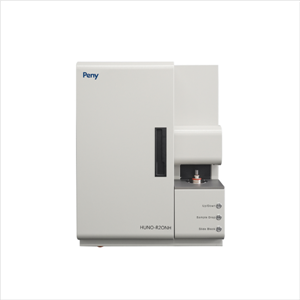
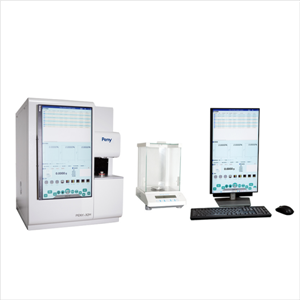
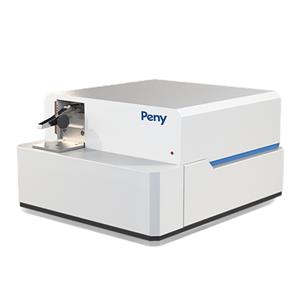
Modern ICP systems, like those from Peny Scientific Instruments (Nantong) Co., Ltd., use solid-state RF generators with real-time feedback control. These generators maintain plasma power within ±0.1% of setpoint, virtually eliminating drift from power fluctuations. The solid-state design also reduces maintenance—no more tuning capacitors or replacing aging tubes. For the German chemical producer, upgrading to a solid-state RF generator reduced drift by 85% and cut downtime from 20 hours per month to just 3.
Solution 2: Inert Sample Introduction Kits and Advanced Wash Protocols
To combat clogging and memory effects, Peny Scientific Instruments offers inert sample introduction kits with PFA nebulizers and cyclonic spray chambers. These components resist corrosive matrices and reduce washout times by up to 50%. Coupled with automated wash protocols that use dilute nitric acid and a surfactant, labs can achieve near-zero carryover. The Perth assay lab implemented this solution and saw throughput increase by 25%, with washout time dropping from 90 seconds to 45 seconds per sample.
Solution 3: Environmental Control and Vibration Isolation
Peny Scientific Instruments provides comprehensive installation support, including site surveys and environmental control recommendations. For the Detroit manufacturer, we recommended a vibration-isolation table and a dedicated HVAC unit to stabilize temperature within ±1°C. The drift disappeared, and the system has run uninterrupted for 18 months. Our engineers also offer remote diagnostics to monitor environmental parameters and alert users to potential issues before they cause drift.
Customer Case Studies
Case 1: Michael Chen, Fab Engineer, Hsinchu, Taiwan
Michael’s fab was plagued by drift during high-volume production. After switching to Peny’s ICP with solid-state RF generator, drift decreased from 5% to 0.3% over an 8-hour shift. “We’ve cut recalibration time by 70% and increased wafer throughput by 15%,” Michael says. “The stability is a game-changer.”
Case 2: Dr. Anna Schmidt, Lab Manager, Ludwigshafen, Germany
Dr. Schmidt’s lab faced €120,000 monthly losses from ICP downtime. Peny’s solution reduced downtime by 85%, saving €102,000 per month. “The ROI was evident within the first quarter,” she remarks. “Our operators now trust the results implicitly.”
Case 3: James O’Connor, Assay Lab Supervisor, Perth, Australia
James’s lab was bottlenecked by slow sample throughput. With Peny’s inert sample introduction kit, throughput rose by 25%, and washout time halved. “We’re now processing 200 more samples per day without adding staff,” James notes. “The reliability is outstanding.”
Case 4: Sarah Thompson, Quality Manager, Detroit, USA
Sarah’s team struggled with environmental drift. Peny’s vibration isolation and HVAC recommendations eliminated the issue. “We’ve had zero drift-related downtime in 18 months,” she says. “The support from Peny’s engineers was exceptional.”
Applications and Partnerships
Peny Scientific Instruments’ ICP spectrometers are used in diverse applications, from semiconductor manufacturing to environmental monitoring and mining assay labs. Our instruments are trusted by major players in these industries, including partnerships with leading semiconductor foundries and mining companies. For instance, we collaborate with a top-tier foundry in Taiwan to develop custom plasma stability protocols, and with an Australian mining giant to optimize sample introduction for high-matrix ores. These partnerships drive innovation and ensure our solutions meet the rigorous demands of high-volume production.
FAQ
Q1: How often should I recalibrate my ICP spectrometer to prevent drift?
A: With a stable system like Peny’s solid-state RF generator, full recalibration is typically needed only weekly, versus daily with older systems. However, we recommend daily performance checks using a check standard to monitor drift. If drift exceeds 2%, investigate immediately.
Q2: Can I use my existing sample introduction system with Peny’s ICP?
A: Yes, but we recommend upgrading to our inert kit for high-matrix samples. Our engineers can assess your current setup and suggest optimal components. In many cases, a simple switch to a PFA nebulizer can reduce drift significantly.
Q3: What environmental conditions are ideal for an ICP spectrometer?
A: Maintain temperature at 20-25°C with ±1°C stability, humidity below 60%, and isolate from vibrations. Avoid direct sunlight and electromagnetic interference. Peny provides site assessment tools and can recommend HVAC and vibration isolation solutions.
Q4: How does the solid-state RF generator compare to traditional tube generators in terms of lifetime cost?
A: Solid-state generators have a higher initial cost but last 2-3 times longer and require no tube replacements. Over five years, the total cost of ownership is 40% lower, not including the savings from reduced downtime.
Q5: What support does Peny offer for method development?
A: We offer method development services tailored to your matrices. Our applications team can help optimize plasma parameters, sample introduction, and calibration strategies. We also provide on-site training and remote support.
Conclusion and Call to Action
Drift in ICP spectrometry is not inevitable—it’s a symptom of outdated technology and overlooked environmental factors. By addressing plasma instability, sample introduction inefficiencies, and environmental control, you can achieve the stability your high-stakes manufacturing demands. Peny Scientific Instruments (Nantong) Co., Ltd. is committed to delivering solutions that eliminate drift and maximize uptime. To learn more about our advanced ICP spectrometers and how we can help your lab, download our technical white paper “Achieving Sub-1% Drift in ICP-OES” or contact our sales engineers for a consultation. Don’t let drift dictate your production schedule—take control today.