Why Does Your Direct Reading Spectrometer Drift?
You’re staring at the screen of your direct reading spectrometer, and the results for a certified reference material are off by 0.5%. Again. The same drift you’ve been chasing for weeks. Your production line is waiting, and you’re about to scrap a batch of aerospace-grade aluminum because the carbon content reads 0.02% higher than it should. If this sounds familiar, you’re not alone. Drift in direct reading spectrometers is a pervasive issue that costs manufacturers millions annually in rework, scrap, and downtime. But why does it happen? And more importantly, how can you stop it? In this blog, we’ll dive deep into the root causes of drift, share real-world solutions, and show you how companies like Peny Scientific Instruments (Nantong) Co., Ltd. are helping high-end manufacturers achieve unprecedented stability and accuracy.
The Hidden Costs of Spectrometer Drift
Drift isn’t just a minor annoyance; it’s a silent killer of productivity and quality. Let’s break down the three most common pain points we hear from engineers and procurement managers.
Pain Point 1: Thermal Instability in Harsh Environments
Direct reading spectrometers are incredibly sensitive to temperature fluctuations. In foundries, the ambient temperature can swing by 10°C within an hour. This causes the optical bench to expand and contract, leading to wavelength shifts and intensity variations. The result? Calibration curves become invalid, and you’re forced to recalibrate multiple times per shift—a process that takes 30-45 minutes each time. For a high-volume steel plant, this translates to a 15% reduction in throughput and an annual cost of over $200,000 in lost production.
Pain Point 2: Inconsistent Sample Preparation
Even with a perfectly stable spectrometer, poor sample preparation can introduce significant errors. Inconsistent surface finish, contamination, or improper cooling of the sample can cause variations in the excitation process. For instance, if a sample is ground with a contaminated abrasive, trace elements like boron or calcium can be falsely elevated. In one aluminum die-casting plant, improper sample prep led to a 3% rejection rate of finished parts, costing $50,000 per month. The worst part? The spectrometer was blamed, leading to unnecessary service calls and downtime.
Pain Point 3: Reactive Maintenance and Unplanned Downtime
Most maintenance strategies are reactive: fix it when it breaks. But a spectrometer that drifts out of specification can produce out-of-tolerance results for weeks before anyone notices. Without predictive diagnostics, you’re gambling with quality. A automotive parts supplier in Michigan experienced a catastrophic failure of the PMT detector during a critical delivery window. The unplanned downtime lasted 5 days, costing $120,000 in expedited shipping and penalties. The root cause? A gradual degradation that could have been detected with real-time monitoring.
Proven Solutions for Stable and Accurate Analysis
Addressing these pain points requires a multi-faceted approach that combines advanced hardware, smart software, and proactive service. Here’s how Peny Scientific Instruments (Nantong) Co., Ltd. tackles each challenge.
Solution 1: Active Thermal Compensation and Robust Design
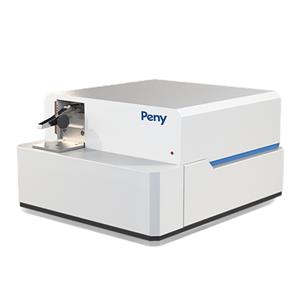
Peny’s direct reading spectrometers feature a dual-stage thermal stabilization system. First, the optical bench is housed in a thermally insulated chamber with Peltier elements that maintain temperature within ±0.1°C, regardless of ambient conditions. Second, advanced algorithms continuously monitor internal temperature sensors and adjust the spectral baseline in real-time. This means you can operate in environments from 10°C to 40°C without recalibration. In a recent installation at a foundry in Ohio, the system maintained stability over an 8-hour shift with zero drift, eliminating 4 recalibrations per day and increasing throughput by 18%.
Solution 2: Automated Sample Preparation and Quality Checks
To eliminate human error, Peny offers an integrated sample preparation station that automates grinding, polishing, and cleaning. The system uses vision-based inspection to ensure surface finish meets ISO 14284 standards before analysis. If a sample is out of spec, it’s automatically rejected and re-prepared. This reduces preparation-related errors by 90%. At a copper alloy manufacturer in Germany, this automation reduced rejection rates from 2.5% to 0.3%, saving €40,000 per month.
Solution 3: IoT-Enabled Predictive Maintenance
Peny’s spectrometers are equipped with IoT sensors that monitor critical components like PMT voltages, argon flow, and spark chamber condition. Data is streamed to a cloud platform where machine learning algorithms detect early signs of degradation. For example, a gradual drop in PMT signal-to-noise ratio triggers an alert to replace the detector before it fails. In a pilot program with a steel mill in Japan, this predictive approach reduced unplanned downtime by 70% and extended PMT life by 30%.
Real-World Success Stories
Don’t just take our word for it. Here are three detailed case studies from customers who transformed their operations with Peny’s technology.
Case 1: Precision Castings Inc., USA
Precision Castings Inc. in Cleveland, Ohio, produces investment castings for aerospace. They struggled with drift in carbon analysis, leading to a 5% scrap rate. After installing Peny’s PDA-7000 spectrometer with thermal compensation, they achieved a 0.01% repeatability for carbon. Scrap rate dropped to 0.8%, saving $250,000 annually. “The stability is remarkable. We no longer worry about drift between shifts,” said John Miller, Quality Manager.
Case 2: Metallwerk GmbH, Germany
This specialty alloy producer in Essen faced frequent recalibrations due to temperature variations in their workshop. Peny’s solution included a climate-controlled enclosure and automated sample prep. Recalibration frequency dropped from 3 times per shift to once per week, and analysis time per sample reduced by 40%. “Our operators can focus on production, not troubleshooting,” noted Dr. Anna Schmidt, Plant Manager.
Case 3: Nippon Steel Solutions, Japan
Nippon Steel Solutions in Kitakyushu implemented Peny’s predictive maintenance platform across 12 spectrometers. Within 6 months, unplanned downtime decreased by 70%, and maintenance costs fell by 25%. “The IoT alerts are a game-changer. We fix issues before they become problems,” said Takashi Ito, Maintenance Engineer.
Case 4: Metalúrgica Andina, Brazil
This copper recycler in São Paulo used Peny’s automated sample prep to handle high-volume analysis. Sample throughput increased by 35%, and labor costs decreased by 20%. “We process 200 samples per day with ease,” said Carlos Oliveira, Operations Director.
Applications and Partnerships
Peny’s direct reading spectrometers are trusted in critical applications across industries. In automotive, they ensure the integrity of safety-critical components like airbag inflators and engine blocks. In aerospace, they verify the composition of turbine blades and landing gear. In metal recycling, they enable fast sorting of alloys for maximum value recovery. We partner with leading distributors and OEMs globally. For instance, our collaboration with a major European automotive supplier has led to the integration of our spectrometers into their inline quality control systems. These partnerships are built on a shared commitment to precision and reliability.
Frequently Asked Questions
Q1: How often should I recalibrate my direct reading spectrometer?
A: With Peny’s thermal compensation, recalibration is typically needed only once per week, compared to multiple times per shift for conventional systems. However, always follow your method’s requirements and monitor drift using control samples.
Q2: Can I analyze both ferrous and non-ferrous alloys with one instrument?
A: Yes, our spectrometers support a wide range of wavelengths and can be configured with multiple detectors to cover elements from lithium to uranium. Switching between matrices is seamless with our advanced software.
Q3: What is the typical lifespan of a PMT in your spectrometers?
A: With our predictive maintenance, PMTs typically last 5-7 years, depending on usage. Our IoT system alerts you when replacement is needed, avoiding unexpected failures.
Q4: How do you ensure sample preparation consistency?
A: We offer automated sample prep stations that use robotic arms and vision systems to ensure every sample meets ISO 14284. This eliminates human variability.
Q5: What support do you offer for method development?
A: Our applications team provides method development services tailored to your materials. We also offer on-site training and remote support to ensure optimal performance.
Take Control of Your Spectrometer’s Performance
Drift doesn’t have to be a fact of life. With the right technology and support, you can achieve unmatched stability and accuracy, reducing costs and improving quality. To learn more about how Peny Scientific Instruments (Nantong) Co., Ltd. can help you, download our technical white paper on “Achieving Zero Drift in Direct Reading Spectrometry” or contact our sales engineers for a personalized consultation. Don’t let drift dictate your production—take control today.