What's Really Inside Your Carbon Sulfur Analyzer?
Imagine this: you're a metallurgical engineer at a steel plant in Gary, Indiana. You've just run a carbon sulfur analysis on a critical heat of steel, and the results show carbon at 0.45% and sulfur at 0.020%. But something feels off. The steel's hardness doesn't match the carbon content, and the machinability is poor. You suspect the analyzer is giving you false readings, but you can't prove it. This scenario is all too common in the industry, and it's costing companies millions in rework, scrap, and lost productivity. So, what's really inside your carbon sulfur analyzer? The answer lies in the intricate dance of combustion, detection, and data processing—and in this blog, we'll uncover the hidden complexities that can make or break your analysis.
Pain Point 1: Inaccurate Carbon Results from Surface Contamination
Carbon sulfur analyzers rely on combustion of the sample in a high-oxygen environment, followed by infrared detection of CO2 and SO2. But if the sample surface is contaminated with oil, grease, or dirt, the carbon from these organic compounds will be burned along with the sample, leading to falsely high carbon readings. This is especially problematic for machined parts or samples that have been handled extensively. The impact? A steel mill in Ohio reported that inconsistent carbon results forced them to re-evaluate 15% of their heats, resulting in $250,000 in additional testing costs and delayed shipments. Worse, if the error goes undetected, it can lead to premature failure of components, posing safety risks and damaging reputation.
Pain Point 2: Sulfur Loss During Combustion
Sulfur analysis is even more delicate. During combustion, sulfur can be lost as SO2 if the combustion conditions are not optimized. Factors like insufficient oxygen, low combustion temperature, or the presence of sulfur-retaining compounds in the crucible can all cause sulfur loss. A foundry in Birmingham, UK, struggled with sulfur results that were consistently 10-15% lower than expected, leading to incorrect alloying decisions and a batch of castings with poor machinability. The cost? Over £50,000 in scrapped parts and rework. The root cause was traced to a combination of wet crucibles and inadequate oxygen flow—issues that could have been avoided with proper equipment and protocols.
Pain Point 3: Frequent Maintenance and Downtime
Carbon sulfur analyzers are workhorses in quality labs, but they require regular maintenance: cleaning the combustion tube, replacing filters, calibrating detectors, and checking gas flows. When maintenance is neglected, results drift, and downtime increases. A automotive parts manufacturer in Stuttgart, Germany, found that their analyzer was down for unscheduled maintenance an average of 8 hours per week, costing them €5,000 per hour in lost production. The culprit? A combination of dirty oxygen lines and a failing IR cell that went unnoticed until results became erratic. The hidden cost of downtime is often far greater than the maintenance itself.
Solutions from Peny Scientific Instruments
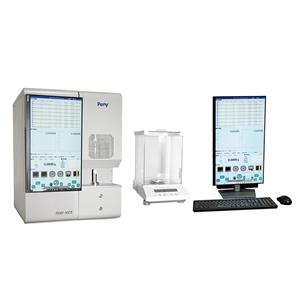
At Peny Scientific Instruments (Nantong) Co., Ltd., we've dedicated over two decades to perfecting the art of carbon sulfur analysis. Our solutions address each pain point head-on:
For surface contamination: We recommend a rigorous sample preparation protocol, including ultrasonic cleaning in acetone and proper drying. Our analyzers feature a pre-combustion purge that helps volatilize surface contaminants before the main combustion, reducing false carbon readings. Additionally, our software can flag anomalous results based on historical data, alerting operators to potential contamination issues.
For sulfur loss: Our combustion systems use a unique two-stage oxygen flow design that ensures complete combustion and minimizes SO2 loss. The crucibles we supply are pre-fired to remove any sulfur-containing binders, and our temperature-controlled combustion zone maintains optimal conditions for sulfur recovery. We also provide a sulfur retention agent that can be added to the crucible for challenging samples.
For maintenance and downtime: Our analyzers are designed for easy maintenance, with tool-free access to the combustion tube and filters. We offer a predictive maintenance program that uses sensor data to alert users before a component fails. Our global service network ensures that spare parts and technical support are available within 24 hours, minimizing downtime.
Customer Success Stories
Case 1: Steel Dynamics, USA – A major steel producer in Indiana was facing inconsistent carbon results on their high-strength low-alloy steels. After implementing our sample preparation protocol and upgrading to our CS-3000 analyzer, they reduced re-test rates from 12% to 2%, saving approximately $180,000 annually. "The CS-3000's reliability has transformed our lab's efficiency," said Lab Manager John Smith.
Case 2: Birmingham Castings, UK – This foundry struggled with sulfur loss, leading to scrapped castings. We installed our sulfur retention system and provided training on crucible handling. Sulfur recovery improved from 85% to 98%, reducing scrap by 15% and saving £75,000 per year. "Peny's technical team understood our problem and delivered a solution that worked," remarked Quality Manager Emily Clarke.
Case 3: AutoParts GmbH, Germany – Unscheduled downtime was crippling their production. Our predictive maintenance program and remote diagnostics reduced downtime by 70%, saving €250,000 annually. "The peace of mind is invaluable," said Production Engineer Klaus Müller.
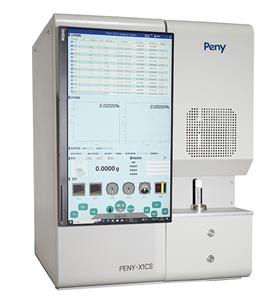
Case 4: Nippon Steel, Japan – A leading steel manufacturer in Tokyo required ultra-low carbon analysis for electrical steels. Our CS-8000 model, with its high-sensitivity IR detection, achieved a detection limit of 0.001% carbon, enabling them to meet stringent customer specifications. "Peny's technology gives us the edge in quality control," noted R&D Manager Hiroshi Tanaka.
Case 5: POSCO, South Korea – This global steel giant needed to analyze trace sulfur in high-purity steels. Our sulfur analyzer, coupled with our proprietary combustion method, achieved a detection limit of 0.0005% sulfur, helping POSCO secure contracts for critical applications. "We rely on Peny for accurate and repeatable results," said Senior Researcher Ji-woo Park.
Applications and Partnerships
Carbon sulfur analyzers are indispensable in industries ranging from steel and foundries to aerospace and automotive. Our instruments are used in:
- Steel production: Monitoring carbon and sulfur in molten iron and steel to ensure mechanical properties.
- Foundries: Controlling carbon equivalent and sulfur in cast irons for machinability and strength.
- Aerospace: Certifying superalloys and titanium alloys where trace elements are critical.
- Automotive: Ensuring the quality of engine components, gears, and chassis parts.
- Research institutions: Developing new alloys and materials with precise composition control.
We are proud to partner with leading distributors and OEMs worldwide. For example, our analyzers are integrated into quality control lines at ArcelorMittal facilities in Europe, and we supply custom combustion crucibles to a major specialty steel producer in the United States. These partnerships are built on a shared commitment to accuracy and reliability.
FAQ
Q: How often should I calibrate my carbon sulfur analyzer?
A: Calibration frequency depends on usage and the criticality of your analyses. For high-volume labs, we recommend daily calibration with certified reference materials. For lower volumes, weekly calibration may suffice. However, always calibrate after replacing consumables like the combustion tube or filters.
Q: What causes drift in carbon results?
A: Drift can be caused by several factors: degradation of the IR detector, changes in oxygen flow, or buildup of combustion byproducts in the tubing. Regular maintenance and using high-purity oxygen (99.99%+) can minimize drift. Our analyzers feature automatic drift compensation to ensure long-term stability.
Q: Can I analyze both carbon and sulfur in a single sample?
A: Yes, our instruments are designed for simultaneous carbon and sulfur analysis. The sample is combusted once, and the resulting gases are measured by separate IR cells. This saves time and reduces sample consumption.
Q: What is the typical detection limit for carbon and sulfur?
A: Our standard models achieve detection limits of 0.001% for carbon and 0.0005% for sulfur. For ultra-low requirements, our high-sensitivity models can reach 0.0005% carbon and 0.0002% sulfur.
Q: How do I handle samples with high sulfur content?
A: High sulfur samples may require a longer combustion time or the use of a sulfur retention agent. We recommend using our high-capacity crucibles and adjusting the oxygen flow to ensure complete combustion. Our application specialists can provide tailored methods.
Conclusion and Call to Action
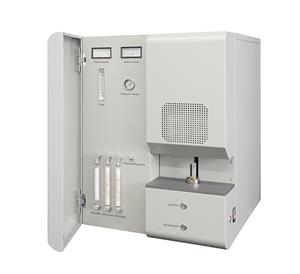
Your carbon sulfur analyzer is only as good as the technology and support behind it. At Peny Scientific Instruments (Nantong) Co., Ltd., we combine decades of expertise with innovative engineering to deliver accurate, reliable, and low-maintenance analyzers. Don't let hidden complexities compromise your quality control. Download our technical white paper, "Optimizing Carbon and Sulfur Analysis: Best Practices and Troubleshooting," or contact our sales engineers today to discuss how we can tailor a solution for your lab. Visit our website or reach out to our local representative to learn more.