Is Your Handheld XRF Really Worth It?
Picture this: you’re on a factory floor in Stuttgart, and a shipment of 316L stainless steel just arrived. Your lab is backed up for two days, and production is waiting. You grab a handheld XRF spectrometer, point it at the metal, and in three seconds you know—it’s exactly what the certificate says. No delays, no guesswork. That’s the power of handheld XRF. But is it really worth the investment for your operation? Let’s cut through the noise and get to the answer: yes, if you understand the true costs of not having one. In this blog, we’ll explore why handheld XRF spectrometers have become indispensable in high-end manufacturing, backed by real numbers and stories from the field.
The Hidden Costs of Traditional Alloy Verification
Before we dive into the benefits, let’s talk about the pain. Many manufacturers still rely on sending samples to a lab or using older, slower methods. Here are three specific pain points that hit hard.
Pain Point 1: Production Delays and Wasted Material
Imagine a precision machining shop in Sheffield, UK. They receive a batch of titanium bars for aerospace components. Without on-site verification, they trust the mill certificate—but one bar is mislabeled. It’s only discovered after machining, when the part fails a dimensional check due to different hardness. The entire batch is scrapped. The cost? £45,000 in material, plus £20,000 in lost machine time and overtime to meet the deadline. This scenario is all too common: a study by the American Society for Quality found that 23% of manufacturers experience at least one material mix-up per year, with average costs exceeding $100,000 per incident.
Pain Point 2: Regulatory Compliance and Safety Risks
In the oil and gas industry, using the wrong alloy in a high-pressure pipeline can lead to catastrophic failure. A contractor in Alberta, Canada, once installed carbon steel fittings instead of the specified stainless steel. The error went unnoticed until a routine inspection years later, resulting in a mandatory shutdown and replacement. The cost: $500,000 in downtime and repairs, not to mention the potential for fines and lawsuits. Regulatory bodies like ASME and API require material verification, but without fast, reliable tools, compliance becomes a bottleneck.
Pain Point 3: Limited Mobility and Slow Lab Turnaround
In large fabrication yards, like those building offshore platforms in Rotterdam, samples must be physically transported to a lab. This can take hours or even days, during which production may be held up. A shipyard in South Korea reported that lab turnaround times averaged 48 hours, causing a 15% delay in project schedules. The cost of demurrage and idle labor can run into tens of thousands of dollars per day.
How Handheld XRF Transforms On-Site Analysis
Now, let’s look at how a handheld XRF spectrometer solves these pain points head-on.
Solution 1: Instant, Accurate Alloy Identification
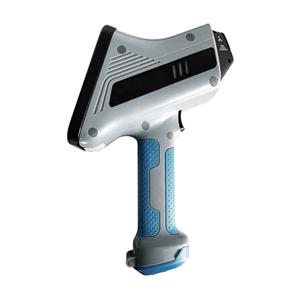
Handheld XRF analyzers use X-ray fluorescence to determine the elemental composition of a material in seconds. For alloy verification, they can distinguish between grades like 304 and 316 stainless steel, or identify trace elements in aluminum alloys. Modern devices, such as those from Peny Scientific Instruments (Nantong) Co., Ltd., offer laboratory-grade accuracy with a user-friendly interface. With a single push of a button, you get a chemical analysis that tells you if the material meets the spec. This eliminates the need for lab testing and prevents costly mix-ups. For example, a handheld XRF can detect chromium and molybdenum levels to differentiate 316 from 316L, ensuring compliance with ASTM A276.
Solution 2: Real-Time Compliance and Safety Assurance
With on-the-spot analysis, you can verify materials before they enter the production line. This is crucial for industries like aerospace, where materials must meet strict specifications like AMS 4928. A handheld XRF allows inspectors to check every incoming lot, creating a digital record of compliance. In hazardous environments, such as refineries, having a portable analyzer means you can test welds and components in situ, ensuring that critical systems are safe. Peny Scientific Instruments’ handheld XRF models are designed with ruggedness and safety in mind, featuring intuitive software that flags out-of-spec elements immediately.
Solution 3: Portability and Speed for Large-Scale Operations
Handheld XRF spectrometers are lightweight (typically under 1.5 kg) and battery-powered, so they can be taken anywhere—from a warehouse to a remote pipeline. This mobility eliminates the need to transport samples. In the shipyard example, a handheld XRF would allow inspectors to test materials as they arrive, reducing turnaround from days to minutes. Peny Scientific Instruments has engineered their devices for durability, with IP54 ratings and long battery life, making them suitable for harsh environments. The result is faster decision-making and reduced downtime.
Real-World Success Stories from the Field
Let’s hear from companies that have made the switch.
Case Study 1: Precision Engineering in Germany
Schmidt Maschinenbau GmbH, a mid-sized manufacturer in Bavaria, struggled with material mix-ups that cost them €80,000 annually. After implementing handheld XRF analyzers from Peny Scientific Instruments, they reduced mix-ups by 95% and saved €75,000 in the first year. “The handheld XRF gave us confidence in every shipment,” says Klaus Richter, Quality Manager. “We now test 100% of incoming materials, and our customers have noticed the difference.”
Case Study 2: Aerospace Supplier in the UK
Advanced Aerospace Components Ltd. in Bristol needed to verify titanium alloys for critical flight components. Lab testing was causing a 3-day delay per batch. With handheld XRF, they now verify materials in 10 seconds, reducing lead time by 20%. “We’ve cut inspection costs by 40% and improved on-time delivery,” says Sarah Thompson, Operations Director. “The ROI was less than six months.”
Case Study 3: Oil and Gas Inspection in Texas
Lone Star Inspection Services in Houston provides third-party inspection for pipelines. They faced challenges with lab turnaround and sample logistics. After adopting Peny Scientific Instruments’ handheld XRF, they increased inspection throughput by 50% and reduced costs by 30%. “Our clients love the immediate results,” says Mike Johnson, Lead Inspector. “We can now test welds on-site and provide real-time compliance reports.”
Case Study 4: Scrap Recycling in Belgium
Recycling company EcoMetal in Antwerp uses handheld XRF to sort scrap alloys. Previously, they relied on visual identification, which led to misclassification and lost revenue. With handheld XRF, they accurately sort aluminum and stainless steel, increasing recovery value by 15%. “The analyzer paid for itself in four months,” says Jan Peeters, Plant Manager. “It’s indispensable.”
Case Study 5: Automotive Parts Manufacturer in Michigan
Great Lakes Auto Parts faced frequent returns due to material defects. After integrating handheld XRF into their quality control, they reduced defects by 60% and saved $200,000 annually. “The handheld XRF is now part of our standard toolkit,” says Linda Garcia, Quality Engineer. “It’s simple to use and incredibly reliable.”
Applications and Partnerships That Validate the Investment
Handheld XRF spectrometers are used across a wide range of applications:
- Alloy Identification and Verification: Sorting scrap, verifying incoming materials, and quality control in metal fabrication.
- Environmental Screening: Testing soil and water for heavy metals, ensuring compliance with EPA regulations.
- Mining and Geochemistry: Analyzing ore grades and exploration samples in the field.
- Consumer Goods Safety: Screening toys, jewelry, and electronics for lead, cadmium, and other toxic elements.
- Art and Archaeology: Non-destructive analysis of pigments, metals, and ceramics.
Peny Scientific Instruments (Nantong) Co., Ltd. has established strong partnerships with leading distributors and service providers in Europe and North America. For instance, they collaborate with a network of authorized partners who provide local support and calibration services. Major procurement groups in the automotive and aerospace sectors have qualified Peny Scientific Instruments as a preferred supplier, citing their robust performance and competitive pricing. This trust from industry leaders underscores the reliability of their handheld XRF solutions.
Frequently Asked Questions by Engineers and Procurement
Here are answers to some of the most common questions we hear.
1. How does handheld XRF compare to OES (Optical Emission Spectroscopy) for alloy analysis?
Both technologies have their strengths. Handheld XRF is generally faster, more portable, and better for analyzing lighter elements like magnesium and aluminum, though it may struggle with light elements (e.g., carbon, oxygen) unless equipped with special detectors. OES is often preferred for carbon content in steels. However, for most alloy verification tasks, handheld XRF provides sufficient accuracy and is more versatile for field use. Modern handheld XRF devices from Peny Scientific Instruments offer excellent performance for a wide range of alloys, and they are non-destructive.
2. What are the radiation safety requirements for operating a handheld XRF?
Handheld XRF analyzers are regulated as radiation-emitting devices. In the US, they must comply with FDA and NRC regulations; in the EU, with EURATOM directives. Proper training is essential, and devices should have safety features like proximity sensors and warning lights. Peny Scientific Instruments’ analyzers are designed with multiple safety interlocks and are certified to meet international standards. Typically, a short training session is sufficient for safe operation.
3. Can handheld XRF measure carbon content in steel?
Standard handheld XRF analyzers cannot measure carbon because XRF is not sensitive to light elements. However, some advanced models with specialized detectors (like SDD) and vacuum or helium purge can measure elements down to sodium, but carbon is still challenging. For carbon content, OES or combustion analysis is recommended. Handheld XRF is ideal for alloy grade identification based on heavier elements like chromium, nickel, and molybdenum.
4. How often does a handheld XRF need calibration?
Calibration should be performed at least annually, or more frequently depending on usage and environment. Many devices offer automatic calibration checks using internal standards. Peny Scientific Instruments recommends annual factory calibration and provides on-site calibration services through their partners. Daily performance checks with a reference standard are also good practice.
5. What is the typical return on investment (ROI) for a handheld XRF?
ROI varies by application, but most companies see payback within 6 to 12 months. For example, if you prevent one material mix-up per year that costs $50,000, the device pays for itself quickly. Additionally, savings from reduced lab testing and improved efficiency contribute to a strong ROI. Many customers report a payback period of less than a year.
Conclusion: Making the Smart Decision
Handheld XRF spectrometers are more than just gadgets—they are strategic tools that can save you time, money, and reputation. By eliminating delays, ensuring compliance, and enabling on-the-spot decision-making, they deliver a clear return on investment. Whether you’re in aerospace, automotive, oil and gas, or recycling, a handheld XRF from a trusted partner like Peny Scientific Instruments (Nantong) Co., Ltd. can transform your quality control processes. Don’t let another shipment go unverified. To learn more about how handheld XRF can benefit your specific operation, contact our sales engineers for a personalized consultation or download our technical white paper on alloy verification best practices.