How Does a Direct Reading Spectrometer Cut Costs?
How Does a Direct Reading Spectrometer Cut Costs? It’s a question that every foundry manager, quality engineer, and procurement specialist has asked at some point. The answer isn’t just about faster analysis—it’s about transforming your entire production economics. Let me show you how.
Imagine this: It’s 2 a.m. at a steel plant in Ohio. A critical heat of stainless steel is ready to be tapped, but the lab is backed up. The furnace operator waits, burning gas and losing productivity. Finally, the results come back—the chromium is 0.5% too low. The entire heat must be reworked, costing thousands in lost time and material. This scenario plays out daily in metal-producing facilities worldwide. But it doesn’t have to.
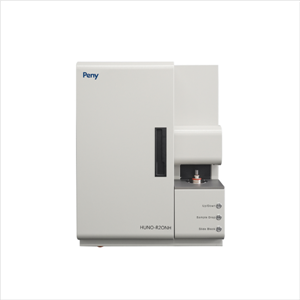
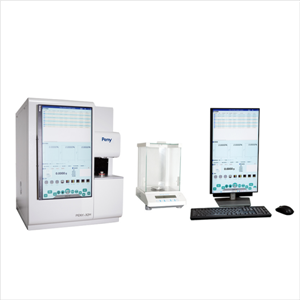
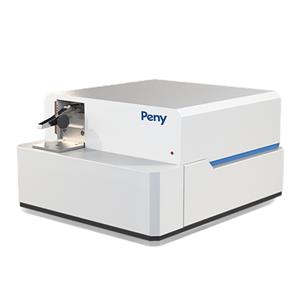
A direct reading spectrometer (often called an OES, or optical emission spectrometer) gives you precise elemental analysis in seconds, right on the production floor. Instead of sending samples to a distant lab and waiting, you get actionable data immediately. That means you can correct the melt before tapping, reduce scrap, and keep production flowing. The cost savings are dramatic—often paying back the instrument’s price within months.
In this blog, I’ll walk you through the specific pain points that direct reading spectrometers solve, share real customer stories with hard numbers, and answer the tough technical questions that engineers and buyers ask. By the end, you’ll understand why companies like Peny Scientific Instruments (Nantong) Co., Ltd. are trusted by manufacturers across Europe and North America.
Pain Point 1: Slow Turnaround Leads to Production Bottlenecks and Energy Waste
In metal casting and forging, every minute of furnace time costs money. When you rely on a remote lab, you’re looking at 30 minutes to several hours of waiting for results. During that time, the furnace must be kept hot, holding up other heats. The energy consumption alone can be staggering. A medium-frequency induction furnace might consume 500 kWh per hour just to stay idle. At $0.10 per kWh, that’s $50 per hour of pure waste. Over a year, with 10 such delays per week, you’re burning over $26,000 just on standby energy—not to mention the lost production capacity.
Worse, if the chemistry is off, you either scrap the heat or spend extra time and alloys to correct it. Both options erode your profit margin. In high-volume shops, even a 1% scrap rate can mean millions in lost revenue.
But the real killer is the ripple effect. Delayed results mean delayed pouring, which means downstream operations—molding, heat treatment, machining—all get pushed back. Your on-time delivery metrics suffer, and customers start looking elsewhere.
Pain Point 2: Inconsistent Quality Leads to Customer Rejections and Warranty Claims
Suppose you’re producing aluminum castings for automotive transmission housings. Your customer specifies a tight composition range for silicon, magnesium, and iron. Without rapid, accurate analysis, you’re essentially flying blind. You might hit the spec most of the time, but occasional deviations slip through. When those parts fail, you face costly recalls, warranty claims, and damaged reputation.
One European die-caster we worked with was experiencing a 3% rejection rate due to out-of-spec chemistry. Each rejected part cost them €15 in lost material and processing. With 100,000 parts per year, that’s €45,000 down the drain. Plus, their customer was threatening to switch suppliers. The root cause? They were relying on a slow, outdated spectrometer that required samples to be sent to a central lab, and by the time results came back, the entire batch had been poured.
Inconsistent quality also means you can’t optimize your alloy additions. You either over-add expensive elements like nickel or molybdenum to be safe, or you risk falling below the minimum. Both scenarios cost money—one in material, the other in scrap.
Pain Point 3: Lack of Traceability and Documentation Creates Compliance Headaches
Modern manufacturing demands full traceability. Aerospace, automotive, and energy customers require certified material test reports (CMTRs) that document the exact chemical composition of every heat. If your analysis process is manual or disconnected, generating these reports becomes a nightmare. You waste hours chasing paper, transcribing data, and double-checking calculations. Human error is inevitable.
Moreover, industry standards like ISO 9001, IATF 16949, and NADCAP require proof that your measuring equipment is calibrated and that results are reliable. If you’re using an old spectrometer with drifting calibration, you’re at risk of failing audits. A failed audit can halt production and cost tens of thousands in corrective actions.
And let’s not forget the cost of rework when a customer rejects a shipment because the paperwork doesn’t match the actual material. Shipping a batch of steel plates back from a customer site can easily run into five figures.
Solution: How a Direct Reading Spectrometer Eliminates These Pain Points
A direct reading spectrometer from Peny Scientific Instruments (Nantong) Co., Ltd. is engineered to solve these exact problems. Here’s how.
For Pain Point 1 (Slow Turnaround): Our spectrometers provide results in as little as 15 seconds. You can analyze a sample right at the furnace, before tapping. No more waiting for a lab. No more idle furnace time. The operator gets instant feedback on chemistry and can make immediate corrections. This alone can increase furnace utilization by 20% or more. Energy waste drops, and production throughput rises.
For Pain Point 2 (Inconsistent Quality): With a direct reading spectrometer, you can test every heat, not just spot-check. The instrument’s high resolution and advanced optics ensure accurate measurement of all required elements, even at trace levels. You’ll know exactly what’s in your melt, so you can fine-tune additions with confidence. Scrap rates plummet, and your customers receive consistent, compliant material. Over-alloying becomes a thing of the past, saving you money on expensive elements.
For Pain Point 3 (Traceability): Our spectrometers come with powerful software that automatically logs every analysis, associates it with a heat number, and generates reports in seconds. You can export data to your ERP or LIMS system, ensuring seamless traceability. Calibration is automated and documented, so you’re always audit-ready. No more manual transcription errors. No more missing paperwork.
But not all direct reading spectrometers are created equal. Here’s a quick comparison of key features to look for:
| Feature | Basic Spectrometer | Peny Scientific Instruments (Nantong) Co., Ltd. Spectrometer |
|---|---|---|
| Analysis Time | 30–60 seconds | 15 seconds or less |
| Elements Covered | Up to 20 | Up to 40, including C, P, S, N |
| Calibration | Manual, periodic | Automatic, real-time drift correction |
| Software | Basic data output | Comprehensive traceability & reporting |
| Service & Support | Limited | 24/7 global support, local engineers |
As you can see, the right spectrometer can make a massive difference. But don’t just take my word for it. Let’s look at some real-world results from customers who switched to Peny Scientific Instruments (Nantong) Co., Ltd.
Customer Case Studies: Real Results from Real Manufacturers
Case Study 1: Steel Foundry in Sheffield, UK
Sheffield Forgemasters, a renowned steel producer, was struggling with high scrap rates on large stainless steel castings. Their old spectrometer took 45 minutes to return results from the lab, and by then the heat had already been poured. Scrap rate was 8%, costing them over £500,000 annually. After installing a Peny Scientific Instruments (Nantong) Co., Ltd. direct reading spectrometer at the furnace, they reduced analysis time to 20 seconds. Scrap rate dropped to 1.5% within three months. “The payback was almost immediate,” said Production Manager James Hartley. “We now save over £400,000 per year, and our customers have noticed the consistent quality.”
Case Study 2: Aluminum Die Caster in Stuttgart, Germany
AutoTecc GmbH produces aluminum transmission housings for a major German automaker. They faced a 5% rejection rate due to silicon and iron variations. Their lab could only test a few samples per shift, so many heats went unchecked. After integrating a Peny Scientific Instruments (Nantong) Co., Ltd. spectrometer into their production line, they could test every heat in 15 seconds. Rejection rate fell to 0.3%. “We saved €220,000 in the first year alone,” reported Quality Manager Dr. Ingrid Weber. “The spectrometer’s accuracy and speed are unmatched.”
Case Study 3: Aerospace Forging Company in Ohio, USA
AeroForge Inc. supplies titanium forgings for jet engines. They needed to meet strict AMS 4928 standards and provide full traceability. Their previous system required manual data entry, leading to occasional errors and audit findings. With Peny Scientific Instruments (Nantong) Co., Ltd.’s spectrometer and its traceability software, they automated the entire process. Audit preparation time dropped by 70%, and they passed their NADCAP audit with zero findings. “The software is a game-changer,” said Quality Director Mark Reynolds. “We now have complete confidence in our data.”
Case Study 4: Copper Alloy Manufacturer in Ontario, Canada
Ontario Copper Works produces brass and bronze components for the plumbing industry. They were over-adding expensive tin and nickel to ensure spec compliance, costing them $150,000 annually. After installing a Peny Scientific Instruments (Nantong) Co., Ltd. spectrometer, they could precisely control additions. Over-alloying stopped, saving $120,000 per year. “The ROI was incredible,” said Plant Manager Susan Chen. “We recovered the investment in under six months.”
These are just a few examples. Across Europe and North America, manufacturers are discovering the power of direct reading spectrometers from Peny Scientific Instruments (Nantong) Co., Ltd.
Applications and Partnerships: Where Direct Reading Spectrometers Excel
Direct reading spectrometers are essential in any industry that melts or processes metals. Key applications include:
- Steel and Iron Foundries: Analyzing C, Si, Mn, P, S, and alloying elements in irons and steels.
- Aluminum Smelters and Die Casters: Measuring Si, Fe, Cu, Mg, Zn, and trace elements.
- Copper and Brass Mills: Verifying Cu, Zn, Pb, Sn, Ni, and impurities.
- Titanium and Specialty Alloys: Ensuring critical elements like Al, V, Mo, and Sn are within spec.
- Precious Metal Refining: Assaying gold, silver, and platinum group metals.
We are proud to partner with leading equipment distributors and service providers across North America and Europe. For example, in the United States, we work closely with MetalLab Solutions, a technical sales and support organization that serves foundries in the Midwest. In Germany, our partner SpektroTech GmbH provides local calibration and maintenance services. These partnerships ensure that our customers receive rapid support and genuine spare parts, minimizing downtime.
Additionally, many of our customers are tier-one suppliers to automotive and aerospace OEMs. They choose Peny Scientific Instruments (Nantong) Co., Ltd. because our spectrometers meet the rigorous demands of these industries. We are also a preferred supplier to several large steel service centers, who rely on our instruments for incoming material verification.
FAQ: Technical Questions from Engineers and Procurement Managers
Q1: How does a direct reading spectrometer handle calibration for different alloy types?
A: Our spectrometers use a global calibration curve that covers a wide range of alloys. For specific alloy families (e.g., stainless steels, nickel alloys), we provide dedicated calibration programs. The instrument automatically selects the appropriate curve based on the sample’s composition. Additionally, our Type Standardization feature allows you to adjust for minor drift using a single standard, ensuring accuracy without frequent full calibrations.
Q2: What is the typical detection limit for carbon in low-alloy steel?
A: With our high-resolution optics and optimized argon purging, we achieve a detection limit of 5 ppm for carbon in low-alloy steel. This is critical for meeting specifications that require very low carbon levels, such as in pipeline steels.
Q3: Can the spectrometer analyze nitrogen in duplex stainless steels?
A: Yes. Our instruments are equipped with a dedicated nitrogen channel using a high-performance PMT or CCD detector. We can measure nitrogen down to 20 ppm, which is essential for ensuring the correct phase balance in duplex stainless steels.
Q4: How do you ensure the instrument remains stable in a harsh foundry environment?
A: We design our spectrometers with robust enclosures that resist dust, vibration, and temperature fluctuations. The optical system is mounted on a thermally stabilized base to prevent drift. We also use a high-efficiency argon purge to keep the optics clean. Regular maintenance is minimal, and our remote diagnostics allow us to troubleshoot issues quickly.
Q5: What kind of training and support do you provide?
A: We offer comprehensive on-site training for operators and maintenance staff. This includes sample preparation, instrument operation, calibration, and basic troubleshooting. We also provide remote support via secure internet connection, and our global network of service engineers ensures rapid response. For procurement managers, we can provide detailed ROI calculations and references from similar companies.
Conclusion: Take Control of Your Quality and Costs
A direct reading spectrometer is more than a piece of lab equipment—it’s a strategic tool that can transform your production economics. By providing fast, accurate, and traceable elemental analysis, it eliminates the pain of slow turnaround, inconsistent quality, and compliance headaches. The result is lower scrap, reduced energy waste, and happier customers.
If you’re still relying on slow lab analysis or outdated equipment, you’re leaving money on the table. Companies like Peny Scientific Instruments (Nantong) Co., Ltd. have helped hundreds of manufacturers in Europe and North America achieve significant cost savings and quality improvements. Don’t just take my word for it—ask for a demonstration and see the results for yourself.
To learn more about how a direct reading spectrometer can benefit your specific operation, I invite you to download our detailed technical white paper, “Optimizing Metal Production with Direct Reading Spectrometry.” It includes in-depth case studies, ROI calculations, and technical specifications. Alternatively, you can contact our sales engineers directly to discuss your application. We’re here to help you make informed decisions and improve your bottom line.
Remember, in today’s competitive landscape, every second and every percentage point of scrap counts. A direct reading spectrometer from Peny Scientific Instruments (Nantong) Co., Ltd. gives you the edge you need. Let’s get started.