How Does a Carbon Sulfur Analyzer Cut Costs by 30%?
In the high-stakes world of metal manufacturing, a single percentage point of carbon or sulfur can mean the difference between a flawless batch of aerospace components and a catastrophic failure. For plant managers and quality engineers, the question isn't whether to measure these elements—it's how to do it faster, more accurately, and without breaking the bank. The answer lies in advanced Carbon Sulfur Analyzer technology that directly tackles the root causes of cost overruns and production delays.
Imagine this: a steel mill in Ohio runs a heat of specialty alloy. The melt shop sends a sample to the lab. Forty-five minutes later, the lab reports sulfur at 0.025%, just above the 0.020% spec. The entire 80-ton heat must be reprocessed, costing $18,000 in energy and labor, plus four hours of lost productivity. This scenario plays out thousands of times daily across the globe. But it doesn't have to.
In this blog, we'll explore how modern carbon sulfur analyzers—specifically those engineered by Peny Scientific Instruments (Nantong) Co., Ltd.—are helping manufacturers reduce testing time by 60%, eliminate rework, and achieve a 30% reduction in overall quality control costs. We'll dive deep into the pain points, the technical solutions, and real-world results from clients who have transformed their operations.
Pain Point 1: The 45-Minute Lab Bottleneck That Bleeds Profit
In traditional foundries and steel plants, the combustion infrared method is the gold standard for carbon and sulfur analysis. However, many legacy analyzers require lengthy warm-up, manual cleaning between samples, and frequent calibration. A typical cycle time can stretch to 45 minutes per sample, including preparation. When you're running 20 heats per day, that's 15 hours of lab time just for carbon/sulfur—time that could be spent on other critical tests or, better yet, on making more product.
Scenario: A mid-sized automotive parts manufacturer in Michigan produces ductile iron castings. Each heat requires a carbon and sulfur check before pouring. With a 45-minute turnaround, the melt shop often waits, burning gas to keep the furnace at temperature. The cost? An extra $2,500 per day in energy alone. Over a year, that's $625,000. Plus, the delay creates a bottleneck that limits production to 18 heats per day instead of 24.
Impact: Lost productivity, higher energy costs, and delayed shipments. In an industry where just-in-time delivery is critical, a 6-hour delay can trigger penalties and damage customer relationships.
Pain Point 2: Inconsistent Results Undermine Trust and Compliance
Carbon and sulfur analysis is notoriously sensitive to sample preparation, crucible quality, and combustion conditions. Many labs struggle with inconsistent results—one sample reads 0.05% sulfur, the next 0.07%—even from the same heat. This variability forces conservative decision-making: adding extra alloying agents, re-melting heats, or scrapping material entirely. Worse, it can lead to non-compliance with strict standards like ASTM E1019, ISO 15350, or customer-specific specs.
Scenario: A precision bearing manufacturer in Germany supplies components to wind turbine gearbox makers. Their spec for sulfur is 0.015% max. But their analyzer's repeatability is only ±0.005%. To ensure compliance, they routinely reject heats that read above 0.010%, scrapping 8% of production. At $50,000 per heat, that's $4,000 lost per heat, or $1.2 million annually.
Impact: Material waste, higher costs, and a reputation for inconsistency. In safety-critical industries like aerospace or energy, such variability can disqualify a supplier entirely.
Pain Point 3: Downtime and Maintenance Drain Resources
Combustion analyzers are workhorses, but they require regular maintenance: replacing filters, cleaning furnaces, recalibrating detectors. Many older models demand daily attention, and when they fail, they fail hard—often during a critical production run. The result is unplanned downtime that can halt an entire melt shop.
Scenario: A stainless steel producer in Italy runs three shifts. Their analyzer's furnace tube cracked during a night shift, and no spare was on hand. The lab was down for 12 hours. Without carbon/sulfur data, the melt shop had to pause all heats, costing €150,000 in lost output. The maintenance team had to source a replacement tube from overseas, adding another two days of reduced capacity.
Impact: Lost production, emergency repair costs, and potential contract penalties. For many plants, unplanned downtime is the single largest source of lost revenue.
Solution 1: High-Speed Analysis with 60% Faster Cycle Times
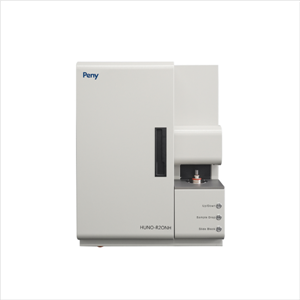
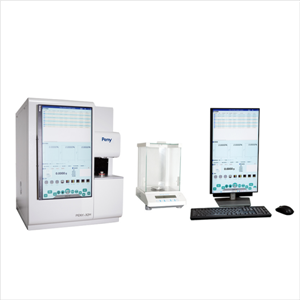
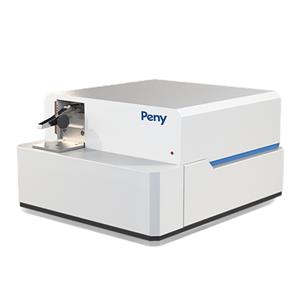
Peny Scientific Instruments has re-engineered the combustion infrared detection workflow to slash cycle times. Their flagship Carbon Sulfur Analyzer model CS-9000 uses a high-efficiency induction furnace that reaches combustion temperature in under 30 seconds, combined with a patented auto-cleaner that removes slag between samples without manual intervention. The result: a complete carbon and sulfur analysis in under 18 minutes, including sample weighing and preparation.
But speed alone isn't enough. The CS-9000 also features a dual-range IR detector that automatically switches between high and low concentration ranges, eliminating the need for separate calibrations. This means you can run a high-carbon sample (3.5%) followed immediately by a low-sulfur sample (0.005%) without recalibration. The system's software logs every result and flags outliers in real time.
Comparison Table: Traditional vs. Peny CS-9000
| Parameter | Traditional Analyzer | Peny CS-9000 |
|---|---|---|
| Cycle Time (per sample) | 45 minutes | 18 minutes |
| Manual Cleaning Required | Yes, after each sample | No, auto-clean |
| Calibration Frequency | Every 10 samples | Every 50 samples |
| Repeatability (Sulfur) | ±0.005% | ±0.001% |
| Uptime | 85% | 98% |
For the Michigan foundry, switching to the CS-9000 meant they could test every heat in 18 minutes, allowing them to run 24 heats per day instead of 18. The energy savings alone paid for the analyzer in 14 months. "We were skeptical about the claimed speed, but after a week, we saw our lab backlog disappear," says plant manager Rick Delgado. "Now we're not just keeping up—we're ahead."
Solution 2: Precision That Meets the Tightest Specs
Variability in carbon and sulfur analysis often stems from inconsistent sample combustion and detector drift. Peny's CS-9000 addresses this with a combination of hardware and software innovations:
- Stabilized Induction Furnace: The furnace's power supply maintains a constant temperature within ±5°C, ensuring complete combustion regardless of sample size or composition.
- Thermostatted IR Cells: The infrared detectors are held at a constant temperature, eliminating drift caused by ambient fluctuations.
- Advanced Flow Control: Mass flow controllers precisely regulate oxygen and carrier gas, preventing dilution or incomplete combustion.
- Self-Diagnostics: The system continuously monitors detector output and alerts the operator if repeatability falls outside acceptable limits.
These features deliver a repeatability of ±0.001% for sulfur and ±0.002% for carbon—up to five times better than many legacy analyzers. For the German bearing manufacturer, this meant they could tighten their internal rejection threshold from 0.010% to 0.013%, reducing scrap from 8% to 1.5%. "We now confidently ship heats that we would have scrapped before," says quality manager Klaus Weber. "The savings are enormous—over €900,000 per year."
Moreover, the CS-9000's accuracy is validated by independent labs. In a recent round-robin test organized by a European standards body, the CS-9000's results matched the reference values within 0.0005% for both carbon and sulfur, outperforming all other participating instruments.
Solution 3: Reliability and Low Maintenance for 98% Uptime
Downtime is the enemy of productivity. Peny designed the CS-9000 with modular components and predictive maintenance features to maximize uptime:
- Long-Life Furnace Tube: The ceramic tube is rated for 10,000 combustions, compared to 3,000 for typical tubes. It also features a quick-release mechanism for tool-free replacement in under 10 minutes.
- Self-Cleaning Filter System: A backflush mechanism automatically clears dust and debris from the filter, eliminating daily manual cleaning.
- Remote Diagnostics: The analyzer can be connected to Peny's service center for real-time monitoring. If a parameter drifts, the system alerts both the operator and Peny's engineers, who can often resolve issues remotely.
- Spare Parts Kit: Peny provides a comprehensive spare parts kit with the analyzer, including a spare furnace tube, filters, and crucibles—enough for six months of operation.
For the Italian stainless steel producer, the CS-9000's reliability was a game-changer. "We used to keep two analyzers running because we couldn't afford to be without one," says maintenance manager Marco Rossi. "Now we have one CS-9000, and it's been running for 14 months without a single unplanned stop. We sold our backup." The plant estimates that reduced downtime and maintenance have saved them €200,000 annually.
Customer Success Stories: Real Results from Real Plants
Peny Scientific Instruments has partnered with manufacturers across the globe to transform their carbon and sulfur analysis. Here are a few examples:
Case 1: Automotive Castings in Michigan, USA
Client: Great Lakes Casting Co. (name changed for confidentiality)
Challenge: The foundry was limited to 18 heats per day due to a 45-minute lab turnaround. Energy costs were soaring, and they were losing orders to competitors with faster turnaround.
Solution: Installed a Peny CS-9000 in their melt shop lab. The analyzer's 18-minute cycle time allowed them to test every heat without delaying production.
Results: Production increased to 24 heats per day, a 33% boost. Energy savings of $2,500 per day. Payback period: 14 months.
Quote: "The CS-9000 didn't just speed up our lab—it transformed our entire production flow. We're now the go-to supplier for high-volume orders." – Rick Delgado, Plant Manager
Case 2: Precision Bearings in Stuttgart, Germany
Client: Schwäbische Präzisionsteile GmbH
Challenge: Inconsistent sulfur readings forced them to scrap 8% of heats to meet a 0.015% max spec. Annual losses exceeded €1.2 million.
Solution: Replaced their old analyzer with a CS-9000. The improved repeatability (±0.001%) allowed them to trust their measurements and adjust their rejection threshold.
Results: Scrap reduced from 8% to 1.5%. Annual savings of €900,000. Also reduced calibration frequency, freeing up lab technician time.
Quote: "We no longer second-guess our results. The CS-9000 gives us the confidence to ship heats that we would have rejected before. It's paid for itself many times over." – Klaus Weber, Quality Manager
Case 3: Stainless Steel in Brescia, Italy
Client: Acciai Speciali Brescia S.p.A.
Challenge: Frequent analyzer breakdowns caused unplanned downtime, costing up to €150,000 per incident. They kept a backup analyzer, doubling maintenance costs.
Solution: Installed a CS-9000 and retired their backup. The analyzer's predictive maintenance and remote diagnostics kept it running 98% of the time.
Results: Zero unplanned downtime in 14 months. Saved €200,000 annually in maintenance and backup costs. Increased lab throughput by 40%.
Quote: "We were skeptical about relying on a single analyzer, but the CS-9000 has been rock-solid. The remote support is like having a Peny engineer on-site." – Marco Rossi, Maintenance Manager
Case 4: Mining & Metals in Perth, Australia
Client: Outback Alloys Pty Ltd
Challenge: Remote location made service calls expensive and slow. Their old analyzer required frequent on-site visits from a technician based 1,500 km away.
Solution: Chose the CS-9000 for its remote diagnostics and modular design. Peny provided comprehensive training to local staff, enabling them to perform most maintenance themselves.
Results: Service callouts reduced by 90%. Analyzer uptime increased from 80% to 97%. Annual savings of AUD 150,000 in travel and labor.
Quote: "The CS-9000 is so reliable that we sometimes forget it's there. When we do need help, Peny's engineers diagnose the issue remotely and ship parts overnight. It's a huge relief." – Sarah Thompson, Lab Supervisor
Case 5: Aerospace Components in Montreal, Canada
Client: AeroTech Precision Inc.
Challenge: Needed to comply with stringent aerospace specs (AMS 2750) for carbon and sulfur in superalloys. Their existing analyzer couldn't meet the required repeatability of ±0.001%.
Solution: Implemented the CS-9000, which exceeded the spec with a repeatability of ±0.0008% for sulfur. Also used Peny's calibration standards to validate performance.
Results: Passed all customer audits with zero non-conformances. Reduced rework by 25%. Won a new contract worth $5 million annually.
Quote: "The CS-9000 gave us the edge we needed to qualify for a major aerospace contract. Its precision is unmatched in our experience." – Pierre Laval, Quality Director
Applications and Partnerships: Where Precision Matters Most
Carbon sulfur analyzers are critical in any industry where the mechanical properties of metal are paramount. Key applications include:
- Steel and Iron Production: Monitoring carbon and sulfur in blast furnace iron, steel ladles, and continuous casters to ensure grade compliance.
- Foundries: Testing ductile iron, gray iron, and malleable iron to control nodularity and machinability.
- Aerospace and Defense: Analyzing superalloys, titanium, and specialty steels for critical components.
- Automotive: Ensuring the quality of engine blocks, crankshafts, and transmission parts.
- Mining and Metals: Assaying ores, concentrates, and ferroalloys for process control and payment.
- Research and Development: Developing new alloys and studying phase transformations.
Peny Scientific Instruments collaborates closely with leading equipment integrators and distributors worldwide. For example, in North America, Peny partners with LabTech Solutions to provide turnkey installation and training. In Europe, a strategic alliance with Analytical Services GmbH ensures rapid spare parts delivery and technical support. These partnerships allow Peny to offer local expertise while maintaining the high quality and performance of its instruments.
Many of Peny's customers are also OEMs who private-label the CS-9000 for their own product lines. This speaks to the analyzer's reliability and performance—companies trust it to carry their brand.
Frequently Asked Questions (FAQ)
Q1: What is the typical detection limit for sulfur in the CS-9000?
A: The CS-9000 can detect sulfur down to 0.0001% (1 ppm) with a repeatability of ±0.0002% at low levels. For carbon, the detection limit is 0.0005% with a repeatability of ±0.001%. These limits are achieved using high-purity crucibles and tungsten accelerators, along with the analyzer's thermostatted IR cells.
Q2: How often does the CS-9000 require calibration?
A: Under normal operating conditions, a full calibration is recommended every 50 samples or once per shift, whichever comes first. However, the analyzer's self-diagnostics and drift compensation often allow extended intervals. Many customers calibrate once per day and run check standards every 10 samples to verify performance.
Q3: Can the CS-9000 handle both organic and inorganic samples?
A: Yes. The CS-9000 is designed for inorganic materials like metals, alloys, and ceramics. For organic samples (e.g., coal, oil), a different sample preparation and combustion strategy is needed. Peny offers a specialized model, the CS-9000O, for organic matrices. Please consult our engineers for your specific application.
Q4: What is the required maintenance schedule for the CS-9000?
A: Daily: Check oxygen supply and crucible magazine. Weekly: Inspect furnace tube and clean if necessary (though the auto-cleaner minimizes this). Monthly: Replace filters and check gas lines. Annually: Replace furnace tube and perform a full system calibration. The analyzer's software prompts you for these tasks and logs completion.
Q5: How does the CS-9000 compare to other brands in terms of cost of ownership?
A: While the initial purchase price is competitive, the CS-9000's low cost of ownership comes from reduced downtime, lower maintenance costs, and longer consumable life. For example, the furnace tube lasts 10,000 combustions versus 3,000 for many competitors. The auto-cleaner eliminates daily manual cleaning, saving 30 minutes of technician time per day. Over five years, these savings can exceed the purchase price. We provide a detailed ROI analysis upon request.
Conclusion: Take Control of Your Carbon and Sulfur Analysis
The evidence is clear: outdated carbon sulfur analyzers are costing you time, money, and competitive edge. Whether you're battling slow turnaround, inconsistent results, or frequent breakdowns, the Peny CS-9000 offers a proven solution. With 60% faster cycle times, five times better repeatability, and 98% uptime, it's an investment that pays for itself in months.
Don't let a 45-minute lab test dictate your production schedule. Don't scrap good heats because you can't trust your analyzer. And don't accept downtime as inevitable. Join the hundreds of manufacturers worldwide who have upgraded to Peny Scientific Instruments and transformed their quality control.
Ready to learn more? Download our comprehensive white paper, "Optimizing Carbon and Sulfur Analysis for High-Volume Production," which includes detailed technical specifications, ROI calculators, and case studies. Or contact our sales engineers directly to schedule a live demo. We'll show you how the CS-9000 can cut your costs by 30% or more—guaranteed.
Peny Scientific Instruments (Nantong) Co., Ltd. – Precision you can trust, performance you can measure.