Handheld XRF: Can It Really Cut Your Scrap Costs?
It’s 2:00 PM on a Tuesday. A shipment of 316L stainless steel arrives at your dock. The mill certificate says it’s good. Your production line is waiting. But something feels off—the color is slightly different, the weight is a bit light. You send a sample to the lab. Three hours later, the report comes back: it’s 304, not 316L. Now you’ve got a line down, a customer angry, and a scrap bin that just ate $50,000. This scenario plays out in manufacturing plants every day. And the question on every plant manager’s mind is: can a handheld XRF spectrometer really stop this from happening? The short answer is yes—and it can do it in seconds, not hours. In this blog, we’ll dive deep into how handheld XRF technology is transforming material verification, cutting costs, and saving reputations. We’ll look at real pain points, practical solutions, and stories from the floor. Let’s get started.
The Hidden Costs of Traditional Material Verification
Before we talk solutions, let’s talk pain. Because if you’re still relying on lab testing or supplier certificates alone, you’re bleeding money in ways you might not even realize.
Pain Point 1: The Lab Bottleneck – Time is Money
Picture this: You’re a precision machining shop in Ohio. You’ve just received a batch of titanium bars for aerospace parts. Your supplier’s certificate says Grade 5 (Ti-6Al-4V). But your gut says verify. So you cut a sample, send it to your lab, and wait. And wait. Maybe it’s a few hours, maybe it’s a day. Meanwhile, your CNC machines sit idle. Your operators are on the clock. Your customer is checking their watch. If the material turns out wrong, you’ve lost production time, and you’ve got to scramble to find replacement stock. If it turns out right, you’ve still lost hours you can’t bill. In high-mix, low-volume shops, this happens weekly. The cost? A single idle machining center can burn $100–$200 per hour in overhead. Add expedited shipping for replacement material, and you’re looking at $10,000–$20,000 per incident. And that’s before you factor in the risk of a bad part reaching your customer.
Pain Point 2: Scrap and Rework – The Silent Profit Killer
Now imagine you’re a foundry in Indiana. You melt down scrap metal to cast new parts. Your scrap is a mix of 304, 316, and 2205 stainless. You think you’ve sorted it correctly, but trace amounts of 316 in a 304 heat can throw off corrosion resistance. Or worse, you accidentally include a piece of 2205, and your entire heat is out of spec. You don’t find out until after casting, heat treating, and machining. By then, you’ve got $30,000 worth of finished parts that have to be scrapped. Or you ship them, and your customer finds the defect six months later. Now you’re dealing with a recall, a lost contract, and a reputation hit that costs far more than the parts. In foundries, even a 1% scrap rate can eat 5–10% of your profit margin. And most of that scrap is preventable—if you could verify material composition before it goes into the furnace.
Pain Point 3: Supplier Fraud and Mixed Alloys – Trust but Verify
Let’s be honest: not every supplier is honest. And even honest suppliers make mistakes. You order 17-4 PH stainless for a medical device component. The mill certificate says it’s 17-4. But when you machine it, the parts fail hardness testing. You send a sample to an independent lab. It’s 15-5 PH. Close, but not close enough. Now you’ve got to recall the parts, rework the order, and explain to your customer why their delivery is late. Or consider a scrap yard in California that buys mixed alloy scrap. They sort by hand, but human error is inevitable. One piece of Inconel 718 in a batch of 316 can contaminate the entire load. The cost? A rejected load can be $50,000 or more. And if you’re the buyer, you’ve just paid for material you can’t use. These are not rare events. They happen every day in plants that rely on paper certificates and visual inspection.
How Handheld XRF Spectrometers Solve the Pain Points
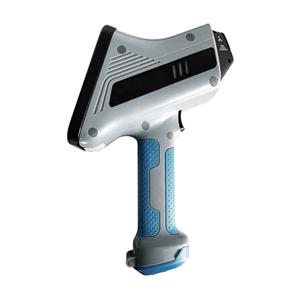
So how do you stop the bleeding? You bring the lab to the material. Handheld XRF (X-ray fluorescence) spectrometers are portable, battery-powered devices that can identify the elemental composition of metals and alloys in seconds. They shoot X-rays at a sample, and the atoms emit fluorescent X-rays that are unique to each element. The detector reads those emissions and tells you exactly what you’re holding. For alloy verification, a good handheld XRF can distinguish between 304 and 316 stainless, between 6061 and 7075 aluminum, and between dozens of other common alloys. It can also detect trace elements like lead, cadmium, and mercury to ensure RoHS compliance. And it does all of this in 1–5 seconds, right on the shop floor.
Let’s map the solutions to the pain points.
Solution 1: Instant Verification – Kill the Lab Bottleneck
With a handheld XRF, you don’t cut samples. You don’t send them to a lab. You point the analyzer at the material—whether it’s a bar, a billet, a weld, or a finished part—and pull the trigger. In seconds, you get a grade ID. For incoming inspection, this means you can verify an entire truckload of material before it’s unloaded. For in-process checks, you can verify a weld before you move to the next station. For final inspection, you can spot-check finished parts before they ship. The result: no more waiting. No more idle machines. No more expedited shipping because you caught the problem early. A typical handheld XRF pays for itself in a few months just from reduced lab fees and faster throughput. And because you’re testing more material, you catch more mistakes before they become expensive.
Solution 2: Scrap Sorting – Turn Waste into Profit
In a foundry or scrap yard, handheld XRF is a game-changer. Instead of guessing, you can sort scrap by alloy in real time. You can quickly separate 304 from 316, aluminum from magnesium, and copper from brass. You can even identify exotic alloys like Hastelloy or Monel that might be hiding in a pile of generic scrap. The benefit is twofold: you reduce the risk of contamination in your melt, and you can sell your sorted scrap for a higher price. Scrap dealers pay premium prices for clean, sorted material. One foundry in Ohio reported that after implementing handheld XRF for scrap sorting, they reduced their scrap rate from 4% to 0.5% and increased their scrap sales revenue by 15%. That’s real money. And it all comes from knowing exactly what’s in the pile.
Solution 3: Supplier Verification – Trust but Verify
Handheld XRF gives you the power to verify every incoming shipment. You can check mill certificates against reality. You can spot-check a few pieces from each lot. You can even test the material before you sign for it. If you find a discrepancy, you can reject the shipment on the spot. This not only saves you from using bad material, but it also sends a clear message to your suppliers: you’re checking. Over time, this reduces the likelihood of fraud or error. And if you’re a supplier yourself, you can use handheld XRF to provide your customers with a certificate of analysis that you generated in-house, adding a layer of quality assurance that sets you apart. For companies like Peny Scientific Instruments (Nantong) Co., Ltd., which manufactures handheld XRF spectrometers, this is exactly the kind of tool that helps their customers sleep better at night.
Real-World Success Stories: From Scrap to Savings
Let’s look at how real companies—names changed for privacy—have used handheld XRF to solve their problems.
Case 1: Aerospace Machining in Washington
Precision Aero Components, a Tier 2 supplier in Everett, Washington, was struggling with material mix-ups. They machined titanium and aluminum parts for commercial aircraft. One day, a batch of Ti-6Al-4V bars arrived with a certificate that said Grade 5. But when they started machining, the tools wore out faster than usual. They sent a sample to a lab and found it was commercially pure titanium, not Grade 5. The mix-up cost them $25,000 in lost production and tooling. After that, they invested in a handheld XRF from Peny Scientific Instruments. Now, they verify every bar before it goes to the saw. “We haven’t had a single material mix-up since,” says their quality manager, Sarah Jenkins. “The XRF paid for itself in three months. And our customers are happier because we’re shipping better parts.”
Case 2: Foundry in Indiana
Midwest Castings, a family-owned foundry in Indianapolis, was losing money on scrap. They melted 304 and 316 stainless steel, but they couldn’t always tell the difference in their scrap pile. One bad batch cost them $40,000 in scrapped castings. They bought a handheld XRF and started sorting every piece of scrap before it went into the furnace. Within six months, their scrap rate dropped from 3.5% to 0.8%. They also started selling their sorted scrap to a local dealer for 20% more than they got for mixed scrap. “The XRF is like having a metallurgist in your pocket,” says owner Mike Reynolds. “It’s the best investment we’ve made in years.”
Case 3: Scrap Yard in California
Golden State Metals, a scrap yard in Los Angeles, was buying mixed alloy scrap from local machine shops. They sorted by hand, but mistakes were common. One load of 316 stainless was contaminated with 2205 duplex, and they had to sell it as low-grade scrap, losing $15,000. They purchased a handheld XRF and trained their sorters to use it. Now they can quickly identify and separate high-value alloys. “We’ve increased our profit per load by 25%,” says operations manager Carlos Mendez. “And our customers trust us more because they know we’re accurate.”
Case 4: Automotive Supplier in Michigan
Detroit Metal Stamping, a Tier 1 automotive supplier, was dealing with RoHS compliance issues. They needed to verify that their stamped parts were free of lead and cadmium. Lab testing was slow and expensive. They bought a handheld XRF from Peny Scientific Instruments and integrated it into their production line. Now they test every batch of incoming steel and every finished part. “We caught a lead contamination issue in a batch of steel that would have cost us a $200,000 recall,” says quality engineer Lisa Chen. “The XRF saved us from a disaster.”
Case 5: Oil and Gas Fabricator in Texas
Gulf Coast Fabricators in Houston builds piping spools for refineries. They need to verify that every weld and every pipe is the correct alloy—typically 316L or Alloy 20. A mistake could lead to a catastrophic leak. They used to rely on mill certificates and spot lab tests. But after a near-miss where a 304 pipe was almost installed in a 316L system, they adopted handheld XRF. Now they test every pipe and every weld before assembly. “The XRF gives us confidence,” says welding supervisor Tom Bradley. “We know that what we’re building is safe.”
Applications and Partnerships: Where Precision Meets Scale
Handheld XRF spectrometers are used in a wide range of industries and applications. Here are some of the most common:
- Incoming Material Inspection: Verify alloy grades, check certificates, and prevent mix-ups.
- Scrap Sorting and Recycling: Separate alloys for higher resale value and reduce melt contamination.
- Quality Control in Manufacturing: Ensure that finished parts meet specifications and regulatory requirements.
- RoHS and WEEE Compliance: Detect hazardous elements like lead, cadmium, and mercury in electronics.
- Positive Material Identification (PMI): Verify critical components in oil and gas, power generation, and chemical processing.
- Art and Archaeology: Analyze artifacts and historical objects without damaging them.
- Mining and Exploration: Assess ore grades and identify mineral deposits in the field.
Peny Scientific Instruments (Nantong) Co., Ltd. is a key player in this space. They design and manufacture handheld XRF spectrometers that are known for their accuracy, durability, and ease of use. Their instruments are used by major manufacturers, scrap yards, and testing labs around the world. For example, a large European automotive parts distributor recently partnered with Peny Scientific Instruments to supply handheld XRF analyzers to their network of suppliers. The goal was to standardize material verification across the supply chain. According to the distributor’s procurement director, “Peny’s XRF analyzers give us the reliability we need at a price that makes sense. Our suppliers love them because they’re fast and easy to use.” This kind of partnership shows how handheld XRF is becoming a standard tool in modern manufacturing.
Another example is a partnership with a major recycling company in the UK. They use Peny Scientific Instruments’ handheld XRF to sort electronic waste and recover valuable metals. “We’ve increased our recovery rate by 18% since we started using Peny’s analyzers,” says their operations manager. “The ROI was almost immediate.”
FAQ: What Engineers and Procurement Managers Really Ask
We’ve gathered the most common questions from engineers and procurement managers who are considering handheld XRF. Here are the answers, with technical depth.
1. How accurate is handheld XRF compared to lab analysis?
Handheld XRF is not a replacement for lab-grade XRF or OES (Optical Emission Spectrometry) for all applications. However, for alloy identification and most PMI applications, it is highly accurate. Modern handheld XRF analyzers can provide results within 0.1–0.5% for major alloying elements. For trace elements, detection limits can be in the low parts per million (ppm) range. The key is to use the right calibration and to understand the limitations. For example, handheld XRF struggles with light elements like carbon, which is important for distinguishing between 304 and 304L. For those cases, you might need a different technique. But for the vast majority of alloy verification tasks, handheld XRF is more than accurate enough. And it’s certainly more accurate than a mill certificate that might be wrong.
2. Can handheld XRF analyze carbon content?
This is a common question because carbon is critical for distinguishing between many steel grades, like 304 vs. 304L or 316 vs. 316L. The short answer is: most handheld XRF analyzers cannot measure carbon directly. XRF is not sensitive to light elements like carbon, nitrogen, and oxygen. However, some manufacturers, including Peny Scientific Instruments, offer handheld analyzers with a special carbon detector that can measure carbon content using a technique called Compton normalization. These analyzers can provide carbon readings with reasonable accuracy for sorting purposes. But if you need precise carbon content for certification, you’ll still need to send a sample to a lab. That said, for many applications, you can use other elements as proxies. For example, if you’re sorting 304 vs. 316, you can look at molybdenum content. If you’re sorting 304 vs. 304L, you might look at titanium or niobium, which are sometimes added to stabilize the steel. So while carbon measurement is a limitation, it’s not a deal-breaker for most users.
3. What is the typical battery life and how rugged are these devices?
Battery life varies by model and usage, but most handheld XRF analyzers run for 6–8 hours on a single charge, which is enough for a full shift. Some models have hot-swappable batteries, so you can keep working without downtime. As for ruggedness, these devices are designed for factory and field use. They typically have IP54 or higher ratings for dust and water resistance, and they can survive drops from a few feet. They also have sealed enclosures to protect the electronics from metal dust and moisture. For example, Peny Scientific Instruments’ handheld XRF analyzers are tested to withstand the rigors of daily use in harsh environments. They also come with a protective case and a wrist strap. So you don’t have to baby them.
4. How do I ensure regulatory compliance with my handheld XRF?
Handheld XRF analyzers emit X-rays, so they are regulated as radiation-generating devices. In the United States, you need to register with your state’s radiation control program and follow OSHA guidelines for radiation safety. In the European Union, you need to comply with the Euratom directives. Most manufacturers provide training and documentation to help you meet these requirements. The devices themselves have safety features like interlocks, warning lights, and low-dose modes. As long as you follow the manufacturer’s instructions and your local regulations, you can use handheld XRF safely. It’s also a good idea to designate a radiation safety officer and to keep a log of usage and maintenance. Peny Scientific Instruments provides comprehensive support to help customers navigate these regulations.
5. What is the total cost of ownership for a handheld XRF?
The purchase price of a handheld XRF analyzer can range from $15,000 to $40,000, depending on the model and features. But the total cost of ownership includes more than just the purchase price. You also need to consider calibration, maintenance, and repairs. Most manufacturers recommend annual calibration, which can cost $1,000–$2,000. Repairs, if needed, can be expensive, but a good warranty can cover you for the first few years. You also need to factor in the cost of training and the time it takes to integrate the device into your workflow. However, the ROI is often measured in months, not years. If you’re currently spending $50,000 a year on lab testing, or if you’re losing $100,000 a year on scrap, a handheld XRF can pay for itself quickly. And that’s before you consider the intangible benefits like faster throughput, happier customers, and better quality. For most companies, the total cost of ownership is well worth it.
Conclusion: Take Control of Your Material Costs
Handheld XRF spectrometers are not a magic wand, but they are one of the most powerful tools you can add to your quality control arsenal. They give you the ability to verify material composition in seconds, right where the material is. They help you avoid the hidden costs of lab delays, scrap, and supplier fraud. They empower your team to make better decisions faster. And they can pay for themselves in a matter of months.
If you’re tired of playing detective with your material, it’s time to take control. Whether you’re a small machine shop or a large foundry, a handheld XRF from a reputable manufacturer like Peny Scientific Instruments (Nantong) Co., Ltd. can make a difference. Their analyzers are used by companies around the world to improve quality, reduce costs, and increase profits.
Ready to learn more? Download our free technical white paper, “The Complete Guide to Handheld XRF for Alloy Verification,” or contact our sales engineers to schedule a demo. We’ll help you find the right analyzer for your application and show you how to get the most out of it. Don’t let another shipment of bad material slip through. Take action today.