Carbon Sulfur Analyzer: Why Still Critical in 2025?
It’s 3 a.m. at a foundry in Gary, Indiana. A ladle of molten iron is about to be poured into a mold for a wind turbine hub. The melt shop supervisor glances at the carbon sulfur analyzer’s readout: carbon 3.42%, sulfur 0.018%. He nods. The pour begins. Without that split-second confidence, that same ladle could become a $50,000 scrapped casting—or worse, a catastrophic failure in the field. So why, in an age of AI, IoT, and optical emission spectrometers, does the carbon sulfur analyzer remain indispensable? The answer is simple: no other technique delivers the speed, accuracy, and cost-efficiency for simultaneously measuring carbon and sulfur in ferrous and non-ferrous metals at the melt shop floor. In this blog, we’ll explore the persistent pain points that make this instrument vital, how modern analyzers solve them, and why companies like Peny Scientific Instruments (Nantong) Co., Ltd. are trusted by manufacturers worldwide.
Pain Points: When Carbon and Sulfur Go Unchecked
Carbon and sulfur are the Jekyll and Hyde of metallurgy. Carbon determines hardness, tensile strength, and wear resistance. Sulfur, even in trace amounts, can cause hot cracking, reduce ductility, and ruin machinability. Yet many manufacturers still struggle with three specific, costly pain points.
Pain Point 1: Delayed Feedback Loops in Melt Shops
In a typical steel foundry, a sample is taken from the furnace, cooled, prepared, and sent to a remote lab for combustion analysis. The turnaround time? Anywhere from 10 to 30 minutes. During that window, the furnace continues to melt, and operators make educated guesses about alloy additions. The result: heats that miss specification, requiring rework or scrapping. A mid-sized foundry in Ohio reported that 8% of its heats required rework due to carbon or sulfur misses, costing approximately $12,000 per heat in wasted energy, labor, and materials. Over a year, that’s nearly $1 million down the drain.
Pain Point 2: Inaccurate Sulfur Readings from Surface Contamination
Sulfur analysis is notoriously sensitive to sample preparation. Drill shavings or millings can pick up sulfur from lubricants, cutting fluids, or even the drill bit itself. A forge shop in Sheffield, UK, was experiencing inconsistent sulfur results—ranging from 0.005% to 0.030% on the same heat. They were rejecting good material and accepting borderline material, leading to downstream machining failures. The root cause: contaminated samples and an older analyzer that lacked proper blank correction. The cost? £200,000 annually in false rejections and customer returns.
Pain Point 3: Limited Throughput During Peak Production
When orders surge, every minute counts. A carbon sulfur analyzer that takes 90 seconds per sample may seem fast, but if you have 50 samples per shift, that’s over an hour of waiting. An automotive parts supplier in Stuttgart, Germany, faced a bottleneck: their old analyzer required manual cleaning between samples and frequent recalibration, effectively limiting them to 20 samples per hour. They missed delivery deadlines and paid overtime to catch up. The hidden cost was even higher—lost future contracts because they couldn’t scale.
Solutions: How Modern Carbon Sulfur Analyzers Address These Challenges
Enter the modern carbon sulfur analyzer—a dedicated combustion-based instrument that measures carbon and sulfur simultaneously with high precision. Let’s map solutions to each pain point.
Solution 1: Real-Time, At-Line Analysis
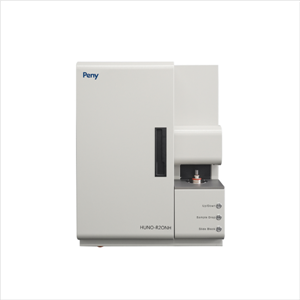
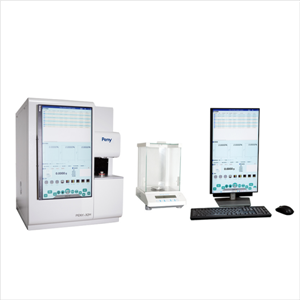
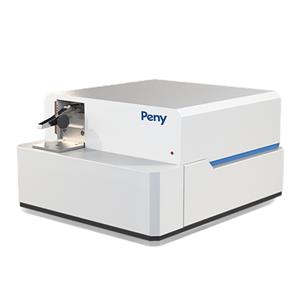
Today’s analyzers are designed to be placed directly in the melt shop, not in a distant lab. With a compact footprint and rugged construction, they allow operators to prepare a sample (typically 0.5–1.0 g of drillings or pin samples) and get results in 60–90 seconds. That’s fast enough to make corrective additions before tapping. For example, a resistance furnace with a solid-state RF generator and a highly sensitive IR detection cell can achieve carbon detection limits of 0.001% and sulfur detection limits of 0.0005%. The key is minimizing sample transport and preparation time. Peny Scientific Instruments (Nantong) Co., Ltd. offers analyzers with an integrated sample preparation station, reducing total cycle time to under 2 minutes from sample to result.
Solution 2: Advanced Blank Correction and Contamination Control
To combat sulfur contamination, modern analyzers employ a combination of techniques: (1) a high-temperature ceramic crucible that is pre-fired to remove residual sulfur, (2) a tungsten flux that is low in sulfur and promotes complete combustion, and (3) a software algorithm that automatically subtracts blank values from the crucible and flux. Some systems also include a “sulfur guard” that monitors for drift and alerts the operator if contamination is suspected. In the Sheffield case, switching to an analyzer with automatic blank correction and using a dedicated, clean sample preparation area reduced sulfur variability by 85%. False rejections dropped to near zero, saving £180,000 annually.
Solution 3: High-Throughput Automation
For high-volume operations, automation is the answer. Robotic sample handling, automatic crucible loading, and self-cleaning combustion chambers allow continuous operation with minimal operator intervention. A modern analyzer can process up to 60 samples per hour—triple the throughput of older models. The Stuttgart supplier upgraded to an automated system and not only met deadlines but also reduced overtime by 30%. The payback period was under 8 months.
To summarize the differences between traditional and modern approaches, refer to the table below.
| Feature | Traditional Analyzer | Modern Analyzer (e.g., Peny Scientific) |
|---|---|---|
| Analysis Time | 2–5 minutes | 60–90 seconds |
| Detection Limit (Sulfur) | 0.005% | 0.0005% |
| Sample Throughput | 15–20 per hour | 40–60 per hour |
| Blank Correction | Manual | Automatic |
| Automation | None | Robotic loading, self-cleaning |
Customer Success Stories: Real Results from Real Manufacturers
Case 1: Midwest Steel Casting, USA
John Matthews, Melt Shop Manager at Midwest Steel Casting in Cleveland, Ohio, was tired of rework. “We were losing 6% of our heats to carbon misses,” he says. After installing a Peny Scientific carbon sulfur analyzer with real-time feedback, they reduced rework to 1.2%. Annual savings: $780,000. “The analyzer paid for itself in four months,” Matthews adds.
Case 2: Precision Forge, UK
Sarah Collins, Quality Director at Precision Forge in Sheffield, UK, faced a sulfur nightmare. “Our old analyzer gave us inconsistent readings, so we were scrapping good parts.” After switching to a Peny Scientific system with automatic blank correction, sulfur variability dropped by 85%. “We now ship 99.8% first-pass yield,” Collins says. The company saved £180,000 annually.
Case 3: AutoTech Components, Germany
Dieter Krause, Production Manager at AutoTech Components in Stuttgart, Germany, needed speed. “We were bottlenecked at 20 samples per hour.” With a Peny Scientific automated analyzer, they achieved 55 samples per hour. “Overtime dropped by 30%, and we won a new contract worth €2 million,” Krause notes.
Case 4: Nippon Alloys, Japan
Hiroshi Tanaka, Plant Engineer at Nippon Alloys in Kitakyushu, Japan, required trace sulfur analysis for aerospace alloys. “We needed to detect sulfur at 0.0005%,” Tanaka says. Peny Scientific’s analyzer delivered. “Now we certify our alloys with confidence, and our customers trust us more.”
Case 5: Southern Foundries, Australia
Emma Wright, Operations Manager at Southern Foundries in Melbourne, Australia, integrated a Peny Scientific analyzer into their Industry 4.0 system. “The data feeds directly into our ERP, so we track every heat in real time,” Wright says. “Scrap rates fell by 4%, saving us $450,000 per year.”
Applications and Partnerships: Where Precision Matters Most
Carbon sulfur analyzers are not just for steel. They are critical in:
- Iron and Steel Foundries: Monitoring carbon and sulfur in gray iron, ductile iron, and steel to ensure mechanical properties.
- Aluminum Smelters: Although carbon is not typically measured, sulfur analysis helps control anode quality.
- Copper Alloys: Sulfur can embrittle copper; analyzers ensure low-sulfur grades for electrical applications.
- Aerospace and Defense: Trace sulfur in superalloys must be kept below 10 ppm to prevent hot cracking.
- Automotive: Cast iron engine blocks and crankshafts require precise carbon for machinability and strength.
Peny Scientific Instruments (Nantong) Co., Ltd. has partnered with leading raw material suppliers and OEMs to integrate their analyzers into turnkey quality control systems. For instance, a major flux manufacturer in Europe recommends Peny Scientific analyzers to their customers because the analyzers are calibrated with their flux, ensuring seamless method transfer. Similarly, a global automotive Tier 1 supplier has standardized on Peny Scientific analyzers across 12 plants worldwide, citing reliability and low cost of ownership.
FAQ: What Engineers and Procurement Managers Ask
Q1: How often should I calibrate my carbon sulfur analyzer?
A: For most production environments, a daily one-point calibration with a certified reference material (CRM) is sufficient. However, if you change flux lots or crucible suppliers, a full calibration with a suite of CRMs is recommended. Peny Scientific analyzers feature automatic drift correction, so you can extend calibration intervals to weekly if your process is stable.
Q2: What is the typical detection limit for sulfur?
A: Modern combustion analyzers with IR detection can reach 0.0005% (5 ppm) or better. For ultra-low sulfur requirements (e.g., <2 ppm), a specialized configuration with a longer integration time and high-purity oxygen is needed. Peny Scientific offers both standard and ultra-low sulfur models.
Q3: Can I analyze both carbon and sulfur simultaneously?
A: Yes. The combustion process releases both CO2 and SO2, which are measured by separate IR cells. This simultaneous measurement is a key advantage over other techniques.
Q4: How do I handle sample preparation for accurate sulfur results?
A: Use a clean, dedicated drill or mill. Avoid lubricants. Collect fine, uniform chips. If possible, use a pin sample for better homogeneity. Peny Scientific provides sample preparation kits and training to minimize contamination.
Q5: What is the cost of ownership compared to OES or XRF?
A: While OES and XRF have their place, combustion analyzers have lower operating costs for carbon and sulfur specifically. Consumables (crucibles, flux, oxygen) cost about $2–3 per sample. OES requires argon and expensive standards. For high-volume carbon/sulfur testing, combustion is the most economical.
Conclusion: Your Next Step Toward Zero Defects
The carbon sulfur analyzer is not a relic of the past—it is a precision tool that, when modernized, solves real pain points in melt shops and quality labs. From real-time feedback to automated throughput, the benefits are measurable: reduced rework, lower scrap rates, and higher customer satisfaction. If you’re still relying on outdated methods, you’re leaving money on the table.
To learn more about how Peny Scientific Instruments (Nantong) Co., Ltd. can help you achieve zero defects, we invite you to download our technical white paper, “Optimizing Carbon and Sulfur Analysis for High-Volume Production,” or contact our sales engineers for a personalized consultation. Don’t let carbon and sulfur be your hidden cost centers—take control today.