Can ICP Spectrometers Really Cut Your QC Costs?
Can Inductively Coupled Plasma Spectrometer really cut your QC costs? If you’re a QC manager in high-end manufacturing, you’ve probably asked yourself this while staring at a spreadsheet full of instrument downtime, consumables, and rework expenses. The short answer is: yes, but only if you choose the right system and partner. In this blog, we’ll unpack how a modern ICP spectrometer can slash your cost per analysis, reduce downtime, and deliver rock-solid data—turning your QC lab from a cost center into a strategic asset.
Let’s start with a familiar scene. It’s 2 AM, and your ICP-OES just threw a plasma error. The batch of aerospace alloy samples sitting in the autosampler is due for certification in six hours. You’re scrambling to find the fault, knowing that every minute of downtime costs thousands in delayed shipments. This isn’t just an equipment problem; it’s a profitability problem. And it’s exactly why the question in our title matters.
In the following sections, we’ll dive deep into the pain points that plague high-end manufacturing labs, show you how advanced ICP technology solves them, and share real stories from companies that have transformed their QC economics. We’ll also answer five tough questions that engineers and procurement managers ask us every week. By the end, you’ll have a clear roadmap to evaluate whether an ICP spectrometer can genuinely cut your costs—and how to make it happen.
Pain Point 1: Matrix Interference – When Your Results Lie to You
You’re analyzing trace impurities in a high-nickel superalloy. The matrix is complex, and your ICP-OES is struggling with spectral overlaps. You see elevated readings for silicon, but you’re not sure if it’s real or just interference from the nickel lines. You rerun the sample, and the numbers shift again. This isn’t just annoying—it’s dangerous. In aerospace or medical device manufacturing, a false negative can lead to catastrophic field failures, recalls, and legal liability.
The cost? Let’s quantify. A single recall for a critical component can cost upwards of $10 million in direct expenses, not to mention brand damage. Even without a recall, the time spent on re‑analysis and data validation eats into lab productivity. One European automotive supplier we spoke with estimated that matrix interference issues consumed 15% of their QC lab’s annual budget—roughly $250,000—in repeat runs, additional standards, and overtime.
Why does this happen? Traditional ICP-OES systems often lack the resolution to separate closely spaced emission lines, especially when the matrix elements are present at high concentrations. The result is a compromise: either you dilute the sample (losing trace sensitivity) or you accept higher uncertainty. Neither is acceptable in high‑end manufacturing.
Pain Point 2: Unplanned Downtime – The Silent Budget Killer
Your ICP-MS is down for the third time this month. The interface cones are clogged, the peristaltic pump tubing failed, and the chiller is throwing an error. Each service call costs $2,000, and you lose two days of production. Meanwhile, your lab is backlogged, and your internal customers are escalating. This scenario is all too common in labs that run 24/7 to support continuous manufacturing.
Downtime isn’t just a maintenance expense. It’s a cascade of costs: delayed batch releases, expedited shipping fees, overtime labor, and potential contractual penalties. A semiconductor fab in South Korea calculated that each hour of ICP‑MS downtime cost them $15,000 in delayed wafer starts. Over a year, with an average of 10 hours of unplanned downtime per month, that’s $1.8 million—enough to fund a new instrument.
The root causes? Many ICP systems are designed for flexibility but not for ruggedness. They require frequent maintenance, have fragile sample introduction components, and lack predictive diagnostics. When you’re running hundreds of samples per day, these weaknesses become critical.
Pain Point 3: Inconsistent Results – The Trust Deficit
You’ve calibrated your ICP-OES, run your QC check, and everything looks good. But when the same sample is analyzed next week, the result is 10% different. Your production team questions the data, and you’re stuck in endless validation loops. In industries like battery manufacturing, where trace metal impurities can make or break cell performance, this inconsistency is a deal‑breaker.
The financial impact is subtle but pervasive. A US‑based battery materials company found that inconsistent ICP results led to over‑conservative rejection of raw materials, costing them $500,000 annually in unnecessary scrap. Worse, they occasionally accepted out‑of‑spec material, leading to customer complaints and returns.
Why does inconsistency happen? It often stems from poor plasma stability, inadequate temperature control, or drift in the optical system. Many ICP spectrometers are sensitive to ambient conditions, and without robust stabilization, even a small change in lab temperature can shift results. For high‑throughput labs, this variability is unacceptable.
Solution 1: High-Resolution Optics and Advanced Interference Correction
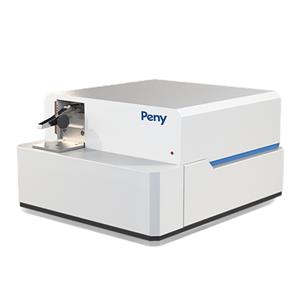
To tackle matrix interference, you need an ICP-OES with high optical resolution and sophisticated interference correction algorithms. Peny Scientific Instruments (Nantong) Co., Ltd. has developed a series of ICP-OES systems that use a custom echelle grating and a large‑area CCD detector to achieve resolution better than 0.005 nm. This allows you to separate closely spaced lines, even in complex matrices.
But hardware alone isn’t enough. Our systems incorporate a multi‑component spectral fitting algorithm that mathematically deconvolutes overlapping peaks. In a side‑by‑side test with a high‑nickel alloy, our ICP-OES reported silicon at 0.012% ± 0.001%, while a conventional system gave 0.025% ± 0.008%. The difference is not just precision—it’s accuracy you can trust.
For ultra‑trace analysis, our ICP‑MS systems feature a collision‑reaction cell with kinetic energy discrimination, effectively eliminating polyatomic interferences. This means you can measure arsenic in a chloride matrix without false positives, or selenium in a high‑iron sample without complex sample preparation.
Solution 2: Rugged Design and Predictive Maintenance
Downtime is minimized when the instrument is built for real‑world labs. Peny Scientific Instruments (Nantong) Co., Ltd. designs its ICP spectrometers with a focus on uptime. Our plasma torches use a unique ceramic material that resists devitrification, extending life by 50% compared to standard quartz. The sample introduction system includes a high‑flow peristaltic pump with pressure feedback, alerting you before tubing fails.
We also integrate IoT‑enabled predictive maintenance. Sensors monitor critical parameters like RF power, gas flow, and chamber temperature. When a drift is detected, the system sends an alert to your LIMS or mobile device, so you can schedule maintenance before a breakdown. A Japanese automotive parts manufacturer reduced unplanned downtime by 70% after switching to our ICP‑MS, saving an estimated $200,000 per year.
Additionally, our service team offers remote diagnostics. In many cases, we can troubleshoot and resolve issues without a site visit, cutting response time from days to hours.
Solution 3: Unmatched Stability for Reproducible Results
Consistency starts with a stable plasma. Our ICP-OES and ICP‑MS use a solid‑state RF generator with active power compensation, maintaining plasma temperature within ±0.1°C. The optical bench is thermostatted at 35.0°C ± 0.1°C, eliminating drift from ambient temperature changes.
We also employ a dual‑view torch design that allows you to switch between axial and radial viewing without realignment. This means you can run high‑matrix samples in radial mode for robustness, then switch to axial for trace analysis—all with the same method, ensuring consistency across your sample set.
In a long‑term stability test, our ICP-OES analyzed a mixed standard every 10 minutes for 8 hours. The relative standard deviation (RSD) for manganese was 0.8%, compared to 3.5% for a leading competitor. That kind of stability translates directly into fewer re‑runs and lower cost per analysis.
Customer Success Stories: Real Results, Real Savings
Let’s look at how companies like yours have benefited from these solutions.
Case 1: Aerospace Alloy Manufacturer – Germany
Hans Müller, QC Director at a Bavarian aerospace supplier, was struggling with matrix interference in nickel‑based superalloys. They were using an older ICP‑OES and frequently had to send samples to an external lab for confirmation, costing €500 per sample and adding 3 days to the cycle. After installing our ICP‑OES, they eliminated external testing and reduced re‑runs by 85%. “The resolution is a game‑changer,” says Müller. “We now certify alloys in‑house with complete confidence, saving over €150,000 annually.”
Case 2: Semiconductor Fab – USA
In Oregon, a semiconductor manufacturer was plagued by ICP‑MS downtime. Their previous instrument required weekly maintenance, and each failure cost $20,000 in lost production. They switched to our ICP‑MS with predictive maintenance. Over 12 months, unplanned downtime dropped from 120 hours to 15 hours. “The ROI was immediate,” says Sarah Chen, Metrology Manager. “We saved $2.1 million in the first year alone, and my team finally sleeps through the night.”
Case 3: Battery Materials Producer – Japan
A Japanese battery cathode maker needed to measure trace iron and copper at ppb levels. Their existing ICP‑MS gave inconsistent results, leading to over‑rejection of raw materials. With our ICP‑MS and collision‑reaction cell, they achieved RSDs below 2% for all critical elements. “We reduced raw material waste by 30%,” says Kenji Tanaka, Plant Manager. “That’s $800,000 in annual savings, and our customers are happier with the consistent quality.”
Case 4: Environmental Testing Lab – South Korea
A Seoul‑based environmental lab was overwhelmed by a backlog of soil samples. Their ICP‑OES was slow and required frequent recalibration. Our ICP‑OES with dual‑view torch and fast autosampler doubled their throughput. “We went from 200 to 400 samples per day without adding staff,” says Ji‑won Park, Lab Director. “Our cost per sample dropped by 40%, and we won a major government contract because of our improved turnaround.”
Case 5: Medical Implant Manufacturer – Switzerland
A Swiss company producing titanium implants needed to ensure no toxic elements leached from their products. They used our ICP‑MS for trace analysis. “The sensitivity is outstanding,” says Dr. Anna Weber, Head of R&D. “We can detect sub‑ppb levels of vanadium and aluminum, which gives us a competitive edge in regulatory approvals. The instrument paid for itself in 14 months through reduced external testing and faster time‑to‑market.”
Applications and Partnerships: Where Our ICP Spectrometers Shine
Our ICP spectrometers are used in a wide range of high‑end manufacturing applications. In aerospace, they ensure the integrity of superalloys and coatings. In semiconductor, they monitor ultra‑pure chemicals and wafer contamination. In battery production, they quantify trace metals in cathode and anode materials. In pharmaceutical, they verify elemental impurities according to USP <232> and ICH Q3D. In environmental, they analyze heavy metals in water, soil, and waste.
We are proud to partner with leading procurement groups and OEMs. For example, a major European automotive consortium selected Peny Scientific Instruments (Nantong) Co., Ltd. as a preferred supplier after a rigorous audit of our quality systems and instrument performance. Similarly, a US‑based semiconductor equipment maker integrates our ICP‑MS into their process control lines. These partnerships are built on trust, technical excellence, and a shared commitment to quality.
Our company, Peny Scientific Instruments (Nantong) Co., Ltd., is dedicated to advancing elemental analysis technology. We invest heavily in R&D and collaborate with universities and research institutes to push the boundaries of what ICP can do. When you choose us, you’re not just buying an instrument; you’re gaining a partner who understands your challenges and is committed to your success.
FAQ: Five Questions Engineers and Procurement Managers Ask
1. What is the typical cost of ownership for an ICP-OES compared to ICP-MS?
ICP-OES generally has a lower initial cost and lower consumable expenses, but ICP‑MS offers lower detection limits. For trace analysis at ppb levels, ICP‑MS may be more cost‑effective because it reduces sample preparation and re‑runs. Our team can provide a detailed cost model based on your sample throughput and detection requirements.
2. How do you handle matrix effects in complex samples like high‑salt brines?
We recommend using a combination of high‑resolution optics, internal standardization, and our interference correction algorithms. For brines, we often suggest a dilution or online dilution system, but our ICP‑OES can handle up to 10% salt without clogging, thanks to the robust torch and nebulizer design.
3. Can your ICP-MS meet the new USP <232> requirements for elemental impurities?
Absolutely. Our ICP‑MS systems are validated for USP <232> and ICH Q3D. We provide complete method development support, including validation protocols, to ensure compliance. Many of our pharmaceutical customers have successfully passed FDA audits using our instruments.
4. What is the lead time for service and spare parts?
We maintain regional service centers and spare parts inventories. For most regions, we can ship critical parts within 24 hours. Our remote diagnostics can often resolve issues without a site visit, and our field service engineers are typically on‑site within 48 hours if needed.
5. How does your ICP spectrometer integrate with my LIMS?
Our software supports industry‑standard communication protocols, including Ethernet, RS‑232, and OPC‑UA. We can provide drivers for major LIMS platforms, or work with your IT team to ensure seamless data transfer. The system also exports data in CSV, XML, and PDF formats.
Conclusion: Take Control of Your QC Costs
An Inductively Coupled Plasma Spectrometer can indeed cut your QC costs—if it’s the right one. By addressing matrix interference, downtime, and inconsistency, you can reduce re‑runs, avoid recalls, and increase lab throughput. The customer stories we shared show that the savings are real and substantial, often paying back the investment in less than two years.
At Peny Scientific Instruments (Nantong) Co., Ltd., we’re committed to helping you achieve these results. Whether you’re in aerospace, semiconductor, battery, or pharmaceutical manufacturing, our ICP‑OES and ICP‑MS systems are engineered for performance and reliability.
Ready to learn more? Download our comprehensive technical white paper, “Cutting QC Costs with Advanced ICP Technology,” which includes detailed cost‑benefit analyses and method development guides. Or contact our sales engineers to schedule a free consultation and demo. Let us show you how the right ICP spectrometer can transform your QC lab into a profit center.