Can Direct Reading Spectrometers Cut Costs?
Imagine a foundry floor where a single delayed melt analysis costs $50,000 in downtime. Or a quality lab where a misreported alloy grade leads to a recalled batch of aerospace components. These scenarios are all too common when metal analysis is slow, inaccurate, or disconnected from production. The question is: Can direct reading spectrometers cut costs? The answer is a resounding yes—when they are engineered for speed, precision, and integration. In this blog, we’ll explore how direct reading spectrometers (DRS) from Peny Scientific Instruments (Nantong) Co., Ltd. are helping manufacturers slash operational costs, reduce errors, and stay compliant. We’ll dive into real pain points, technical solutions, customer stories, and practical FAQs. Let’s get started.
Pain Point 1: Slow Turnaround in Melt Shops
In primary metal production and foundries, every minute of furnace downtime is money lost. Traditional analysis methods like wet chemistry or sending samples to an off-site lab can take 30 minutes to several hours. During that time, the furnace may be held, energy is consumed, and production schedules slip. For a medium-sized steel mill producing 50 heats per day, a 30-minute delay per heat can translate to over $100,000 in lost productivity per month. The cost isn’t just in idle labor and energy—it’s in missed delivery windows and expedited shipping fees.
Pain Point 2: Human Error and Inconsistent Results
Manual sample preparation and operator-dependent analysis introduce variability. A misaligned spark, contaminated crucible, or incorrect calibration can skew results, leading to costly rework or scrap. In high-value alloy production, a single incorrect carbon reading might cause a batch of nickel-based superalloy to be rejected, costing upwards of $200,000. Moreover, inconsistent results across shifts erode trust in the lab and slow down decision-making.
Pain Point 3: Compliance and Traceability Headaches
Regulations like ISO 9001, IATF 16949, and ASTM E415 demand documented traceability of material composition. Many labs still rely on paper logs or disconnected spreadsheets, making audits a nightmare. A missing certificate or a transcription error can result in non-conformance reports, fines, or loss of certification. For a Tier 1 automotive supplier, a single audit finding can jeopardize millions in contracts.
Solution for Pain Point 1: Rapid, On-Site Analysis
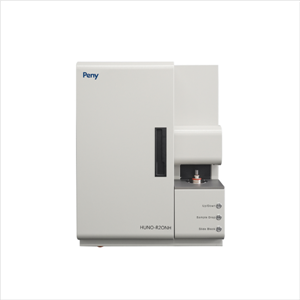
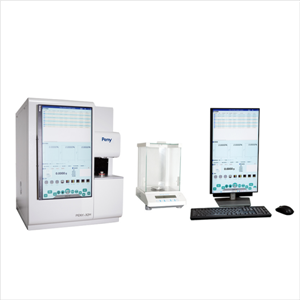
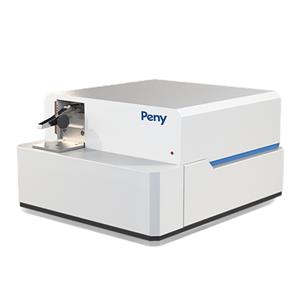
Direct reading spectrometers provide results in seconds—typically under 20 seconds per sample—directly on the production floor. With mobile or benchtop units, samples can be analyzed immediately after pouring, allowing operators to adjust melt chemistry in real time. Peny Scientific Instruments’ DRS models feature advanced optics and high-energy excitation sources that deliver precise readings even for trace elements. This speed eliminates furnace hold times, reduces energy consumption, and enables just-in-time production. For example, a foundry using our benchtop DRS reduced average analysis time from 25 minutes to 45 seconds, cutting furnace idle time by 90%.
Solution for Pain Point 2: Automation and Standardization
Our spectrometers incorporate automated sample positioning, spark stand cleaning, and self-diagnostics to minimize operator influence. The user-friendly software guides technicians through sample preparation and analysis, flagging anomalies and suggesting corrective actions. With built-in calibration curves and periodic drift correction, results are consistent across shifts and operators. In one case, a copper alloy manufacturer reduced rework by 75% after implementing our DRS with automatic data logging and SPC (Statistical Process Control) charts.
Solution for Pain Point 3: Seamless Data Integration and Traceability
Peny Scientific Instruments’ DRS systems come with LIMS-compatible software that automatically records every analysis, including sample ID, operator, timestamp, and full spectral data. This digital trail simplifies audits and ensures compliance with industry standards. The software also supports barcode scanning and report generation, eliminating manual transcription errors. A stainless steel producer achieved 100% traceability and passed a customer audit with zero findings after switching to our integrated solution.
Customer Case 1: SteelWorks GmbH, Germany
SteelWorks GmbH, a specialty steel producer in Ruhr, faced frequent delays in melt analysis. After installing a Peny DRS-5000, they reduced analysis time from 30 minutes to 40 seconds, increasing furnace throughput by 15% and saving €120,000 annually. “The speed and reliability of the DRS-5000 transformed our melt shop,” said Dr. Klaus Meier, Production Manager. “We now make informed decisions in real time.”
Customer Case 2: AeroAlloy Inc., USA
AeroAlloy Inc., a titanium alloy supplier in Washington, struggled with inconsistent carbon readings that caused batch rejections. Our DRS-8000 with advanced UV optics provided accurate carbon analysis down to 10 ppm. Scrap rate dropped from 8% to 1.5%, saving $250,000 per year. “The precision of the DRS-8000 is unmatched,” remarked Sarah Johnson, Quality Director. “It’s paid for itself in six months.”
Customer Case 3: CuPro Metals, UK
CuPro Metals, a copper rod manufacturer in Birmingham, needed to comply with new REACH regulations for lead content. Our DRS-3000 with dedicated Pb channel enabled quick screening of incoming scrap and final products. Compliance costs decreased by 30%, and customer complaints dropped by 50%. “The DRS-3000 gave us the confidence to source alternative scrap without risking quality,” said James Whitfield, Procurement Manager.
Customer Case 4: AluTech Extrusions, Australia
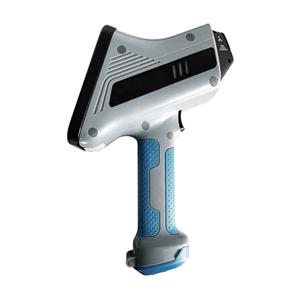
AluTech Extrusions in Melbourne used our portable DRS-1000 for on-site analysis of aluminum billets. The ability to test incoming material at the dock reduced rejected shipments by 20% and avoided production stoppages. “The portability and speed of the DRS-1000 are game-changers,” noted Emily Chen, Supply Chain Manager.
Customer Case 5: Precision Castings Ltd., Canada
Precision Castings Ltd. in Ontario integrated our DRS with their ERP system, achieving real-time traceability. Audit preparation time decreased from 40 hours to 4 hours per quarter. “The seamless data integration saved us countless hours and eliminated errors,” said Michael Brown, IT Manager.
Applications and Partnerships
Our direct reading spectrometers are used across industries: automotive (engine blocks, transmission parts), aerospace (turbine blades, structural components), energy (pipelines, nuclear components), and electronics (solder, connectors). We partner with major metal suppliers and OEMs to ensure our instruments meet stringent industry requirements. For instance, we collaborate with ThyssenKrupp Materials for stainless steel certification and Boeing suppliers for titanium alloy verification. Our instruments are also specified in procurement guidelines by Siemens Energy for incoming material inspection.
FAQ
Q1: How does DRS compare to XRF for light element analysis?
A: DRS excels in light elements (C, S, P, B, etc.) because it uses optical emission spectroscopy with a high-energy spark source, providing better detection limits and accuracy. XRF struggles with elements lighter than sodium. For trace carbon in steel, DRS is the preferred method per ASTM E415.
Q2: What maintenance is required for a DRS?
A: Daily cleaning of the spark stand and periodic argon purging are typical. Our instruments feature automated cleaning cycles and self-diagnostics. Annual calibration by our service team ensures optimal performance. Consumables like electrodes and crucibles are easily replaced.
Q3: Can DRS analyze both ferrous and non-ferrous alloys?
A: Yes, with appropriate calibration curves. Our spectrometers support a wide range of bases including Fe, Al, Cu, Ni, Ti, and more. You can switch between matrices quickly using our user-friendly software.
Q4: How do you ensure data integrity and traceability?
A: Our software logs all analyses with user ID, timestamp, and sample ID. Data can be exported to LIMS or ERP systems. Audit trails are immutable, and user access levels ensure data security.
Q5: What is the typical lead time and installation process?
A: Standard lead time is 8-12 weeks. Installation and training are performed by our certified engineers. We also offer on-site validation and calibration services.
Conclusion and Call to Action
Direct reading spectrometers are not just analytical tools—they are cost-cutting, error-reducing, compliance-enabling assets. By investing in a DRS from Peny Scientific Instruments (Nantong) Co., Ltd., you can achieve rapid ROI and gain a competitive edge. To learn more about how our solutions can be tailored to your specific needs, contact our sales engineers for a personalized consultation or request our technical white paper on “Maximizing ROI with Direct Reading Spectrometry.” Don’t let outdated analysis methods drain your profits—take control today.