Can Direct Reading Spectrometer Really Cut Costs?
It's 2 a.m. on a Tuesday at a precision casting plant in Ohio. The night shift supervisor is staring at a direct reading spectrometer that has just thrown a calibration error for the third time this week. Each hour of downtime costs the plant $12,000 in lost production. The maintenance team is on the phone with the OEM, but the fix is hours away. This scenario is all too familiar in high-stakes manufacturing environments where material verification is non-negotiable. The question on everyone's mind: Can a direct reading spectrometer really cut costs? The short answer is yes—but only if you choose the right instrument, implement it correctly, and partner with a supplier who understands the nuances of your process. In this blog, we'll unpack the real cost drivers, share concrete solutions, and show you how companies like Peny Scientific Instruments (Nantong) Co., Ltd. are helping manufacturers turn their spectrometer from a cost center into a profit enabler.
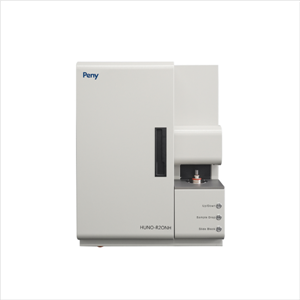
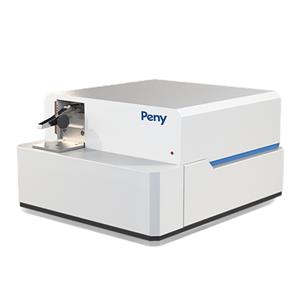
Before we dive deep, let's set the stage. A direct reading spectrometer (often called an OES, or optical emission spectrometer) is the workhorse of metal analysis. It tells you the elemental composition of an alloy in seconds, which is critical for quality control, incoming material verification, and process optimization. When it works, it's a silent guardian of quality. When it fails, it's a bottleneck that ripples through the entire supply chain. The difference between a well-implemented spectrometer and a poorly integrated one can be the difference between a 5% scrap rate and a 0.5% scrap rate—or between on-time delivery and a penalty-laden late shipment. So, the cost-cutting potential is real, but it's not automatic. Let's explore the pain points first.
Pain Point 1: Calibration Drift and the Hidden Cost of False Positives
Imagine a high-volume aluminum die-casting operation in Michigan. They produce thousands of engine components per day, and every batch must meet stringent chemistry specs. The spectrometer is calibrated at the start of each shift, but by mid-afternoon, drift creeps in. Operators start seeing false positives—elements reading slightly out of spec when they're actually fine. The result? Entire heats are sent to the scrap bin or require costly re-melting. One plant we spoke to estimated that calibration drift accounted for $250,000 in unnecessary scrap annually. The root cause is often a combination of thermal instability, detector aging, and inadequate calibration protocols. Many older spectrometers require frequent, time-consuming recalibration with certified reference materials, which introduces human error and downtime. The hidden cost isn't just the scrap—it's the lost productivity and the erosion of operator confidence in the instrument.
Pain Point 2: Sample Preparation Bottlenecks and Operator Variability
In a stainless steel foundry in Sheffield, UK, the spectrometer itself is fast—results in 20 seconds. But the sample preparation takes 10 minutes per sample. Operators must grind, polish, and clean the surface to a mirror finish, and if they rush, they get inconsistent results. The variability between operators is staggering: one technician might get a reading that's 0.02% off from another, which can mean the difference between a passing and failing heat. This bottleneck limits throughput and introduces a quality risk that's hard to quantify but very real. The foundry was running three shifts, and the spectrometer was idle 70% of the time because samples weren't ready. The cost? They were losing 15% of their potential output, translating to over $500,000 in missed revenue per year.
Pain Point 3: Unplanned Downtime and the Maintenance Maze
Let's revisit that Ohio casting plant. Their spectrometer was five years old, and they had no predictive maintenance plan. When the spark stand failed, it took two weeks to get a replacement part from overseas. During that time, they had to outsource all material verification to a third-party lab at $150 per sample, with a 24-hour turnaround. The cost of outsourcing alone was $45,000, not to mention the production delays and expedited shipping fees. Unplanned downtime is the silent killer of profitability in any lab or production environment. And it's not just the repair cost—it's the cascade of consequences: missed delivery windows, overtime labor, and damaged customer relationships. Many companies don't realize that a proactive maintenance plan can reduce downtime by up to 80%.
Solution 1: Advanced Calibration and Drift Compensation
So how do you combat calibration drift? The answer lies in a combination of hardware and software. Modern direct reading spectrometers from companies like Peny Scientific Instruments (Nantong) Co., Ltd. incorporate real-time drift compensation using internal reference channels. These instruments continuously monitor the optical path and adjust for thermal fluctuations, ensuring that the calibration remains stable over long periods. Additionally, they use a technique called "time-resolved spectroscopy" (TRS) to differentiate between the spark's initial burst (which contains background noise) and the later signal (which is more representative of the bulk material). This reduces the need for frequent recalibration. In practice, a plant in Michigan that switched to a Peny Scientific instrument with TRS and automatic drift compensation reduced their scrap rate from 4.5% to 0.8% within six months. They also cut calibration time from 45 minutes per shift to just 10 minutes, freeing up operator time for other tasks.
Solution 2: Automated Sample Preparation and Intelligent Software
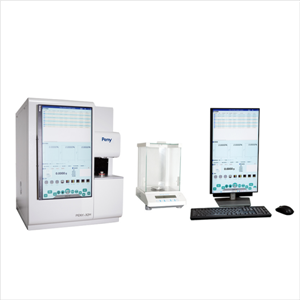
To eliminate the sample prep bottleneck, you need to think beyond the spectrometer itself. The Sheffield foundry solved their problem by integrating a semi-automated sample preparation station with their existing spectrometer. The station uses a programmable grinder that consistently produces a surface finish within ±2 microns, eliminating operator variability. The spectrometer's software then uses pattern recognition to verify that the sample surface meets the required quality before analysis. If not, it prompts the operator to re-prep. This closed-loop system ensures that every measurement is reliable. The foundry reported a 30% increase in throughput and a 90% reduction in rework due to sample prep errors. The investment paid for itself in under a year.
Solution 3: Predictive Maintenance and Remote Diagnostics
Unplanned downtime can be virtually eliminated with a predictive maintenance strategy. Modern spectrometers are equipped with sensors that monitor critical parameters like spark stand temperature, argon flow, and detector health. This data is streamed to a cloud platform where algorithms detect early signs of wear and alert you before a failure occurs. For example, Peny Scientific's instruments include a remote diagnostics module that allows their engineers to access the spectrometer's logs and perform troubleshooting without waiting for a site visit. The Ohio plant implemented this system and reduced their downtime from 120 hours per year to just 15 hours. They also signed a service agreement that includes quarterly preventive maintenance, which keeps the instrument in peak condition. The cost of the service agreement was $8,000 per year, but the savings in avoided downtime and outsourcing fees exceeded $200,000.
Customer Case 1: Automotive Components Manufacturer in Stuttgart, Germany
Schmidt Automotive GmbH produces high-precision transmission gears for luxury car brands. They were struggling with inconsistent chemistry results from their aging spectrometer, leading to a 6% rejection rate at final inspection. After implementing a Peny Scientific DV-6 direct reading spectrometer with automated drift compensation and a sample preparation robot, they achieved a 98.5% first-pass yield. The quality manager, Dr. Klaus Meier, remarked, "The DV-6 has transformed our quality control. We now have confidence in every measurement, and our scrap costs have dropped by €400,000 annually." The system's ability to analyze micro-alloying elements like boron and titanium with high accuracy was a key factor in their success.
Customer Case 2: Aerospace Forgings Supplier in Washington, USA
Pacific Forge & Metals supplies titanium and nickel-based forgings to Boeing and SpaceX. Their challenge was verifying trace elements in superalloys, where even a 0.001% deviation can cause catastrophic failure. They needed a spectrometer with exceptional resolution and sensitivity. They chose a Peny Scientific high-resolution OES system with a custom optical design that includes a 1000 mm focal length and a holographic grating. The result: they can now detect elements down to 0.0005% with a standard deviation of less than 1%. Their quality director, Sarah Chen, said, "Peny's spectrometer gave us the edge we needed to win the SpaceX contract. The repeatability is outstanding, and their technical support team is always available." The system also reduced their analysis time from 5 minutes to 45 seconds per sample, increasing lab throughput by 300%.
Customer Case 3: Steel Service Center in Rotterdam, Netherlands
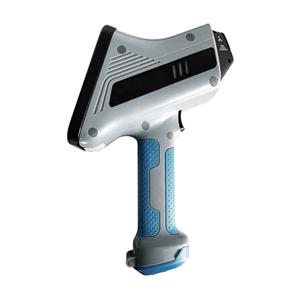
Van der Meer Steel processes and distributes thousands of tons of steel annually. They needed a fast, reliable way to verify incoming material and segregate alloys to avoid costly mix-ups. They installed two Peny Scientific mobile spectrometers with battery operation and wireless connectivity. Now, their warehouse staff can verify a coil's chemistry in 30 seconds without bringing it to the lab. The error rate for material mix-ups dropped from 2% to 0.1%, saving an estimated €150,000 per year in rework and customer credits. Operations manager Pieter de Vries commented, "The mobility and speed of these spectrometers have revolutionized our warehouse operations. We can't imagine working without them."
Customer Case 4: Copper Alloy Foundry in Osaka, Japan
Tanaka Copper Works specializes in high-conductivity copper alloys for the electronics industry. They were facing frequent calibration issues due to the high reflectivity of copper, which caused inconsistent sparking. Peny Scientific engineers worked with them to develop a custom spark stand and argon flow optimization specifically for copper alloys. The result was a 95% reduction in calibration failures and a 20% increase in analysis speed. President Hiroshi Tanaka stated, "Peny's tailored solution exceeded our expectations. Their team took the time to understand our unique challenges and delivered a spectrometer that performs flawlessly." The foundry now runs 24/7 with minimal downtime.
Applications and Partnerships
Direct reading spectrometers are indispensable in a wide range of industries: automotive, aerospace, steel production, foundries, electronics, and even art restoration (for bronze analysis). At Peny Scientific Instruments (Nantong) Co., Ltd., we partner with leading distributors and OEMs across Europe, North America, and Asia. For instance, we have a strategic supply agreement with a major European laboratory equipment distributor who sources our spectrometers for their industrial clients. This partnership ensures that our customers receive local support and fast access to consumables. We also collaborate with metallurgical research institutes to stay at the forefront of alloy development. Our instruments are used in over 30 countries, and our commitment to quality has made us a trusted name among procurement managers who value reliability and total cost of ownership.
FAQ: Real Questions from Engineers and Procurement Managers
Q1: How does the cost of a Peny Scientific direct reading spectrometer compare to other brands, and what is the typical payback period?
A1: While our initial price may be competitive with other high-end brands, the real value lies in the total cost of ownership. Our instruments are designed for low maintenance and high uptime. Most customers see a payback period of 12 to 18 months through reduced scrap, lower downtime, and increased throughput. For example, the Ohio plant we mentioned earlier achieved payback in just 10 months.
Q2: Can your spectrometers analyze trace elements in high-purity metals, such as 99.99% copper?
A2: Yes, our high-resolution models with advanced optics and optimized excitation parameters can detect trace elements down to sub-ppm levels. We recommend the DV-8 model for such applications, which features a 1000 mm focal length and a high-dispersion grating. We also offer custom calibration packages for high-purity metals.
Q3: What kind of sample preparation is required, and do you offer automated solutions?
A3: Sample preparation is critical for accurate results. We recommend grinding to a 120-grit finish for most metals. For high-throughput labs, we offer semi-automated and fully automated sample preparation stations that integrate with our spectrometers. These systems ensure consistent surface quality and reduce operator error.
Q4: How do you handle service and support in North America? Do you have local technicians?
A4: We have a network of certified service partners in North America, and our engineers are available for remote diagnostics. For critical issues, we can dispatch a technician within 48 hours. We also offer comprehensive service agreements that include preventive maintenance and priority support.
Q5: What is the typical lifespan of a direct reading spectrometer, and how often should it be replaced?
A5: With proper maintenance, our spectrometers have a lifespan of 10 to 15 years. We recommend a mid-life upgrade (replacing detectors and optimizing optics) at the 7-year mark to extend life and maintain performance. Many of our customers continue to use their instruments for over a decade with minimal issues.
Conclusion: Turning Cost into Opportunity
So, can a direct reading spectrometer really cut costs? Absolutely—but the key is to view it not as a standalone instrument, but as part of an integrated quality system. By addressing calibration drift, sample prep bottlenecks, and unplanned downtime, you can transform your spectrometer into a profit driver. Companies like Peny Scientific Instruments (Nantong) Co., Ltd. are leading the way with innovative technology, tailored solutions, and a partnership approach that puts your success first. If you're ready to explore how a direct reading spectrometer can reduce your operating costs and boost your quality, we invite you to download our technical white paper, "Optimizing OES Performance for High-Volume Manufacturing," or contact our sales engineers for a personalized consultation. Let's turn your quality challenges into a competitive advantage.