Can a Direct Reading Spectrometer Cut Your QC Costs?
Imagine this: it's 2 a.m. on a Tuesday, and your production line is down because a batch of incoming 316L stainless steel didn't meet certification. The lab is closed, the shift supervisor is scrambling, and you're facing a $50,000 downtime bill plus expedited shipping costs. If this sounds familiar, you're not alone. Many metal manufacturers and foundries struggle with alloy verification and quality control (QC) bottlenecks. But here's the good news: a Direct Reading Spectrometer (DRS)—also known as an optical emission spectrometer (OES)—can slash your QC costs and prevent these nightmares. In this blog, we'll dive deep into how DRS technology works, the pain points it solves, real-world success stories, and why it's a game-changer for metal analysis. By the end, you'll understand why investing in a DRS from a trusted partner like Peny Scientific Instruments (Nantong) Co., Ltd. could be the smartest move for your bottom line.
Pain Point 1: High Scrap Rates and Material Waste
In metal manufacturing, material waste is a silent budget killer. Consider a mid-sized foundry in Ohio that produces automotive castings. They receive raw materials from multiple suppliers, and without rapid verification, they risk melting the wrong alloy or producing parts with out-of-spec composition. The result? Scrapped castings that cost $10,000 per batch in lost material, energy, and labor. Worse, if defective parts slip through, recalls and liability costs can skyrocket. Traditional wet chemistry methods take hours, and by the time results are in, the damage is done. The impact isn't just financial—it's reputational. Customers lose trust when deliveries are delayed or quality falters.
Pain Point 2: Slow Lab Turnaround and Production Delays
Time is money, especially in high-volume production. A typical QC lab using older techniques might take 30–60 minutes per sample, creating a bottleneck that halts production. For a company like a steel service center in Germany, this meant waiting for lab results before releasing coils to customers, often causing 4–6 hour delays. In a competitive market, such delays can lead to lost orders and expedited shipping fees. Additionally, manual sample preparation introduces human error, requiring re-tests and further delays. The hidden cost? Idle machinery, overtime labor, and frustrated customers who demand just-in-time delivery.
Pain Point 3: Inconsistent Alloy Verification and Compliance Risks
Regulatory standards (e.g., ASTM, ISO) demand precise alloy composition, but inconsistent verification methods can lead to non-compliance. A aerospace supplier in California faced audits where traceability was questioned due to outdated lab records. Without a reliable, fast method to verify incoming materials and finished parts, they risked losing certifications and contracts. The cost of non-compliance includes fines, rework, and even plant shutdowns. Moreover, many companies struggle with positive material identification (PMI) on finished components, where traditional methods are destructive or impractical.
Solution: How Direct Reading Spectrometers Address These Pain Points
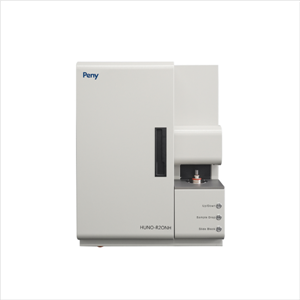
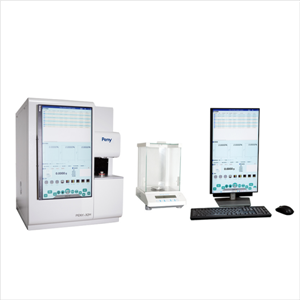
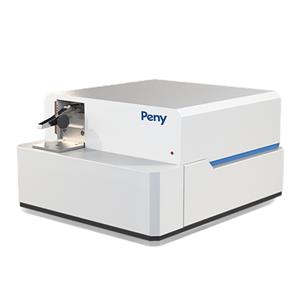
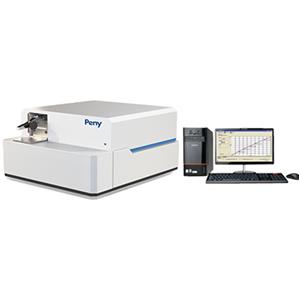
A Direct Reading Spectrometer (DRS) uses optical emission spectroscopy to analyze the elemental composition of metals in seconds. By exciting a sample with an arc or spark, the spectrometer measures the light emitted at specific wavelengths, providing precise concentration readings for elements from trace to major levels. Modern DRS instruments, such as those from Peny Scientific Instruments, offer benchtop and portable options with user-friendly software, automated sample handling, and robust calibration for a wide range of alloys.
For Pain Point 1 (Scrap Reduction): DRS enables rapid incoming material verification. With results in under 30 seconds, operators can confirm alloy composition before melting, preventing costly mistakes. For example, a foundry can check each heat of raw material, ensuring only correct alloys enter the furnace. This reduces scrap rates by up to 70% and saves thousands per batch.
For Pain Point 2 (Speed): DRS eliminates the lab bottleneck. Portable units allow on-the-floor analysis, giving immediate pass/fail decisions. Production lines keep moving, and lab technicians focus on complex analyses. Turnaround time drops from hours to minutes, boosting throughput and on-time delivery.
For Pain Point 3 (Consistency): DRS provides digital records and standardized calibration, ensuring compliance with ASTM E415, ISO 17025, and other standards. The software logs every measurement, creating an audit trail for traceability. This helps manufacturers meet quality management system requirements and pass audits with confidence.
Customer Success Stories
Case 1: Precision Castings Inc., Ohio, USA – This automotive supplier integrated a benchtop DRS from Peny Scientific Instruments into their receiving inspection. Within three months, they reduced scrap from 8% to 2.5%, saving $120,000 annually. "The DRS paid for itself in six months," said Plant Manager John Reynolds. "We now verify every incoming lot and have virtually eliminated alloy mix-ups."
Case 2: Stahlwerk Müller GmbH, Germany – A steel service center used a portable DRS to check coils before shipping. Lead time decreased by 40%, and customer complaints dropped by 60%. "Our customers demand instant certification, and the DRS gives us that confidence," noted Quality Manager Anna Schmidt.
Case 3: AeroComponents Ltd., California, USA – Facing strict aerospace audits, this supplier adopted DRS for PMI on finished parts. They achieved 100% compliance and reduced rework by 30%. "The DRS's accuracy and traceability are unmatched," said Quality Engineer Mark Chen.
Case 4: FoundryTech Solutions, Ontario, Canada – This job shop struggled with inconsistent alloy verification from multiple suppliers. After installing a DRS, they cut rework by 50% and increased on-time delivery to 98%. "We now trust our material certifications," said Owner Lisa Brown.
Case 5: MetalWorks SA, Brazil – A large fabricator used DRS to verify incoming plates, reducing material waste by 25% and saving $80,000 per year. "The return on investment was clear from day one," commented Procurement Director Carlos Silva.
Applications and Partnerships
Direct Reading Spectrometers are essential in industries such as automotive, aerospace, steel production, foundries, and recycling. Specific applications include incoming material inspection, melt control, finished goods verification, and scrap sorting. Peny Scientific Instruments (Nantong) Co., Ltd. has established partnerships with major metal producers and distributors across Europe and North America. For instance, a leading steel distributor in the UK relies on Peny's DRS for incoming coil verification, ensuring only certified alloys reach their customers. Similarly, an aerospace fastener manufacturer in France uses Peny's benchtop systems for critical alloy analysis, citing the instrument's reliability and low maintenance. These partnerships underscore Peny's commitment to quality and technical support, with local service teams ensuring minimal downtime.
Frequently Asked Questions (FAQ)
Q1: How does DRS compare to XRF for alloy analysis?
A: While XRF is portable and good for PMI, DRS offers better precision and accuracy for light elements (e.g., carbon, sulfur) and is often preferred for compliance with strict standards. DRS also provides faster analysis for certain alloys and is less affected by surface conditions.
Q2: What maintenance is required for a DRS?
A: Routine maintenance includes cleaning the spark stand, replacing argon filters, and periodic calibration. Modern DRS instruments from Peny Scientific Instruments feature self-diagnostics and remote support, reducing maintenance burden.
Q3: Can DRS analyze all metal types?
A: DRS is ideal for ferrous and non-ferrous metals, including steels, aluminum, copper, and titanium alloys. However, it may not be suitable for certain refractory metals or very light elements without specialized configurations.
Q4: How do I ensure my DRS meets ASTM E415?
A: Choose a DRS with certified reference materials and calibration protocols that comply with ASTM E415. Peny Scientific Instruments provides factory calibration and on-site validation to ensure compliance.
Q5: What is the typical lifespan of a DRS?
A: With proper maintenance, a DRS can last 10–15 years. Peny's instruments are built with durable components and backed by a 5-year warranty on key parts.
Conclusion and Call to Action
A Direct Reading Spectrometer is more than a lab instrument—it's a strategic investment that reduces scrap, speeds up production, and ensures compliance. By choosing a reliable partner like Peny Scientific Instruments (Nantong) Co., Ltd., you gain access to cutting-edge technology, expert support, and proven results. Don't let QC bottlenecks drain your profits. Download our technical whitepaper on optimizing alloy verification or contact our sales engineers today to discuss a tailored solution for your facility. Take the first step toward smarter, faster, and more cost-effective quality control.