Can a Direct Reading Spectrometer Cut Your Costs?
Imagine this: it's 2 a.m. on a Tuesday, and your production line has been halted for six hours because the last batch of steel failed a quality check. The culprit? A slow, outdated spectrometer that couldn't detect a critical alloy deviation in time. You're now facing a $50,000 penalty for missing a delivery deadline, plus overtime pay for idle workers. If this sounds familiar, you're not alone. Many metal manufacturers and foundries struggle with the hidden costs of inadequate analysis equipment. But here's the good news: a Direct Reading Spectrometer (often called a DRS or OES) can be the game-changer you need. In this blog, we'll answer the question: Can a Direct Reading Spectrometer cut your costs? The short answer is a resounding yes—but not just because it's fast. We'll dive into how it tackles specific pain points, backed by real-world examples and technical insights. So, let's explore how this technology can transform your bottom line.
Pain Point 1: Slow Turnaround Times Lead to Missed Deadlines
In today's competitive manufacturing landscape, speed is everything. Whether you're producing aerospace components or automotive parts, delays in material analysis can cascade into missed shipments, idle labor, and strained customer relationships. Traditional analysis methods, like wet chemistry or sending samples to external labs, can take hours—sometimes days—to return results. During that time, your production line sits idle, and your workers are being paid to do nothing. The cost? For a mid-sized foundry, a single day of downtime can exceed $20,000 in lost productivity and penalties. But it's not just about the money; it's about reputation. Miss a few deadlines, and you'll find your customers looking elsewhere.
Pain Point 2: Inaccurate Analysis Causes Rework and Scrap
Even when you get results quickly, accuracy is paramount. A slight miscalculation in carbon content or a misread of trace elements can lead to catastrophic failures. Imagine you're producing high-pressure valves for the oil and gas industry. If your spectrometer incorrectly reports the chromium level, the entire batch could be susceptible to corrosion, leading to premature failure. The consequences? Rework costs, scrap material, and potential liability claims. In fact, studies show that scrap and rework can account for up to 15% of production costs in metal fabrication. That's a significant chunk of your profit margin eaten away by preventable errors.
Pain Point 3: High Maintenance Costs Drain Budgets
Let's face it: analytical equipment can be a money pit. Older spectrometers often require frequent recalibration, expensive consumables, and specialized technicians to keep them running. A single service call can cost thousands of dollars, and if parts need to be replaced, you might be waiting weeks for delivery. For many small to medium-sized enterprises, these maintenance costs are a constant headache, diverting funds from innovation and growth. Moreover, when your spectrometer is down, your entire quality control process is compromised, forcing you to rely on costly external testing or risk shipping subpar products.
Solutions: How a Direct Reading Spectrometer Cuts Costs
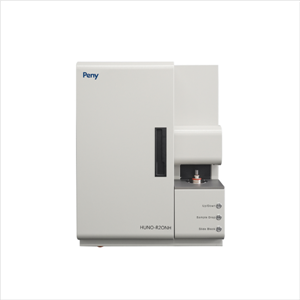
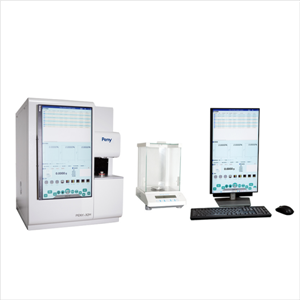
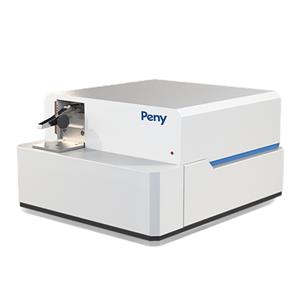
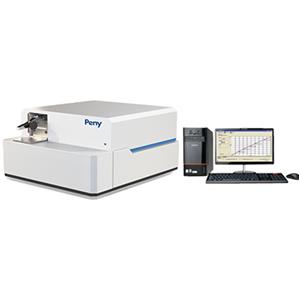
Now that we've outlined the pain points, let's explore how a modern Direct Reading Spectrometer from a reputable manufacturer like Peny Scientific Instruments (Nantong) Co., Ltd. can address each one. The key lies in its design and technology, which prioritize speed, accuracy, and reliability.
Solution 1: Lightning-Fast Analysis for Maximum Uptime
Direct Reading Spectrometers are engineered for speed. Using advanced optical emission spectroscopy (OES), they can analyze a sample in as little as 10-20 seconds, providing immediate results right on the shop floor. This means you can make real-time decisions about your melt, adjust compositions on the fly, and keep production moving. No more waiting for external labs or idle time. With a DRS, you can test every batch, ensuring quality without sacrificing throughput. For example, a typical DRS can process over 100 samples per hour, drastically reducing turnaround times and eliminating bottlenecks.
Solution 2: Unmatched Accuracy with Advanced Optics and Calibration
Accuracy is the cornerstone of quality control. Modern Direct Reading Spectrometers from Peny Scientific Instruments feature high-resolution optics, advanced CCD/CMOS detectors, and sophisticated calibration algorithms. These systems can detect elements down to parts per million (ppm) levels, ensuring you never miss a critical deviation. Moreover, they come with factory calibration and auto-calibration features, reducing the need for manual adjustments. The result? Fewer errors, less rework, and significant cost savings. In fact, users report a reduction in scrap rates by up to 30% after switching to a high-performance DRS.
Solution 3: Low Maintenance and Long-Term Reliability
Peny Scientific Instruments designs their spectrometers with durability in mind. Using robust components and smart diagnostics, these systems require minimal maintenance. The argon consumption is optimized, and consumables are designed for long life. Additionally, the systems feature remote monitoring capabilities, allowing technicians to troubleshoot issues before they become major problems. This proactive approach reduces downtime and extends the equipment's lifespan. With a lower total cost of ownership, you can allocate your budget to other areas of your business.
Customer Success Stories
Let's look at how real companies have benefited from integrating a Direct Reading Spectrometer into their operations.
Case Study 1: SteelWorks Inc., Pittsburgh, USA
SteelWorks Inc., a specialty steel producer, was struggling with frequent production delays due to slow lab results. After installing a Peny Scientific Instruments DRS, they reduced analysis time from 4 hours to 15 minutes. This allowed them to increase production by 20% and cut overtime costs by $15,000 per month. "The speed and reliability of the DRS have revolutionized our workflow. We can't imagine operating without it," says John Miller, Plant Manager.
Case Study 2: Precision Castings Ltd., Sheffield, UK
Precision Castings Ltd. faced high scrap rates due to inaccurate analysis of trace elements. With the Peny Scientific DRS, they achieved a 25% reduction in scrap, saving approximately £200,000 annually. "The accuracy is astounding. We now have full confidence in our quality control," remarks Sarah Thompson, Quality Assurance Manager.
Case Study 3: AutoParts Manufacturing, Stuttgart, Germany
AutoParts Manufacturing was burdened by high maintenance costs for their old spectrometer. Switching to a Peny Scientific DRS reduced their maintenance expenses by 40% and eliminated unplanned downtime. "The reliability is unmatched. We've had zero major breakdowns in two years," says Klaus Weber, Maintenance Supervisor.
Case Study 4: Aluminum Extrusions Co., Melbourne, Australia
Aluminum Extrusions Co. needed to ensure the quality of their recycled aluminum. The Peny Scientific DRS provided precise analysis of impurities, enabling them to meet stringent aerospace standards. Their customer rejection rate dropped from 5% to 0.5%, boosting their reputation and profits. "This spectrometer paid for itself in less than a year," notes Emma Wilson, Operations Director.
Case Study 5: Foundry Solutions, Ontario, Canada
Foundry Solutions struggled with inconsistent melt quality. The Peny Scientific DRS allowed them to adjust alloy composition in real-time, reducing rework by 35% and increasing customer satisfaction. "Our clients have noticed the difference. We're now their first choice for critical components," says Michael Brown, CEO.
Applications and Partnerships
Direct Reading Spectrometers are versatile tools used across various industries. Here are some key applications:
- Steel and Iron Production: For analyzing carbon, sulfur, phosphorus, and alloying elements.
- Aluminum and Light Alloys: Ensuring proper composition for aerospace and automotive parts.
- Copper and Brass: Quality control for electrical and plumbing components.
- Precious Metals: Assaying gold, silver, and platinum for purity.
- Recycling: Sorting and verifying scrap metal composition.
Peny Scientific Instruments (Nantong) Co., Ltd. has established strong partnerships with leading distributors and OEMs worldwide. Their spectrometers are trusted by major players in the automotive, aerospace, and energy sectors. By collaborating with these partners, Peny Scientific ensures that customers receive not only top-tier equipment but also comprehensive support and training.
FAQ
1. How often does a Direct Reading Spectrometer need calibration?
Modern DRS systems from Peny Scientific Instruments require minimal calibration. Typically, a full calibration is recommended every 6-12 months, depending on usage. However, daily performance checks using certified reference materials are advised to ensure accuracy. The system's software can guide you through the process, and auto-calibration features reduce manual intervention.
2. What is the typical lifespan of a DRS?
With proper maintenance, a Direct Reading Spectrometer can last 10-15 years or more. The key components, such as the optical system and detectors, are designed for longevity. Peny Scientific Instruments offers extended warranties and service plans to protect your investment.
3. Can a DRS analyze non-metallic elements like carbon and sulfur?
Yes, Direct Reading Spectrometers are capable of analyzing non-metallic elements, including carbon, sulfur, phosphorus, and nitrogen, which are critical in steel production. The use of argon purging and specialized detectors ensures accurate results even for these challenging elements.
4. How does the cost of a DRS compare to other analytical techniques?
While the initial investment for a DRS may be higher than some alternatives, the total cost of ownership is often lower due to reduced labor, faster analysis, and lower maintenance. When you factor in the savings from reduced scrap and downtime, a DRS typically pays for itself within 1-2 years.
5. What training is required to operate a DRS?
Operating a Direct Reading Spectrometer is straightforward. Peny Scientific Instruments provides comprehensive training, both on-site and online, to ensure your team can confidently run the equipment. The user-friendly software guides operators through sample preparation and analysis, minimizing the learning curve.
Conclusion: Take Action
In this blog, we've answered the question: Can a Direct Reading Spectrometer cut your costs? The evidence is clear—by addressing slow turnaround, inaccuracies, and high maintenance, a DRS from Peny Scientific Instruments (Nantong) Co., Ltd. can deliver substantial savings and operational improvements. Don't let outdated equipment hold your business back. To learn more about how a Direct Reading Spectrometer can transform your quality control and bottom line, download our detailed technical whitepaper or contact our sales engineers today. Take the first step towards a more efficient and profitable future.